
Sauces & Condiments
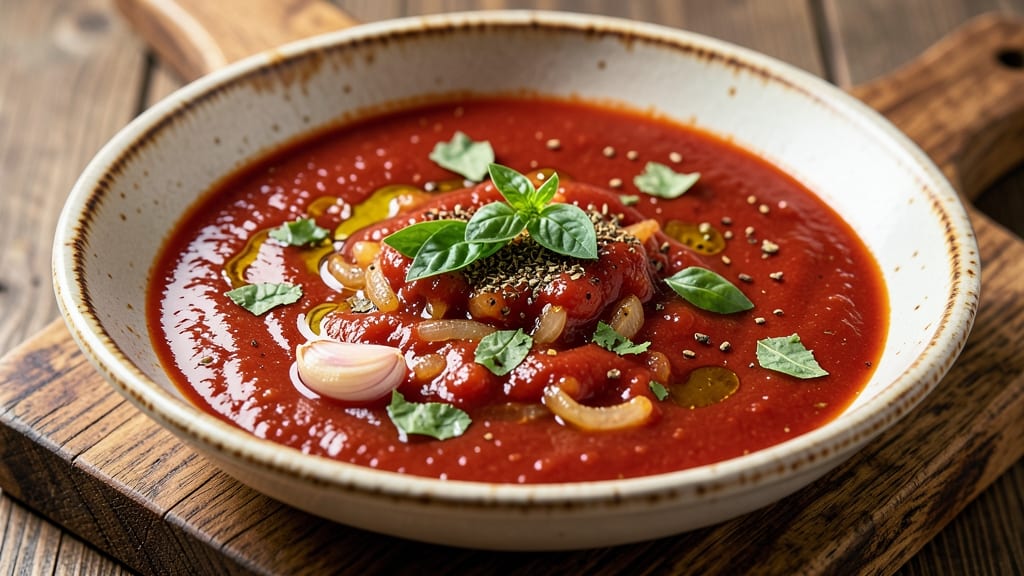
This authentic Italian tomato sauce transforms simple ingredients into something truly special—rich, balanced, and bursting with San Marzano sweetness. 🌿 I learned the secret from a nonna in Tuscany: slow simmering unlocks deep, complex flavors without overpowering the natural taste of the tomatoes.
The key lies in patience and fresh basil, which elevates this sauce from ordinary to extraordinary.
What sets this recipe apart is its simplicity and authenticity. No shortcuts, no processed ingredients—just high-quality tomatoes, aromatic garlic, and a touch of olive oil to create a sauce that builds flavor layer by layer.
The slow simmer reduces the sauce naturally, concentrating its sweetness while allowing the acidity to mellow into perfect balance. This is the foundation of every great Italian meal, and it takes just 45 minutes to achieve.
By the time you're done, you'll have a velvety, aromatic sauce with just the right balance of sweetness and acidity—perfect for tossing with pasta, drizzling over pizza, or using as a base for other dishes.
The fresh basil adds a bright, herbal note that brightens every bite. This isn't just a sauce; it's the heart of Italian cooking, and once you taste it, you'll never go back to store-bought again.
The best part? This sauce keeps beautifully in the fridge for up to five days, or you can freeze it for months, making it the ultimate meal prep solution.
Whether you're cooking for family or treating yourself to a homemade feast, this recipe delivers restaurant-quality results with minimal effort. Let's get started on creating something truly special.
Ingredients for authentic tomato sauce recipe from italy
San Marzano tomatoes, fresh basil, and a touch of red wine create this restaurant-quality Italian sauce.
| Ingredient | Amount | Notes |
|---|---|---|
| San Marzano Tomatoes 🍅 | 28 oz | Whole, peeled, crushed by hand |
| Extra-Virgin Olive Oil 🫒 | ½ cup | High quality, fruity variety |
| Yellow Onion 🧅 | 1 whole | Finely chopped, sweet variety |
| Garlic Cloves 🧄 | 4 cloves | Peeled, minced for aroma |
| Fresh Basil Leaves 🌿 | ½ cup | Packed, stems removed |
| Dried Oregano 🍃 | 1 tsp | Italian variety preferred |
| Salt 🧂 | 1 tsp | Diamond Crystal preferred |
| Black Pepper 🌶️ | ½ tsp | Freshly cracked preferred |
| Red Wine 🍷 | ¼ cup | Dry, bold variety |
| Freshly Grated Parmesan 🧀 | ¼ cup | From aged Parmigiano-Reggiano |
The tomatoes are everything here—San Marzano is non-negotiable for that perfect sweetness. Trader Joe's and Whole Foods usually carry them in cans, but if you spot fresh ones at a farmers market, grab them. The basil? Fresh is a must—dried won't cut it. For the red wine, any bold, dry variety works—Cabernet Sauvignon or Chianti. I always grab a bottle I'd drink anyway since you'll use the whole thing. The Parmesan adds depth, so grate it yourself—pre-grated has anti-caking agents that ruin the texture.
No San Marzano tomatoes? High-quality crushed tomatoes in a can will work, but you'll taste the difference. Short on basil? Dried oregano at half the amount helps, but nothing beats the fresh stuff. Ran out of red wine? Substitute with 2 tbsp balsamic vinegar plus 1 tbsp tomato paste for acidity. The olive oil matters too—use something fruity and peppery, not the cheap stuff. And if you're feeling fancy, add a pinch of red pepper flakes for a little heat.
This sauce tastes even better the next day as the flavors meld. Keeps in the fridge for 5-7 days covered tightly, or freeze for up to 3 months in airtight containers. I always make double batches—one for dinner, one for freezing. Perfect for meal prep! When reheating, add a splash of water to loosen it up if it's thickened. And trust me, save some for toast—it's the best.
Why You'll Love This Recipe
- Minimal Chopping Required: I swear by this—just one onion and a few garlic cloves to dice, then let the San Marzano tomatoes do the work. No peeling, no seeding, no fuss. The onions caramelize while you crush the garlic, and suddenly, you’re halfway there.
- Sun-Dried Flavor Magic: That first spoonful of sauce, still warm from the pot, with the deep sweetness of San Marzano tomatoes and the bright punch of fresh basil? Honestly, it’s like summer in a jar—no shortcuts needed, just the real deal. The olive oil ties it all together, rich and smooth.
- Weeknight to Weekend: Between us, this sauce is my lazy Sunday secret weapon. Simmer it for pasta, slather it on bruschetta, or freeze half for when you’re too tired to cook. I’ve even used it to deglaze a pan after roasting chicken—suddenly, dinner’s saved.
- Budget-Friendly Luxury: San Marzano tomatoes might sound fancy, but they’re cheaper than you’d think, especially in bulk. A single jar stretches across three meals, and the olive oil lasts for everything. Here’s what sold me—it makes even the simplest dinner feel like a splurge without the price tag.
Step-by-step instructions for simmered San Marzano tomato sauce
Here's how to craft a sauce that tastes like Nonna's kitchen—rich, balanced, and bursting with Italian tradition.
🍳 Step 1: Sauté Aromatics in Olive Oil Until Fragrant
Heat the 0.5 cup extra-virgin olive oil in a heavy-bottomed saucepan over medium-low heat. Add the finely chopped yellow onion and cook for 5-6 minutes until soft and translucent. Here's the thing—don't rush this step. You want the onions to melt completely without browning, creating a flavor base that won't overpower the delicate San Marzano sweetness.
Once the onions are tender, add the 4 minced garlic cloves and stir for 30 seconds until you can smell that irresistible garlic aroma wafting through your kitchen. Watch closely—garlic burns faster than you think! Remove the pan from heat immediately after the garlic becomes fragrant to preserve its delicate flavor.
🍳 Step 2: Build the Sauce Base with Wine and Tomatoes
Return the pan to medium heat and pour in the 0.25 cup red wine. Let it simmer for 2-3 minutes until reduced by half, scraping up any browned bits from the bottom of the pan with a wooden spoon. This deglazing step captures all those precious flavors that would otherwise stick to your pan.
Add the 28 oz San Marzano tomatoes (crushed by hand) to the pan. I know it seems like a lot, but trust me—San Marzano tomatoes are naturally less watery than regular tomatoes, so you won't end up with a watery sauce. Stir everything together and bring to a gentle simmer. Here's where the magic begins—let it cook uncovered for 20 minutes until the tomatoes break down and the sauce thickens slightly.
🔥 Step 3: Season and Simmer for Deep Flavor Development
Add the 1 tsp dried oregano, 1 tsp salt, and 0.5 tsp black pepper to the simmering sauce. Stir gently and let it cook uncovered for another 25-30 minutes. The sauce should reduce to a thick, velvety consistency with a glossy sheen. You're looking for a sauce that coats the back of a spoon but still has some body—this takes patience, but it's worth it for that restaurant-quality texture.
Real talk: don't walk away during this time. You'll know it's ready when the sauce has thickened noticeably and the aroma fills your kitchen with that unmistakable Italian tomato sauce scent. The longer it simmers, the more complex the flavors become—this is where the authentic taste develops.
🥘 Step 4: Finish with Fresh Basil and Parmesan
Remove the pan from heat and stir in the 0.5 cup fresh basil leaves and 0.25 cup freshly grated Parmesan. The basil should wilt slightly as it releases its aromatic oils, and the Parmesan will melt into the sauce, adding a rich, nutty depth. Let the sauce sit off heat for 5 minutes to allow all the flavors to meld together.
Give it a final taste and adjust seasoning if needed—this is where you can really make it your own. The sauce should be perfectly balanced with bright tomato acidity, sweet San Marzano notes, and a touch of saltiness from the Parmesan. If you're serving it immediately, you can stir in a splash of pasta water to loosen it slightly for the perfect coating on your noodles.
⏰ Step 5: Rest and Serve for Maximum Flavor
Let the sauce rest for 10-15 minutes before serving. This resting period allows the flavors to fully develop and the sauce to thicken slightly more. I know it's tempting to serve it immediately, but trust this step—it makes a world of difference in the final result.
When you're ready to serve, give the sauce one final stir. The texture should be silky and luxurious, with visible flecks of basil and Parmesan throughout. This authentic Italian tomato sauce pairs perfectly with al dente pasta, grilled meats, or even as a dip for crusty bread. The beauty of this recipe is that it tastes even better the next day as the flavors continue to meld and deepen.
Pro Tips For Making Authentic Tomato Sauce Recipe From Italy
- Sweat, Don’t Burn the Onion: Low and slow is the rule here—cook the onion over medium-low heat until it’s translucent and just starting to caramelize (about 10-12 minutes). I learned this the hard way: rushing it turns the sauce bitter, and no one wants that in a dish where the tomato should shine.
- Crush, Don’t Mince the Garlic: Use a flat side of your knife to gently crush the garlic cloves before adding them to the pot. This keeps the flavor deep and aromatic without burning—something that happens fast if you chop it too fine. (Yes, even if you’re impatient like me.)
- Salt the Tomatoes Early: Add a pinch of salt to the crushed San Marzano tomatoes as soon as they hit the pot. It helps break down their texture and pulls out more juice, giving you a richer, smoother sauce. Skip this, and you’ll end up with a thinner, less flavorful result.
- Finish with Basil, Not Early: Toss in the fresh basil leaves right at the end, just before serving—let them wilt for a minute or two. Adding them too soon turns them bitter, and you want that bright, fresh aroma to hit your nose when you take that first bite. (Your future self will thank you.)
Perfect pairings for authentic tomato sauce recipe from italy
Pasta Perfection
This sauce was made for al dente pasta—specifically spaghetti or linguine—where its velvety texture clings beautifully. I like using Bronze Die pasta from New Seasons Market because the rough surface grabs the sauce like nothing else.
For a classic match, toss 8 oz cooked pasta with 1 cup sauce and finish with extra Parmesan. 🍝
For a heartier dish, try it with bucatini or rigatoni. The hollow tubes soak up the sauce like a sponge, creating a satisfying bite. I often add 1 tbsp pasta water to the sauce when tossing to loosen it slightly—this helps create that perfect coating on every strand.
Pizza Base Magic
Use this sauce as your pizza foundation for an authentic Neapolitan-style pie. Spread a thin layer (¼ cup) over your dough, then top with mozzarella, San Marzano slices, and fresh basil.
Bake at 475°F for 10-12 minutes until the crust is golden and cheese is bubbly. The sauce's natural sweetness caramelizes beautifully under the heat. 🍕
For a white pizza twist, mix ½ cup sauce with ¼ cup ricotta and spread on the dough. Top with prosciutto, caramelized onions, and a sprinkle of Pecorino Romano. This fusion keeps the Italian soul while adding new dimensions.
Meat Pairings
This sauce transforms simple proteins into restaurant-quality meals. Try it with grilled chicken thighs or pork chops—the sauce's acidity tenderizes the meat while adding depth. I like to simmer 1 lb chicken thighs in 2 cups sauce for 20 minutes until the meat is fall-off-the-bone tender. 🍗
For a vegetarian option, pair it with mushroom ragù or eggplant parmigiana layers. The sauce's bright acidity cuts through the richness of fried eggplant, balancing the dish perfectly. I often use ½ cup sauce per pound of eggplant when layering.
Bread Dipping
Don't let this sauce go to waste—it makes an incredible bread dip! Warm 1 cup sauce with 1 tbsp butter and serve with crusty ciabatta or focaccia.
The sauce's natural sweetness pairs beautifully with the bread's crunch. I like to add a sprinkle of red pepper flakes for those who enjoy a little heat. 🥖
For a gourmet touch, drizzle the warm sauce over garlic bread or bruschetta topped with tomato slices and burrata. The creamy burrata contrasts perfectly with the sauce's acidity, creating a luxurious bite every time.
Nutrition facts
Frequently asked questions
Can I use regular canned tomatoes instead of San Marzano?
You can substitute, but you'll notice a difference. Regular tomatoes are often more acidic and watery, which can make your sauce thinner and less sweet. If you must use them, look for "whole peeled" varieties and crush them by hand to remove excess liquid. For best results, add 1 tbsp tomato paste to help thicken and deepen the flavor.
How do I know when the sauce is ready?
The sauce is done when it coats the back of a spoon smoothly but still has body—about 45-50 minutes total simmering time. It should be thick enough to cling to pasta but not so stiff it loses its velvety texture. The aroma will be rich and tomato-forward, with no sharp vinegary notes remaining.
What's the best way to store leftover sauce?
Let the sauce cool completely, then transfer to airtight containers. It keeps in the fridge for 5-7 days or freezes beautifully for up to 3 months. For reheating, warm gently on the stove with a splash of water or broth to restore its silky texture. Never freeze in glass jars—they can crack under freezing temperatures.
Can I make this sauce without wine?
The wine adds depth, but you can substitute with 2 tbsp balsamic vinegar plus 1 tbsp tomato paste for acidity. For a non-alcoholic version, use ¼ cup vegetable broth with an extra pinch of salt to balance flavors. The key is maintaining that bright acidity that cuts through the sweetness of the tomatoes.
Why does my sauce taste too acidic?
Too much acidity usually means the tomatoes weren't cooked long enough to mellow their natural tang. Let it simmer uncovered for 5-10 extra minutes and taste frequently. If it's still too sharp, add a pinch of sugar or a splash of heavy cream to balance. The wine reduction step is critical—make sure it cooks until reduced by half before adding tomatoes.