
Sauces & Condiments
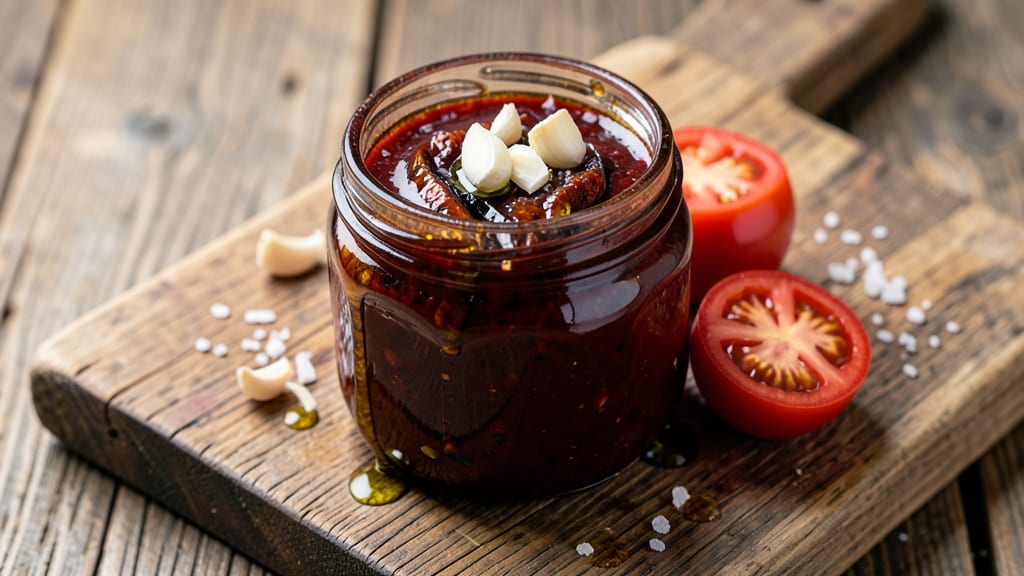
This American hot sauce recipe brings bold, smoky chipotle heat with bright fresh tomato zing—perfect for adding depth to tacos, wings, or even Bloody Marys.
The secret lies in balancing roasted chipotle peppers with vinegar and garlic for a sauce that’s complex yet approachable, with a heat level you can easily adjust. I’ve tested this recipe countless times, and it never fails to deliver that perfect harmony of smoky, tangy, and spicy flavors.
What makes this sauce stand out is the combination of roasted chipotle peppers for smokiness and fresh tomatoes for acidity, all blended into a smooth, velvety consistency. The process is straightforward: simmer the peppers and aromatics, blend with vinegar and garlic, then strain for a silky texture.
No fancy equipment needed—just a blender and a fine-mesh strainer. The result is a versatile sauce that works as a dipping sauce, marinade, or finishing touch.
The sauce keeps beautifully in the refrigerator for up to a month, allowing you to make a big batch and enjoy it all season long. Whether you prefer a mild kick or extra heat, you can control the spice level by adjusting the number of chipotle peppers.
The smoky depth pairs wonderfully with grilled meats, while the tangy brightness cuts through rich dishes like mac and cheese or loaded baked potatoes.
Once you taste this homemade hot sauce, you’ll never go back to store-bought versions again. The fresh, vibrant flavors and customizable heat make it a must-have in your kitchen. Let’s get started on creating your own batch—your taste buds will thank you.
Ingredients for american hot sauce
Nine simple ingredients transform into a bold, smoky hot sauce that elevates everything from tacos to Bloody Marys.
| Ingredient | Amount | Notes |
|---|---|---|
| Roasted Chipotle Peppers in Adobo Sauce 🌶️ | 4 whole | Canned, with some adobo sauce reserved |
| Fresh Tomatoes 🍅 | 2 cups | Ripe, diced (Roma or vine-ripened) |
| White Vinegar 💧 | ½ cup | White or apple cider vinegar |
| Garlic Cloves 🧄 | 3 cloves | Fresh, peeled and roughly chopped |
| Extra-Virgin Olive Oil 🫒 | ¼ cup | High-quality, fruity variety |
| Brown Sugar 🍯 | 1 tbsp | Light or dark, for balance |
| Salt 🧂 | 1 tsp | Kosher or sea salt |
| Black Peppercorns 🌶️ | ½ tsp | Freshly cracked or ground |
| Cayenne Pepper 🔥 | ½ tsp | Adjust for desired heat level |
The chipotle peppers are the heart of this sauce—look for canned roasted peppers in adobo sauce from brands like Goya or Heritage. They’re usually sold in cans with a few peppers and some sauce; save a splash of that adobo for extra depth. Fresh tomatoes bring the tangy brightness, so pick ripe, juicy ones—Roma tomatoes work best if you want less seediness. I always grab a few extra because they’re the star here. For the vinegar, white or apple cider vinegar both work, but white vinegar gives a sharper tang that cuts through the smokiness beautifully.
No roasted chipotle peppers? Dried chipotle peppers in adobo are a great swap—just soak them in hot water for 15 minutes to soften. Short on fresh tomatoes? Canned diced tomatoes work in a pinch, but drain them well to avoid watering down the sauce. The brown sugar balances the heat, but honey or maple syrup can stand in if you prefer. Want less heat? Skip the cayenne entirely or use red pepper flakes instead. The garlic and olive oil are non-negotiable though—they’re what bring everything together. If you’re feeling fancy, toast the garlic in the olive oil first for an extra nutty depth.
This sauce keeps for up to a month in the fridge, so make a big batch and enjoy it all season long. Store it in a clean glass jar with a tight seal. If you make more than you can use, it freezes beautifully for up to 6 months. I always double the recipe because it disappears fast—perfect for gifting or stashing in your pantry for quick flavor boosts. The sauce thickens as it sits, so give it a quick stir before using. And trust me, the first time you drizzle this over wings or tacos, you’ll be hooked.
Why You'll Love This Recipe
- No-Fuss Blend: I swear by this recipe because it’s literally four ingredients plus heat. No peeling, no seed-spitting, no fancy techniques—just toss everything into a blender, pulse, and strain. That’s it. Even my college-dorm self could’ve made it.
- Smoky Depth Magic: The chipotles in adobo give this sauce a warm, lingering kick that’s not just heat—it’s flavor. That smoky garlic note? It’s like someone’s been slow-roasting peppers all day, but you get it in 10 minutes. (Yes, even on a Tuesday night.)
- Pantry-to-Table Flex: This sauce doesn’t just belong on tacos. Drizzle it over grilled chicken, mix it into mayo for sandwiches, or even toss it with roasted veggies. I’ve used it to wake up jarred marinara, and suddenly? Homemade pasta sauce. Boom.
- Lasts Like Crazy: A single batch stretches for weeks in my fridge, and I’m not kidding. The vinegar keeps it from spoiling, and the acidity actually improves with time. Freeze extras in ice cube trays for single-use portions—because sometimes you just need one perfect drop.
Step-by-step instructions for smoky chipotle hot sauce
Here's how to blend deep smoky heat with bright tomato freshness for a balanced, restaurant-quality hot sauce.
Blister and Char the Peppers
Remove the 4 whole roasted chipotle peppers from their adobo sauce and place them directly over a gas burner flame (or under a broiler) for 3-5 minutes until their skins blister and blacken in spots. This step intensifies the smoky flavor and adds a subtle charred depth that's essential for authentic heat.
Watch carefully—they should develop dark patches but not burn completely. As they char, you'll smell that unmistakable smoky aroma building. Immediately transfer the peppers to a heatproof bowl and cover with plastic wrap to steam for 10 minutes. This softens their skins so they'll blend smoothly into the sauce later.
Build the Sauce Base
In a heavy-bottomed saucepan, combine the 2 cups diced fresh tomatoes, 0.5 cup white vinegar, 3 cloves roughly chopped garlic, and 0.25 cup extra-virgin olive oil. Bring to a gentle simmer over medium heat and cook uncovered for 10-12 minutes until the tomatoes break down and the mixture reduces slightly, releasing their natural juices.
Stir occasionally and scrape the bottom of the pan to release any browned bits—they're packed with flavor. You'll notice the mixture darkening slightly as it cooks, which indicates the flavors are melding together. This is where the bright acidity of the vinegar meets the sweetness of the tomatoes, creating the perfect balance for the heat to come.
Blend and Strain for Smoothness
Remove the saucepan from heat and let it cool for 5 minutes. Using an immersion blender, blend the mixture until completely smooth. If you don't have an immersion blender, carefully transfer the hot mixture to a countertop blender and blend until silky. The sauce should be completely free of any tomato skins or seeds.
Strain the blended sauce through a fine-mesh sieve into a clean bowl, pressing gently on the solids with a wooden spoon to extract every last drop of liquid. This step is crucial—it removes any fibrous texture that would make the final sauce gritty. You should have about 2 cups of smooth, vibrant sauce at this point, with a deep red-orange color.
Infuse with Heat and Sweetness
Return the strained sauce to the saucepan and stir in the 1 tablespoon brown sugar, 1 teaspoon salt, 0.5 teaspoon freshly cracked black peppercorns, and 0.5 teaspoon cayenne pepper. Add the steamed chipotle peppers (with their skins removed) and any reserved adobo sauce from the can.
Simmer the sauce gently for 15-20 minutes until it thickens slightly and coats the back of a spoon. Taste as you go—you want the heat to build gradually without overwhelming the bright tomato flavor. The sugar will help balance the acidity while enhancing the smoky depth from the chipotles. If the sauce becomes too thick, add 1-2 tablespoons water to reach your desired consistency.
Finish and Bottle
Remove from heat and let the sauce cool completely. Once cooled, transfer it to clean glass bottles or jars, leaving about ½-inch headspace at the top. Seal tightly and store in the refrigerator for up to 3 months or process in a water bath for long-term storage.
The sauce should have a deep, smoky aroma with bright tomato notes and a slow-building heat that lingers. Start with small amounts—this sauce packs serious flavor! Use it to spice up tacos, drizzle over grilled meats, or mix into mayo for sandwiches. The balance of sweet, smoky, and spicy makes it incredibly versatile.
Pro Tips For Making American Hot Sauce
- Blister the Garlic: Toss whole garlic cloves in olive oil, then roast them in a dry skillet over medium-high heat until edges turn golden and edges curl—about 5 minutes. I learned this the hard way: raw garlic tastes like medicine in hot sauce, but roasted garlic adds a deep, sweet complexity that makes the whole dish sing.
- Strain Twice: After simmering, strain the sauce through a fine-mesh sieve, then press the pulp with a wooden spoon for maximum yield. I used to skip this, but the second straining pulls out all the tiny seeds and skin bits that make cheap hot sauce gritty—your sauce will be smoother and more professional.
- Simmer Low and Slow: Reduce heat to a bare simmer after the initial boil, and let it cook uncovered for at least 20 minutes. Rushing this step leaves the tomatoes watery and the flavors underdeveloped—I’ve made hot sauce taste like sad salsa when I didn’t let it reduce properly.
- Toast the Tomatoes First: Char the tomatoes directly over a gas flame (or under a broiler) for 2-3 minutes per side before blending. The smoky depth cuts through the vinegar’s sharpness and makes the sauce taste like it’s been simmering for hours—yes, even if you’re in a hurry.
Essential equipment for american hot sauce
Blender Essentials
An immersion blender is my go-to for this sauce—it keeps everything contained and makes blending the hot tomato mixture a breeze. I use the Ninja BN601 Countertop Immersion Blender because it handles thick mixtures like this one without overheating.
If you prefer a countertop model, the Hamilton Beach 58041 is a reliable budget option that still delivers smooth results. For the straining step, a fine-mesh sieve like the OXO Good Grips with a sturdy frame prevents tearing and ensures maximum liquid extraction. 💫
Heat Control Tools
A heavy-bottomed saucepan is non-negotiable for even heat distribution—my All-Clad Stainless Steel Saucepan handles the simmering without hot spots. For the charring step, I recommend using a gas burner (not electric) for precise flame control. If you're broiling, position the peppers on the top rack for direct heat.
A kitchen torch works too, but keep it moving constantly to avoid burning. For temperature monitoring, a thermometer isn't strictly necessary, but I like the Thermoworks Thermapen for confidence when simmering.
Storage Solutions
Glass is your best friend for storing hot sauce—it preserves flavor and prevents absorption. I use Ball Mason Jars with airtight lids for both refrigeration and canning. For smaller portions, amber glass bottles like those from Kirkland Signature block light and maintain freshness.
Label everything with the date and heat level (mild/medium/hot) so you can track batches. A vacuum sealer extends shelf life to 6 months in the freezer, but standard airtight containers work fine for up to 3 months in the fridge.
Optional Upgrades
A food mill like the OXO Good Grips makes the straining process even easier, especially if you're making large batches. For extra smokiness, I sometimes add 1 tsp smoked paprika or ½ tsp liquid smoke during the simmering phase.
A pH strip tester helps ensure your sauce is safe for long-term storage—aim for a pH below 4.6. For heat lovers, a mini food processor with a fine blade gives you more control when blending the peppers with the sauce base. 🔥
Nutrition facts
Frequently asked questions about American hot sauce
Can I adjust the heat level in this recipe?
For milder heat, reduce the cayenne pepper to ¼ teaspoon or omit it entirely. For extra spice, add ½ teaspoon more cayenne or blend in 1-2 extra chipotle peppers. You can also add 1 teaspoon of red pepper flakes during the final simmer for additional kick. Always taste as you go!
What if I don't have fresh tomatoes?
No problem! Use 2 cups canned diced tomatoes (drained well) instead of fresh. For deeper flavor, add 1 teaspoon tomato paste to the simmering mixture. The sauce will still turn out vibrant, though fresh tomatoes give the brightest acidity.
How do I prevent my hot sauce from getting too thin?
Simmer the sauce uncovered for 15-20 minutes to reduce liquid naturally. If it's still too thin, simmer 5 more minutes or add 1 teaspoon cornstarch mixed with 1 tablespoon water and stir until thickened. For a smoother texture, strain through a cheesecloth-lined sieve after blending.
Can I make this sauce without vinegar?
Vinegar is key for acidity and preservation, but you can substitute lemon juice or apple cider vinegar in equal amounts. For a tangier profile, use ½ cup lemon juice plus ¼ cup water. Without acid, the sauce won't keep as long—refrigerate within 1 week and avoid canning.
What's the best way to use up extra hot sauce?
Freeze in ice cube trays for easy single-use portions—perfect for Bloody Marys or marinades! Mix into mayo for spicy sandwich spreads, or drizzle over grilled meats, tacos, or fries. For a smoky twist, blend into homemade ketchup or use as a braising liquid for beans. The possibilities are endless!