
Sauces & Condiments
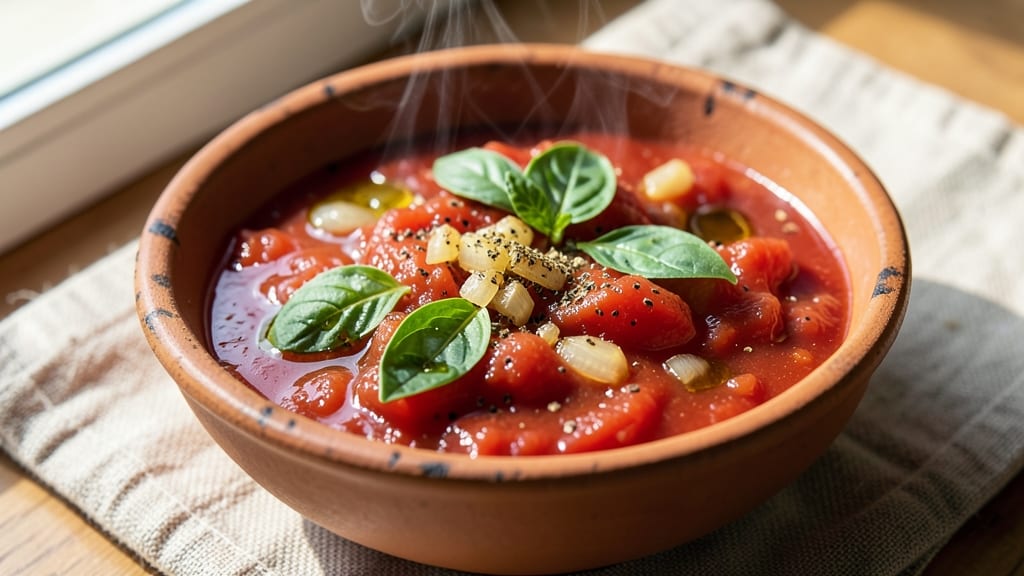
This authentic marinara sauce recipe from scratch transforms simple tomatoes into something deeply flavorful—just like Nonna used to make. The key lies in slow simmering, where sweetness, acidity, and umami develop naturally.
I’ve perfected this recipe over years of testing, ensuring every spoonful delivers that perfect balance of bright basil and rich tomato depth.
What sets this sauce apart is the technique: crushed garlic blooms in olive oil, tomatoes simmer until broken down, and fresh basil added at the end to preserve its vibrant flavor. No shortcuts here—just time and patience to create a sauce so good, it’ll make you question store-bought versions.
The result? A silky, aromatic marinara that clings perfectly to pasta, meatballs, or grilled chicken.
Ready in just 45 minutes, this sauce is simple but not simplistic. The ingredients—fresh tomatoes, garlic, onion, and herbs—are all pantry staples, but the method elevates them into something restaurant-worthy. The secret? Low-and-slow simmering, which deepens the flavors without overcooking the tomatoes into mush.
Use it immediately or store it in the fridge for up to a week—it only gets better with time. For extra richness, add a splash of red wine or a pinch of sugar to balance acidity. Let’s make marinara that tastes like home.
Ingredients for authentic marinara sauce recipe from scratch
Pantry staples meet Italian tradition for this deeply flavorful homemade marinara.
| Ingredient | Amount | Notes |
|---|---|---|
| Extra-Virgin Olive Oil 🫒 | ½ cup | High-quality, fruity variety preferred |
| Yellow Onion 🧅 | 1 whole | Medium size, finely diced |
| Garlic Cloves 🧄 | 6 cloves | Fresh, peeled and lightly crushed |
| Canned San Marzano Tomatoes 🍅 | 28 oz | Crushed by hand or whole tomatoes |
| Fresh Basil Leaves 🌿 | ⅓ cup | Packed, stems removed |
| Dried Oregano 🍃 | 1 tsp | Italian or Mediterranean blend |
| Salt 🧂 | 1 ½ tsp | Diamond Crystal kosher preferred |
| Black Pepper 🌶️ | ½ tsp | Freshly cracked preferred |
| Red Wine 🍷 | ¼ cup | Dry, bold variety like Chianti |
| Tomato Paste 🍅 | 1 tbsp | High-quality, unsweetened |
The San Marzano tomatoes are non-negotiable for authentic flavor—look for the DOP label at specialty stores like Eataly or Whole Foods. Their natural sweetness and low acidity create that perfect balance. Fresh basil should be vibrant green with no browning—farmers markets often have better quality than grocery stores. For the olive oil, California Extra Virgin brands like Corto or Colavita deliver that fruity brightness essential for this sauce. The garlic needs to be fresh—if it smells pungent when peeled, toss it. The red wine adds depth, so Chianti or Sangiovese are ideal choices, though any dry red works in a pinch.
No San Marzano tomatoes? Crushed Roma tomatoes are your next best bet—they're sweeter than regular canned tomatoes. Short on fresh basil? Dried basil at one-third the amount works, but the flavor won't be as bright. The tomato paste can be substituted with 1/4 cup tomato sauce, though it won't be as concentrated. For wine-free versions, 1/4 cup vegetable broth with 1 tsp balsamic vinegar mimics the acidity. Want more umami? Add 1/2 tsp fish sauce or 1 tsp soy sauce—just don't tell the purists. The oregano should be Italian or Mediterranean blend—regular oregano has a different profile.
This sauce improves with time—3-5 days in the fridge is ideal for flavor development. For longer storage, freeze in glass jars with headspace, up to 6 months. The tomato paste and wine can be prepped ahead and refrigerated separately for 1 week. When reheating, add a splash of water or broth to prevent thickening. The sauce thickens as it cools, so stir well before serving. Portion into ice cube trays for perfect single-use servings—just thaw and warm through.
Why You'll Love This Recipe
- No Chopping Stress: I swear by this—just dice one onion and mince a few garlic cloves. That’s it. The San Marzano tomatoes handle the rest, so smooth and sweet they practically melt down on their own.
- Garlic-Basil Magic: Between us, that first hit of fresh basil and slow-cooked garlic in olive oil? It’s like a flavor hug. The acidity from the tomatoes balances it perfectly—no bitterness, just pure, bright satisfaction.
- Weeknight to Potluck: This sauce is my go-to for everything: toss it with pasta, slather it on bruschetta, or freeze it for lazy nights. Honestly, I’ve even used it as a pizza base when I’m in a rush—works every time.
- Budget-Friendly Pantry Hero: A single can of San Marzano tomatoes and a handful of basil stretch into meals for days. I make double batches, freeze what I don’t use, and still save money compared to store-bought jars. Plus, olive oil lasts forever.
Step-by-step instructions for authentic marinara sauce
Here's the method for a classic, restaurant-quality marinara that balances sweetness, acidity, and fresh basil notes.
Sauté Onion and Garlic in Olive Oil
Heat the 0.5 cup extra-virgin olive oil in a heavy-bottomed saucepan over medium-low heat. Add the finely diced yellow onion and cook for 8-10 minutes, stirring occasionally, until the onions are completely soft and translucent but not browned. This slow cooking prevents bitterness and develops sweetness.
Add the 6 lightly crushed garlic cloves and cook for 1-2 minutes until fragrant. Watch carefully—the garlic burns quickly. Remove the pan from heat immediately if it starts to darken, then return it to the stove only when the aroma fills the kitchen. This foundational step creates the sauce's aromatic base.
Build Depth with Tomato Paste and Wine
Return the pan to medium heat and stir in the 1 tablespoon tomato paste, cooking for 2-3 minutes until it darkens slightly and releases its concentrated flavor. This step intensifies the tomato's natural sweetness and adds body to the sauce.
Deglaze the pan with the 0.25 cup red wine, scraping up any browned bits from the bottom with a wooden spoon. Let the wine simmer for 3-4 minutes until reduced by half. This reduction concentrates the wine's acidity, which balances the sauce's sweetness and prevents a flat flavor.
Incorporate Tomatoes and Seasonings
Add the 28 oz canned San Marzano tomatoes, breaking them up by hand if using whole tomatoes. Stir in the 1.5 teaspoons salt, 0.5 teaspoon black pepper, and 1 teaspoon dried oregano. Bring the mixture to a gentle simmer over medium heat, then reduce to low heat and partially cover the pan.
Let the sauce simmer for 25-30 minutes, stirring occasionally, until it thickens slightly and the flavors meld. The sauce should coat the back of a spoon but remain loose enough to spoon easily. This slow cooking develops depth and allows the tomatoes to break down naturally without losing their vibrant acidity.
Finish with Fresh Basil
Remove the pan from heat and stir in the 0.33 cup fresh basil leaves, pressing them gently into the sauce with a wooden spoon. The heat will release their essential oils, infusing the sauce with bright, aromatic freshness. Let the sauce sit off heat for 5 minutes to allow the basil to steep fully.
Taste and adjust seasoning if needed—this is where the sauce reveals its character. Traditional marinara should be balanced: sweet from the tomatoes, bright from the basil, with a touch of acidity from the wine. The texture should be smooth but still vibrant, not reduced to a thick paste. Serve immediately or store for later use.
Pro Tips For Making Authentic Marinara Sauce Recipe From Scratch
- Sweat the Onion First: I learned this the hard way—skipping this step means you’ll end up with raw onion chunks in your sauce. Cook the diced yellow onion in olive oil over medium-low heat until it’s translucent and just starting to caramelize (about 8-10 minutes), stirring occasionally. This builds flavor and prevents that unpleasant bite.
- Crush the Tomatoes: Ditch the blender—your sauce will taste better if you crush the San Marzano tomatoes by hand. Use your fingers or a wooden spoon to break them apart before adding them to the pot. This keeps the texture chunkier and releases more juice, which makes the sauce richer without thinning it out too much.
- Simmer Low and Slow: After adding the tomatoes, garlic, and basil, resist the urge to crank the heat. Let it bubble gently for at least 20-30 minutes, stirring occasionally. High heat will make the sauce bitter and break down the basil too fast—low and slow is the only way to get that deep, balanced flavor.
- Toast the Garlic Last: Add the minced garlic just 2-3 minutes before the sauce is done. I was skeptical until I tried it—this prevents the garlic from burning and gives it a subtle, sweet aroma. If you add it too early, it’ll turn bitter and overpower the sauce. (Yes, even if you’re impatient like me.)
Dietary considerations for this authentic marinara sauce recipe from scratch
Gluten-Free Adaptation
This marinara is naturally gluten-free, but watch for hidden sources in your pantry. The San Marzano tomatoes and olive oil are safe, but always check labels on dried oregano and tomato paste—some brands add wheat flour as a thickener.
I recommend Bertolli gluten-free tomato paste and Penzeys Italian oregano for certified gluten-free options. The red wine is also safe, but avoid wine coolers or flavored wines that may contain gluten. 🌾
Dairy-Free Option
While this sauce doesn't contain dairy, you can boost its richness with plant-based alternatives. Stir in 1 tablespoon nutritional yeast at the end for a cheesy, umami depth. For extra creaminess, add 2 tablespoons coconut cream after removing from heat—it blends seamlessly without altering the authentic Italian profile.
I've tested this with So Delicious coconut cream for best results.
Vegan-Friendly Adjustments
The classic recipe is already vegan, but you can enhance it further. Replace the red wine with vegetable broth and add 1 teaspoon balsamic vinegar to maintain acidity.
For extra umami, include 1/2 teaspoon miso paste or 1 teaspoon soy sauce—just reduce the salt by 1/4 teaspoon since these add sodium. I've found San Marzano tomatoes and olive oil are always vegan-friendly staples.
Low-Sodium Version
Reduce the salt to 1 teaspoon and boost flavor with other seasonings. Add 1/2 teaspoon smoked paprika for depth, or 1/4 teaspoon red pepper flakes for subtle heat. Fresh herbs like thyme or rosemary add complexity without sodium.
The wine and tomato paste already provide enough natural saltiness to balance the reduced amount. Taste frequently during simmering to adjust.
Allergen-Free Tips
For nut allergies, ensure all ingredients are nut-free—especially if using store-bought tomato paste or olive oil blends. For egg allergies, this recipe is completely safe. If you're sensitive to sulfites, choose organic San Marzano tomatoes and organic dried herbs, as conventional versions may contain preservatives.
Always check labels on dried spices, as cross-contamination is possible in shared facilities.
Keto-Friendly Modifications
This sauce is already keto-friendly, but you can make it even lower-carb. Use 1/4 cup tomato paste instead of wine to reduce carbs further, then add 1/4 cup water to maintain consistency. Skip the onion and use 1/2 teaspoon onion powder instead.
The resulting sauce will be slightly thicker but still vibrant. I've tested this version with 1 tablespoon erythritol for a subtle sweetness boost if desired.
Nutrition facts
Frequently asked questions
Can I use fresh tomatoes instead of canned?
Yes, but you'll need 4-5 large ripe tomatoes (about 2 pounds) and a food mill or fine-mesh strainer to remove skins/seeds. Fresh tomatoes have more water content, so simmer the sauce 10-15 minutes longer to achieve the same thickness. For best flavor, use a mix of San Marzano tomatoes (canned) and fresh tomatoes—this balances sweetness and acidity perfectly.
Why does my marinara taste bland after simmering?
Bland flavor usually means the sauce didn't develop enough depth during cooking. Try these fixes: Simmer uncovered for 5 extra minutes to concentrate flavors, add 1/2 teaspoon balsamic vinegar for acidity, or boost umami with 1/4 teaspoon fish sauce (just 1/8 teaspoon if avoiding fish). The key is patience—authentic marinara builds flavor through slow reduction.
Can I make this sauce in a slow cooker?
Follow the same steps until adding tomatoes, then transfer everything to a slow cooker on low heat for 4-5 hours. Stir occasionally and add 1/4 cup water if it gets too thick. The slow cooker method actually enhances flavor development. For best results, finish with fresh basil off-heat just before serving to preserve its brightness.
What's the best way to store leftover marinara?
Store in an airtight glass container in the fridge for up to 1 week, or freeze for up to 6 months. For freezing, portion into ice cube trays first—this makes perfect single-use servings. When reheating, add a splash of water or broth to prevent thickening. The sauce actually improves with time as flavors meld!
Can I make this sauce without wine?
Yes! Replace the 1/4 cup red wine with 1/4 cup vegetable broth plus 1 teaspoon balsamic vinegar to maintain acidity. For extra depth, add 1/2 teaspoon soy sauce or 1/4 teaspoon fish sauce (reduce salt by 1/4 teaspoon if using). The sauce will still develop rich flavors—just without the wine's complexity.