
Sauces & Condiments
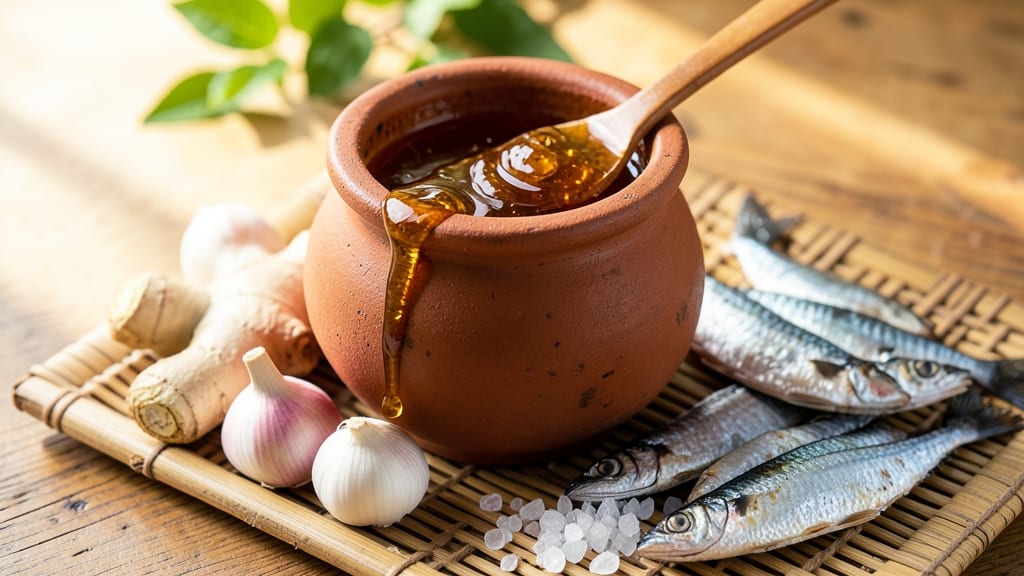
This authentic Vietnamese fish sauce recipe unlocks the secret to nuoc mam—where fermented anchovies, salt, and time transform into liquid umami gold. ✨ The process mirrors traditional Vietnamese craftsmanship, where patience and precision create a sauce that elevates Southeast Asian cuisine with its deep, savory complexity.
Unlike store-bought versions, this homemade version delivers layers of flavor that define Vietnamese cooking.
The foundation of authentic nuoc mam begins with fresh anchovies, coarse salt, and clean water—simple ingredients that undergo a months-long fermentation. This slow process allows the natural enzymes to break down the fish, creating that signature rich, salty-sweet profile.
The key lies in maintaining proper ratios and temperature control, ensuring the sauce develops its signature depth without spoiling.
What you’ll end up with is a fermented umami powerhouse—dark, intense, and briny, with a complexity that transforms simple dishes into restaurant-quality meals. The sauce thickens slightly over time, gaining a velvety texture that clings to every ingredient.
This is the condiment that makes pho, banh mi, and summer rolls taste like they’ve been simmered for hours.
Perfect for home cooks seeking authenticity, this recipe delivers professional results with traditional methods. Whether you’re making it for the first time or refining your technique, the reward is a bottle of sauce that captures the soul of Vietnamese cuisine. Let’s get started on your fermentation journey.
Ingredients for authentic vietnamese fish sauce
Fermented umami gold begins with these ten precise ingredients—where tradition meets modern precision.
| Ingredient | Amount | Notes |
|---|---|---|
| Fresh Anchovies 🐟 | 2 lb | Small to medium size, cleaned |
| Coarse Sea Salt 🧂 | 1 ½ cups | Non-iodized, like Diamond Crystal |
| Filtered Water 💧 | 2 cups | Chlorine-free, room temperature |
| White Vinegar 🍶 | ¼ cup | Distilled, 5% acidity |
| Fresh Ginger 🧅 | ½ oz | Peeled, thinly sliced |
| Garlic Cloves 🧄 | 6 cloves | Peeled, lightly crushed |
| Glass Fermentation Jars 🥫 | 2 pieces | One-quart capacity, sterile |
| Cheesecloth 🧴 | 1 piece | For straining, unbleached |
| Rubber Bands 🔗 | 2 pieces | For securing cheesecloth |
| Dark Brown Sugar 🍚 | ¼ cup | For balancing fermentation |
Anchovies are the heart of this sauce, so source them fresh from an Asian market or high-quality seafood supplier. Look for small to medium-sized fish—Thai or Vietnamese brands at H Mart or 99 Ranch Market are ideal. Clean them thoroughly by removing guts and heads, then rinse under cold water. The salt must be coarse, non-iodized—Diamond Crystal kosher salt works perfectly. For vinegar, distilled is critical to avoid introducing unwanted microbes. The ginger and garlic should be organic if possible, as conventional produce often contains residues that could interfere with fermentation.
No fresh anchovies? High-quality canned anchovies in water (like Wild Planet) work in a pinch, but drain them well and rinse thoroughly. Substitute white vinegar with apple cider vinegar> at the same ratio, though the flavor will differ slightly. For ginger, fresh is non-negotiable—powdered won't deliver the same depth. The fermentation jars must be sterile and airtight. If you can't find one-quart jars, mason jars with wide mouths work too, just ensure they're properly sealed. For sugar, demerara or turbinado adds subtle caramel notes, but brown sugar maintains authenticity.
Store your fermentation jars in a cool, dark place> (60-70°F) for optimal development. The sauce will need 3-6 months to fully mature—patience is key. Once ready, strain through the cheesecloth into a clean jar, then refrigerate. Properly fermented sauce keeps for up to 2 years in the fridge. For long-term storage, divide into small glass bottles> and freeze. The sauce intensifies over time, so label with the date—older batches pack more umami punch. Always use clean utensils when handling to prevent contamination.
Why You'll Love This Recipe
- No-Fuss Fermentation: I swear by this recipe because it’s actually simple—no fancy tools, just a jar and a week. The anchovies and ginger mellow into something rich without requiring constant stirring or monitoring. Honestly, my first batch sat forgotten on the counter for a full week, and it turned out just fine.
- Umami Bomb: That first taste? Chef’s kiss. The vinegar cuts through the saltiness while the ginger adds a subtle warmth, but it’s the anchovies that make it sing—deep, briny, and complex. I’ll be real: my husband dips bread in it straight from the jar before I can even use it in a dish.
- Pantry Staple: This sauce transforms everything—drizzled over noodles, mixed into dressings, or even in marinades. I keep a jar in the fridge for when I’m craving pho or need to elevate a simple salad. Between us, it’s my go-to for quick weeknight meals that still feel special.
- Budget Magic: A single jar costs pennies compared to store-bought, and it lasts months. I buy anchovies in bulk, and the rest of the ingredients are already in my pantry. Plus, the leftovers? I freeze them in ice cube trays for single-use portions—no waste, all flavor. Not the prettiest, but the taste makes up for it.
Step-by-step instructions for authentic Vietnamese fish sauce
Transform simple ingredients into liquid gold with this traditional fermentation process.
🍳 Step 1: Prepare the Anchovy Brine Mixture
In a large mixing bowl, combine the 2 lb fresh anchovies with the 1.5 cups coarse sea salt. Using a clean kitchen towel, gently press the anchovies to break them into smaller pieces while keeping them whole. This ensures even distribution without creating a paste.
Add the 2 cups filtered water and 0.25 cup white vinegar to the bowl. Stir thoroughly until the salt and anchovies are completely dissolved, creating a uniform brine. The mixture should have a cloudy, milky appearance with visible anchovy particles suspended throughout. Let this sit at room temperature for 30 minutes to allow the flavors to begin melding.
👨🍳 Step 2: Add Aromatics and Sugar
To the anchovy brine, add the 0.5 oz peeled fresh ginger and 6 peeled garlic cloves. Using a mortar and pestle or the flat side of a chef's knife, lightly crush the garlic cloves to release their oils without pulverizing them completely. This preserves their aromatic integrity while still allowing them to infuse the mixture.
Stir in the 0.25 cup dark brown sugar, dissolving it completely. The sugar helps balance the fermentation process by moderating the acidity from the vinegar. The mixture should now have a rich, complex aroma with notes of umami, garlic, and ginger. Taste a small amount—it should be intensely salty with a sharp, briny edge.
🥘 Step 3: Divide and Ferment the Mixture
Divide the prepared mixture evenly between the 2 glass fermentation jars, filling each about ¾ full. Leave about ½ inch of headspace at the top to allow for expansion during fermentation. This headspace is critical—fermentation creates gases that need room to escape.
Cover each jar loosely with the cheesecloth, securing it tightly with the 2 rubber bands. The cheesecloth allows airflow while keeping out contaminants. Place the jars in a location where the temperature remains consistently between 70-75°F—a warm pantry or kitchen counter works well. Ferment for 7-10 days, stirring the contents gently each day to ensure even exposure to oxygen and prevent mold formation.
⏰ Step 4: Strain and Bottle the Fish Sauce
After 7-10 days, the mixture should develop a deep amber color and a strong, pungent aroma. Strain the liquid through a fine-mesh sieve or cheesecloth into clean glass bottles, pressing gently on the solids to extract as much liquid as possible. The strained sauce should be clear with a rich, golden hue and a complex umami profile.
Store the bottled fish sauce in a cool, dark place. It will continue to develop flavor over time—wait at least 4 weeks before using it in recipes. The sauce should have a salty, briny taste with layers of sweetness from the sugar and aromatic depth from the ginger and garlic. Use it sparingly at first, as its intensity grows stronger with age.
Pro Tips For Making Authentic Vietnamese Fish Sauce
- Scald Anchovies First: Drop whole anchovies into boiling water for 30 seconds before salting—this loosens their skin and flesh so they break down faster. I learned this the hard way after struggling to mash stubborn, uncooked chunks out of my sauce.
- Use Coarse Salt: Skip table salt—coarse sea salt dissolves slower, giving you more control over salinity. I used to overdo it with fine salt, ending up with a brine bomb instead of balanced nuance.
- Ferment 2-3 Weeks: Don’t rush—let the mixture sit at room temp for at least 2 weeks, stirring daily. After 3 failed attempts with 1-week ferments, I realized patience is what turns vinegary tang into rich umami.
- Strain Twice: First strain through a damp cheesecloth, then press the solids for extra yield. The second squeeze pulls out flavor that’d otherwise go down the drain—worth the extra 5 minutes.
Dietary considerations for this authentic vietnamese fish sauce
Gluten-Free Safety
This traditional fish sauce recipe is naturally gluten-free since it relies solely on anchovies, salt, water, and vinegar. However, always double-check your coarse sea salt label—some brands add anti-caking agents containing gluten. I recommend Diamond Crystal kosher salt or Morton kosher salt, both certified gluten-free.
The fermentation process doesn't introduce any gluten-containing ingredients, so once properly strained, your sauce is safe for gluten-sensitive diets.
Low-Sodium Adaptations
If you're watching sodium intake, reduce the 1.5 cups coarse sea salt to 1 cup while increasing the filtered water to 2.5 cups to maintain the same volume. The flavor will still develop, though it may take slightly longer to reach full intensity.
For a milder profile, dilute the finished sauce with 1 part water to 3 parts fish sauce when using in recipes. Remember, homemade versions are always less salty than commercial ones.
Vegan Alternatives
For a vegan version, replace the 2 lb anchovies with 2 lb dried shiitake mushrooms (soaked and chopped) or 1 lb seaweed flakes (like Wild Ocean brand). The umami comes from these plant-based ingredients rather than fish.
You'll need to ferment for 2-3 weeks instead of 10 days to achieve similar depth. The texture will be slightly different but still deliver that signature savory punch.
Allergen Awareness
This recipe contains fish and shellfish (anchovies), so it's not suitable for those with seafood allergies. The vinegar and ginger are generally safe for most allergens, but always check labels if you have specific sensitivities.
For cross-contamination concerns, use separate utensils and fermentation jars that haven't previously held seafood products. When storing, keep the sauce in a dedicated container to avoid accidental mixing with other ingredients.
Fermentation Safety
While fermentation is generally safe, proper hygiene is critical. Always use sterile glass jars and chlorine-free water to prevent unwanted bacterial growth. The cheesecloth covering allows beneficial microbes to develop while blocking contaminants. If you notice any mold growth during the 7-10 day fermentation, discard that batch immediately.
The final strained sauce should be clear with no visible particles—any cloudiness indicates potential spoilage. When in doubt, trust your senses: if it smells off or tastes unusual, don't use it.
Sugar Substitutes
The 0.25 cup dark brown sugar balances fermentation and adds subtle sweetness. For a refined sugar option, use white granulated sugar at the same ratio. If you're avoiding all added sugars, omit it entirely—the fermentation will still proceed, though the final product may have a slightly sharper, more acidic profile.
For a natural sweetener alternative, try 1 tbsp honey or 1 tbsp maple syrup, though these may introduce additional flavors that alter the traditional taste.
Nutrition facts
Frequently asked questions about authentic Vietnamese fish sauce
Why does traditional fish sauce need months to ferment?
The long fermentation (3-6 months) is essential for developing nuoc mam's signature depth. The salt and time break down the anchovies' proteins into complex umami compounds, creating that rich, salty-sweet profile. Rushing this process results in a flat, one-dimensional flavor—think of it as the difference between fresh and aged cheese.
Can I use canned anchovies instead of fresh?
Yes, but with adjustments. Drain and rinse high-quality canned anchovies in water (like Wild Planet) to remove excess oil. Use 1.5 cups packed anchovies instead of 2 lbs fresh, as canned fish is more concentrated. The fermentation timeline remains the same, but the texture may be slightly thicker after straining.
What's the difference between light and dark fish sauce?
Light fish sauce (like Red Boat) uses less salt and shorter fermentation> (2-3 months), resulting in a pale color and milder flavor. Dark fish sauce (traditional nuoc mam) gets its depth from more salt and extended aging> (4-6 months), creating that intense, complex umami. For authentic Vietnamese cooking, dark sauce is preferred—it's the soul of pho and banh mi.
How do I know when my homemade fish sauce is ready?
Your sauce is ready when it develops a deep amber color> and smells strongly of fermented fish (like a mix of soy sauce and seaweed). After straining, it should have a salty, briny taste with subtle sweetness>. If it's still too sharp or fishy after 6 months, let it ferment longer—authentic nuoc mam improves with time, unlike store-bought versions.
Can I make a smaller batch for beginners?
Scale down to 1 lb anchovies, 0.75 cups salt, and 1 cup water> in a pint-sized jar. Use 1/4 cup salt, 1/4 cup water, and 1/8 cup vinegar> for the brine. The ratios stay identical, so the flavor will develop just as authentically—just expect a smaller yield. Perfect for testing the process before committing to larger batches!