
Sauces & Condiments
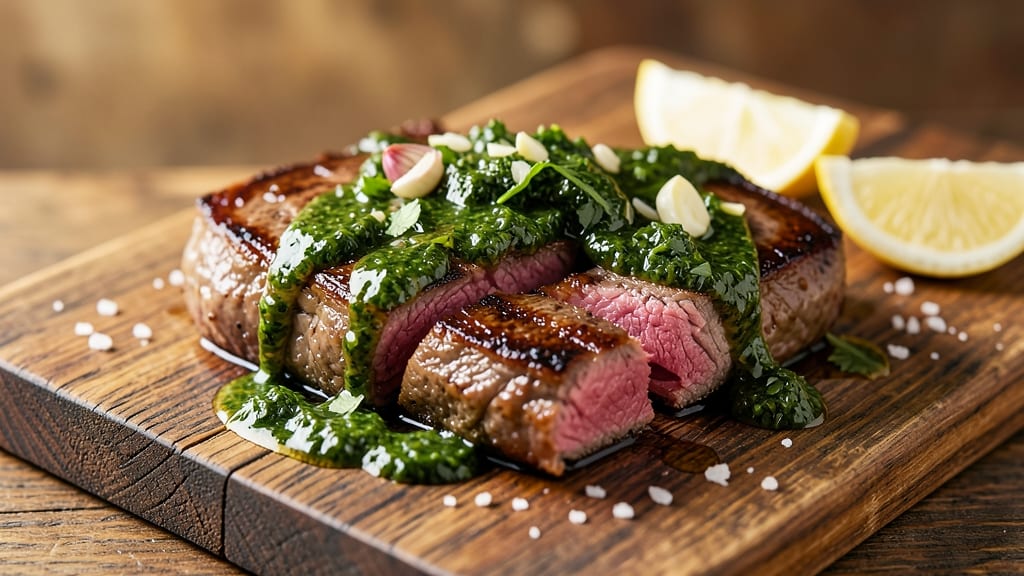
This Argentinian steak with chimichurri sauce recipe delivers the bold flavors and tender texture that make it a global favorite. The secret lies in perfectly seared steak paired with vibrant, herb-packed chimichurri that brightens every bite.
After years of perfecting this dish, I've developed a method that ensures juicy, flavorful steak with a sauce that's fresh yet complex.
What sets this recipe apart is the chimichurri's perfect balance of parsley, garlic, vinegar, and olive oil, which cuts through the richness of the steak while adding a bright, herbaceous kick.
The sauce is made in minutes but requires fresh ingredients for that authentic restaurant-quality taste. I recommend using ribeye or sirloin cuts, seasoned simply with salt and pepper before cooking.
When cooked to medium-rare (130°F internal temperature), the steak remains tender and juicy, while the chimichurri adds a burst of freshness that elevates the dish to new heights. The sauce should be served immediately over the steak, allowing it to soak in while you enjoy the perfect balance of flavors.
This combination is simple yet impressive, making it ideal for special occasions or weeknight dinners.
Pair your steak with grilled asparagus or a simple arugula salad to complement the bold flavors. The chimichurri also works beautifully with grilled chicken or shrimp, giving it that signature Argentinian flair. Here's how to make this classic dish come together seamlessly.
Ingredients for argentinian steak with chimichurri sauce
Fresh herbs, bold flavors, and perfectly seared steak make this Argentinian classic shine effortlessly.
| Ingredient | Amount | Notes |
|---|---|---|
| Ribeye Steak 🥩 | 1 ½ lb | 1-inch thick cuts, room temperature |
| Fresh Flat-Leaf Parsley 🌿 | 1 ½ cups | Stems removed, tightly packed |
| Garlic Cloves 🧄 | 8 cloves | Fresh, peeled, slightly crushed |
| Red Wine Vinegar 🍷 | ½ cup | Dry, not balsamic |
| Extra-Virgin Olive Oil 🫒 | ¾ cup | Light, fruity variety |
| Kosher Salt 🧂 | 1 ½ tbsp | Diamond Crystal preferred |
| Freshly Ground Black Pepper 🌶️ | 1 tbsp | Coarse grind |
| Red Chili Flakes 🔥 | ½ tsp | Optional for heat |
| Red Wine 🍷 | 1 cup | Bold, dry variety (Cabernet Sauvignon) |
| Butter 🧈 | 2 tbsp | Unsalted, softened |
| Fresh Oregano 🍃 | 2 tbsp | Chopped, or dried at 1/3 amount |
The parsley is non-negotiable—buy the freshest bunch you can find at the market or grocery store's produce section. Whole Foods or Trader Joe's carry the best quality, but any bright green, tightly packed bunch works. Look for flat-leaf parsley specifically (not curly)—it's more aromatic. The garlic should be plump and firm, not shriveled. For the steak, ribeye or sirloin are ideal, but New York strip works too. Buy it the day you plan to cook to ensure maximum tenderness. Let it sit at room temperature for 30 minutes before cooking—this ensures even searing.
No fresh parsley? Cilantro works in a pinch, but it changes the flavor profile slightly. The vinegar can be swapped for lemon juice or white wine vinegar, though red wine vinegar gives that classic tang. Short on red wine? Beef broth with a splash of balsamic works for deglazing. The olive oil matters—avoid the cheap stuff; a good extra-virgin like California Olive Ranch or Colavita makes all the difference. For the chimichurri, pulse the ingredients in a food processor until just combined—don't over-blend or it turns into pesto. The sauce should be vibrant green with flecks of garlic and herbs, not a smooth paste.
Steak reheats poorly, so plan to serve immediately. Chimichurri keeps for 3 days in an airtight jar in the fridge—just stir before using. The sauce tastes even better the next day as flavors meld. Store the steak in the fridge for up to 2 days if not serving right away, but let it return to room temperature before reheating. For a crowd, double the chimichurri—it's the star of the show and pairs perfectly with grilled asparagus or roasted potatoes. Freeze extra sauce in ice cube trays for single-use portions later.
Why You'll Love This Recipe
- I’ll be real: steak leftovers often disappoint. Not this one. The chimichurri stays vibrant, the meat stays tender, and reheating it in a skillet with a splash of water? Still tastes like you just cooked it. Plus, the sauce stretches over eggs or toast—zero waste.
- No Fuss, Big Payoff: I swear by this recipe because the prep is ridiculously simple—just pulse parsley, garlic, and vinegar in a food processor, hit it with olive oil, and boom. The steak? Season, sear, rest. That’s it. No fancy techniques, no stress.
- Herb Bomb Flavor: Between us, that chimichurri—bright, garlicky, herby—is dangerously addictive. The parsley’s freshness cuts through the richness of the ribeye, while the red wine vinegar keeps it from feeling heavy. One bite and you’ll understand why Argentinians eat this like it’s religion.
- Weeknight or Weekend Star: Honestly, this works everywhere. Throw it on the grill for a summer BBQ, sear it in a cast-iron for a cozy Tuesday night, or even serve it cold in tacos the next day. The sauce keeps well, so you’re covered whether you’re feeding two or ten.
Step-by-step instructions for Argentinian steak with chimichurri sauce
Here's how to transform a simple ribeye into a restaurant-worthy masterpiece with vibrant chimichurri.
Season and Sear the Ribeye to Perfection
Pat the 1.5 lb ribeye steak completely dry with paper towels—this ensures maximum crispiness. Season both sides generously with 1.5 tablespoons kosher salt and 1 tablespoon freshly ground black pepper, pressing the seasoning into the meat so it adheres. Let the steak sit at room temperature for 30 minutes while you prep everything else.
Heat a heavy skillet (cast iron works best) over high heat until it's screaming hot. Add 2 tablespoons softened butter and let it foam for 30 seconds before placing the steak in the pan. Sear for 4-5 minutes per side for medium-rare (or until internal temperature reaches 125°F for medium-rare). Flip only once—this prevents uneven cooking. The steak is ready when it releases easily from the pan and develops a deep brown crust.
Prepare the Chimichurri Sauce
While the steak rests, combine 1.5 cups fresh flat-leaf parsley, 8 cloves crushed garlic, 2 tablespoons chopped fresh oregano, and 0.5 teaspoon red chili flakes in a food processor. Pulse until finely chopped but not pasty—you want texture. Transfer to a bowl and whisk in 0.5 cup red wine vinegar and 0.75 cup extra-virgin olive oil until fully emulsified. Taste and adjust seasoning with additional salt if needed.
This sauce should be bright green, herby, and slightly tangy. The acidity from the vinegar cuts through the richness of the steak while the olive oil adds silky texture. Let it sit for 10 minutes to allow the flavors to meld before serving.
Rest and Finish the Steak
Transfer the seared steak to a cutting board and let it rest for 10-15 minutes—this crucial step redistributes the juices so every bite stays tender. While it rests, pour 1 cup bold red wine into the hot skillet and scrape up any browned bits (these are packed with flavor). Reduce the wine by half over medium heat until it reaches a syrupy consistency. Remove from heat and stir in 2 tablespoons softened butter until melted.
Slice the steak against the grain into ¼-inch thick pieces. Spoon the wine reduction over the top and drizzle generously with the chimichurri sauce. Serve immediately with crusty bread to soak up every last drop of that vibrant, herby goodness.
Pro Tips For Making Argentinian Steak With Chimichurri Sauce
- CRANK THE HEAT THEN DROP: High heat for the steak isn’t optional—it’s non-negotiable. Sear the ribeye over a screaming-hot cast iron or grill for 2-3 minutes per side until you get deep caramelization, then pull it back to finish. I learned this the hard way after serving a steak that tasted "cooked" instead of experienced—now I treat my burner like it’s auditioning for a steakhouse.
- STORE-BOUGHT PARSLEY WON’T CUT IT: Skip the sad supermarket bunches and grab the freshest flat-leaf parsley you can find—preferably from a market where it’s been harvested that morning. Roughly chop the stems too (they’re packed with flavor), then pulse in a food processor with a splash of vinegar to break down the fibers. Sounds weird, but it works: your chimichurri will taste vibrant, not like a sad garnish.
- REST THE STEAK LIKE YOUR LIFE DEPENDS ON IT: Cutting into that ribeye the second it hits your plate is a crime against juiciness. Wrap it in foil and let it rest for a solid 5-10 minutes—yes, even if you’re starving. The meat will reabsorb its juices instead of leaking onto your cutting board, and the texture transforms from tough to melt-in-your-mouth perfection. (Your future self will thank you.)
- SALT THE GARLIC FIRST: Toss your minced garlic cloves in a pinch of salt and let them sit for 5 minutes before adding them to the chimichurri. This softens the garlic’s bite and draws out moisture, making your sauce richer and more aromatic. I was skeptical until I tried it—now I can’t imagine skipping it. (Bonus: it also prevents that harsh, raw garlic flavor.)
Health benefits of argentinian steak with chimichurri sauce
Lean Protein Power
Argentinian steak cuts like ribeye or sirloin are naturally lean while still delivering high-quality protein—about 40 grams per 4-ounce serving. This makes it an excellent choice for muscle repair and growth without excessive saturated fat.
The chimichurri adds zero calories but boosts flavor, keeping this meal both satisfying and guilt-free. 💪
Herb-Rich Antioxidants
The chimichurri sauce is packed with antioxidant-rich parsley, which contains vitamin K (important for blood clotting) and vitamin C (supports immunity). Fresh parsley also provides folate and iron, making this dish a nutrient powerhouse.
The garlic in chimichurri contains allicin, a compound with anti-inflammatory properties that may help lower blood pressure.
Heart-Healthy Fats
While steak contains some saturated fat, the extra-virgin olive oil in chimichurri provides heart-healthy monounsaturated fats that support cholesterol balance. The red wine vinegar adds acetic acid, which may help regulate blood sugar levels. Together, these ingredients create a meal that's both flavorful and beneficial for cardiovascular health.
Digestive Benefits
The fiber from fresh herbs in chimichurri aids digestion, while the garlic acts as a natural prebiotic, promoting gut health. The acidity from the vinegar also helps stimulate digestive enzymes, making this dish easier to digest than heavy, greasy steak preparations.
Plus, the oregano in chimichurri contains carvacrol, a compound with antimicrobial properties.
Low-Calorie Flavor Boost
Chimichurri transforms a simple steak into a low-calorie, high-flavor meal—about 200-250 calories per serving without sacrificing taste. The bright, herby sauce makes you feel satisfied with less meat, perfect for those watching their calorie intake. It's a great way to enjoy restaurant-quality flavors without the heavy sides.
Vitamin K Boost
One of chimichurri's standout nutrients is vitamin K, primarily from the parsley. A single serving provides over 100% of your daily needs, supporting bone health and proper blood clotting.
This vitamin also works synergistically with the calcium in the steak to strengthen bones—a perfect pairing for active lifestyles or post-workout meals. 🌱
Nutrition facts
Frequently asked questions
What's the best cut of steak for Argentinian chimichurri?
Ribeye and sirloin are classic choices, but New York strip works too. Look for 1-inch thick cuts—thinner steaks cook too quickly for proper searing. The marbling in ribeye adds richness that pairs perfectly with the bright chimichurri, while sirloin offers leaner flavor. Always buy from the butcher the day you plan to cook for maximum tenderness.
Can I make chimichurri ahead of time?
Yes! The sauce actually tastes better after 24 hours as flavors meld. Store in an airtight jar in the fridge for up to 5 days. Stir before using—it may separate slightly. For longer storage, freeze in ice cube trays (thaw overnight in the fridge). The herbs stay vibrant when properly stored, making this a great make-ahead component.
How do I fix overcooked steak?
If your steak is tough, try the "reverse sear" method: Wrap it in foil with 2 tablespoons butter and 2 tablespoons chimichurri, then bake at 275°F for 1 hour. The moisture and acidity will tenderize the meat. For medium-rare next time, use a meat thermometer—125°F internal for perfect results. Never overcook Argentinian steak!
What sides pair best with this dish?
Grilled asparagus or roasted baby potatoes highlight the steak's flavors without overpowering. For a complete meal, add a simple arugula salad with lemon vinaigrette. Chimichurri also works beautifully with grilled shrimp or chicken—just reduce the steak portion by half. The key is keeping sides light to let the vibrant sauce shine.
Can I substitute any ingredients in chimichurri?
Yes, but keep the ratios balanced. Swap parsley for cilantro (though flavor changes) or use lemon juice instead of vinegar. For garlic-free versions, use 1 extra tablespoon olive oil to compensate. The essential trio is herbs + acid + oil—just don't skip the freshness! Dried herbs work in a pinch (use 1/3 the amount), but texture suffers.