
Sauces & Condiments
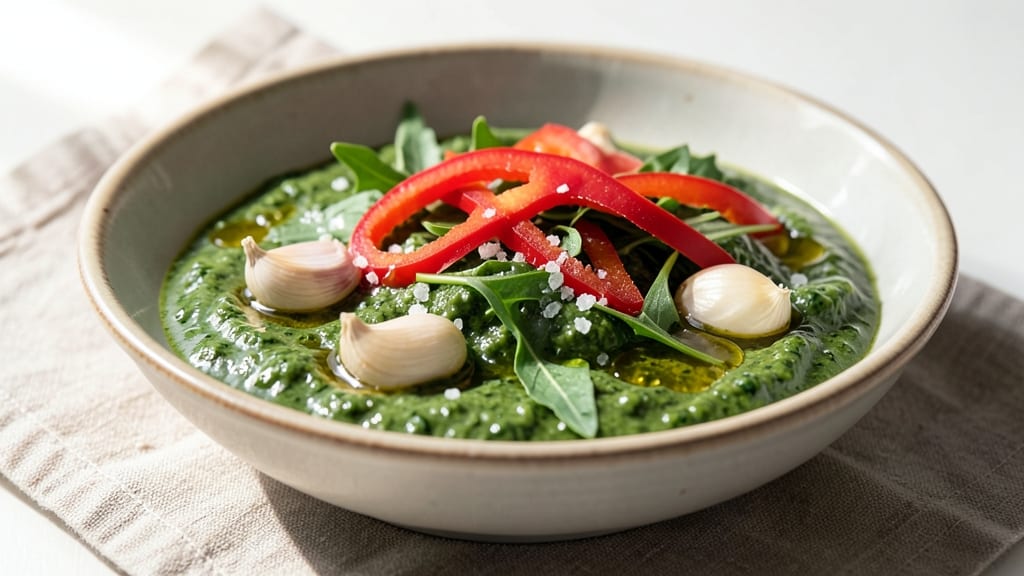
Arugula chimichurri sauce transforms grilled meats and fresh salads into vibrant, herb-packed masterpieces—without relying on parsley. This bright green sauce delivers the same zesty punch with a peppery bite from arugula, garlic, and red wine vinegar. The secret lies in blending fresh ingredients until just combined, preserving texture while releasing maximum flavor.
What sets this sauce apart is its versatility—it elevates everything from steak and chicken to sandwiches and roasted vegetables. The arugula adds a peppery kick that traditional chimichurri lacks, while the olive oil keeps it rich and clingy.
Unlike store-bought versions, this recipe stays fresh for up to a week when refrigerated, making it perfect for meal prep.
By the time you drizzle this sauce over your dish, you’ll taste layers of garlic, lemon, and arugula’s sharp freshness cutting through richness. The sauce’s vibrant color makes every bite visually appealing, too. It’s the kind of condiment that turns ordinary meals into restaurant-worthy experiences.
Ready in just 10 minutes, this sauce requires no cooking—just chopping and blending. Whether you’re grilling outdoors or prepping dinner indoors, it’s the perfect finishing touch. Let’s make it.
Ingredients for arugula chimichurri sauce
Nine vibrant ingredients blend into a peppery, herb-packed sauce that transforms any dish instantly.
| Ingredient | Amount | Notes |
|---|---|---|
| Fresh Arugula Leaves 🌿 | 2 cups | Packed, stems removed |
| Garlic Cloves 🧄 | 4 cloves | Peeled, roughly chopped |
| Extra-Virgin Olive Oil 🫒 | ½ cup | High-quality, fruity |
| Red Wine Vinegar 🍷 | ¼ cup | Dry, bold variety |
| Lemon Juice 🍋 | ⅛ cup | Freshly squeezed |
| Red Bell Pepper 🌶️ | ¼ cup | Seeded, finely chopped |
| Kosher Salt 🧂 | 1 tsp | Diamond Crystal preferred |
| Ground Black Pepper 🌶️ | ½ tsp | Freshly ground |
| Cayenne Pepper 🔥 | ¼ tsp | Adjust for heat |
The arugula is the star—buy the freshest bunch you can find, preferably from a farmers market where the leaves are still crisp. Whole Foods or local grocers usually carry the best quality, but even your regular supermarket should have decent arugula if it's bright green and not wilted. The red bell pepper adds natural sweetness and color, so grab one that's firm and vibrant. For the olive oil, look for Italian or Spanish brands like Bertolli or California Olive Ranch—they've got that rich, fruity flavor that makes this sauce sing. Don't skimp here; it's what keeps the sauce clingy and delicious.
No arugula? Baby spinach works in a pinch, but you'll lose that signature peppery bite. Short on red bell pepper? Roasted red pepper from a jar (like Mutti) adds depth without chopping. The red wine vinegar should be dry—Bartles & Jaymes or a good Italian brand from the grocery store works perfectly. For extra heat, add a pinch of crushed red pepper flakes instead of cayenne. And if you're out of kosher salt, sea salt in a 1:1 ratio will do just fine. The key is balancing the acidity from the vinegar and lemon with the richness of the olive oil—taste as you go!
This sauce keeps beautifully—up to 1 week in the fridge if you pour a thin layer of olive oil on top before sealing. It actually tastes better the next day as the flavors meld. For longer storage, freeze in ice cube trays and pop out what you need. I like to make a double batch because it's perfect for meal prep—drizzle over grilled veggies, toss with pasta, or use as a marinade. Just remember, the arugula wilts fast, so store it separately if you're not using it all at once. The sauce's vibrant color fades slightly over time, but the flavor stays bold.
Why You'll Love This Recipe
- No Pulse Required: I’ve made this sauce while my hands were still sticky from dinner—just toss everything into a food processor and pulse until it’s almost smooth. That’s it. No chopping, no straining, no waiting for herbs to wilt.
- Herb Bomb Brightness: The arugula’s peppery kick meets the garlic’s punch, then the lemon and vinegar cut through like a cool breeze. It’s fresh, vibrant, and way more exciting than store-bought—honestly, I’ve tasted the difference in seconds.
- Weeknight to Weekend: Drizzle it on grilled chicken for a Tuesday dinner, toss it with roasted veggies for a Friday date night, or slather it on toast with feta for a lazy Sunday. It’s the kind of sauce that doesn’t demand a special occasion—it just works.
- Lasts Longer Than You Think: Between us, I’ve had this sauce survive in my fridge for almost a week without losing its zip. Just store it in a jar, shake before using, and you’ve got a pantry hero that’s cheaper than buying pre-made and way more flavorful.
Step-by-step instructions for arugula chimichurri sauce
Here's how to craft vibrant, herb-forward chimichurri using arugula's peppery bite instead of parsley.
Prepare the Herb Base
In a food processor, combine the 2 cups fresh arugula leaves and 4 cloves roughly chopped garlic cloves. Pulse until the arugula is finely chopped but not completely puréed—you want visible texture. This creates that signature chimichurri bite while maintaining freshness. I like to leave some leafy bits intact so the sauce has visual appeal and doesn't become too thick.
Here's the thing—don't over-process. You're aiming for a rough chop, not a smooth paste. If you go too fine, the sauce loses its bright green color and vibrant texture. Pulse until the mixture resembles coarse herbs rather than a smooth sauce. This ensures each bite delivers that peppery arugula punch.
Incorporate the Acidic Components
With the processor running, slowly drizzle in the 0.5 cup extra-virgin olive oil through the feed tube. This gradual addition prevents the oil from splattering while allowing it to emulsify with the herbs. The oil should be high-quality and fruity—it carries the herb flavors and prevents the sauce from becoming too acidic.
Next, add the 0.25 cup red wine vinegar and 0.125 cup freshly squeezed lemon juice. The vinegar adds tangy depth while the lemon brightens the overall flavor. I always use freshly squeezed lemon juice because bottled juice lacks the same vibrant acidity. Pulse just until everything is evenly combined—you should still see visible herb pieces throughout the sauce.
Add the Bell Pepper and Seasonings
Add the 0.25 cup finely chopped red bell pepper, 1 tsp kosher salt, 0.5 tsp freshly ground black pepper, and 0.25 tsp cayenne pepper. Pulse again just until the bell pepper is evenly distributed. The bell pepper adds natural sweetness that balances the peppery arugula and acidic components. The cayenne provides subtle heat, but don't worry if you're sensitive to spice—you can always adjust to taste.
Taste the mixture at this stage. It should be vibrant, tangy, and slightly spicy. If it needs more acidity, add a splash more lemon juice. If it's too mild, add a pinch more cayenne. The sauce should be bright and fresh, not dull or overly salty. This is your flavor baseline before the final emulsification.
Finish and Emulsify
Transfer the mixture to a bowl and let it sit for 10 minutes. This resting period allows the flavors to meld and the oil to fully coat the herbs. After resting, give it one final taste and adjust the seasoning if needed. The sauce should be balanced—herby, tangy, and slightly spicy with a touch of sweetness from the bell pepper.
For the perfect texture, transfer the chimichurri to a jar with a tight-sealing lid. Shake vigorously for 30 seconds to fully emulsify the sauce. This final step ensures the oil and herbs are perfectly combined. The sauce should be thick but pourable, with visible herb flecks throughout. Let it sit for another 10 minutes before using—this resting time allows the flavors to develop fully.
Pro Tips For Making Arugula Chimichurri Sauce
- Pulse Not Chop: Arugula’s delicate leaves turn to mush if you go full throttle in the food processor. Instead, pulse it in 2-3 second bursts—just enough to break it down, not liquefy it. You want texture, not soup.
- Use Cold Garlic: I learned this the hard way—raw garlic straight from the fridge burns fast. Let it sit at room temp for 10 minutes before pulsing it in, or it’ll overpower the sauce with a bitter, almost medicinal edge. Trust me, your taste buds will notice.
- Balance the Vinegar: Red wine vinegar’s sharpness can sneak up on you. Start with just 1 tablespoon, taste, then add lemon juice (about ½ tablespoon) to brighten it. If it’s too harsh, a splash of water thins it out—no one needs to gag on their chimichurri.
- Strain for Smoothness: Skip the food processor entirely for a silky sauce. Finely chop the arugula and garlic by hand, then press the mixture through a fine-mesh sieve with a spoon. It’s more work, but the result is velvety—no fiber left to chew on. (Yes, even if you’re impatient like me.)
Essential equipment for arugula chimichurri sauce
Food Processor Essentials
The heart of this sauce is a good food processor—I recommend the Ninja BN601 for its powerful motor and easy cleanup. A standard 3-cup capacity works perfectly for this recipe, but avoid mini processors that struggle with the arugula's texture.
If you don't have one, a mortar and pestle works for small batches, though it requires more elbow grease. 💪
Knife and Cutting Board
Invest in a sharp chef's knife (I use Wüsthof Classic) and a cutting board to prep ingredients efficiently. The arugula and bell pepper need precise chopping for even distribution.
A mandoline with a julienne blade speeds up prep if you're making multiple batches. Never use dull knives—they crush herbs instead of cleanly chopping them.
Measuring Tools
Accurate measurements matter, especially for the vinegar and lemon juice. Use a liquid measuring cup with clear markings for these acidic components. For dry ingredients like salt and cayenne, a small measuring spoon set ensures precision.
I keep my OXO Good Grips set on hand—they're durable and easy to read.
Storage Containers
Transfer the finished sauce to airtight glass jars with tight-sealing lids—I love Le Parfait jars for their wide mouths and durability. These containers preserve freshness and prevent oxidation.
For meal prep, divide into smaller portions (like 4-ounce jars) so you only thaw what you need. Label with the date to track freshness.
Optional Tools
A fine-mesh strainer helps remove any stubborn stems if you prefer a smoother texture. For heat-sensitive adjustments, keep a small bowl of ice water nearby to cool the sauce quickly.
If you're making this frequently, a herb scissors (like Trident) makes chopping arugula faster without dulling your main knife. 🌿
Nutrition facts
Frequently asked questions
Can I make arugula chimichurri without a food processor?
For a hand-chopped version, finely mince the arugula and garlic with a sharp knife, then mix everything in a bowl. Use a mortar and pestle for extra texture control. The sauce will be slightly less uniform but still delicious—just give it a good stir before using.
How do I prevent the sauce from separating?
Emulsify properly by adding the olive oil very slowly while processing. After blending, transfer to a jar and shake vigorously for 30 seconds before resting. If it separates later, just stir before using. The key is high-quality oil—it binds better than cheap alternatives.
What's the best way to store leftover arugula chimichurri?
Store in an airtight glass jar with a thin layer of olive oil on top. It keeps for 5-7 days in the fridge. For longer storage, freeze in ice cube trays—thaw overnight in the fridge before using. The oil layer prevents oxidation and keeps flavors fresh.
Can I use this sauce on non-meat dishes?
Yes! It's perfect for grilled vegetables, pasta dishes, sandwiches, or even as a dipping sauce for crusty bread. The peppery arugula adds brightness to anything. Try it on roasted potatoes or avocado toast for a fresh twist.
Why does my chimichurri taste too bitter?
Over-chopping the arugula releases bitter compounds. Pulse just until coarsely chopped, not puréed. Also check your vinegar-to-lemon ratio—too much vinegar can overpower. A splash of extra olive oil helps mellow harsh flavors.