
Sauces & Condiments
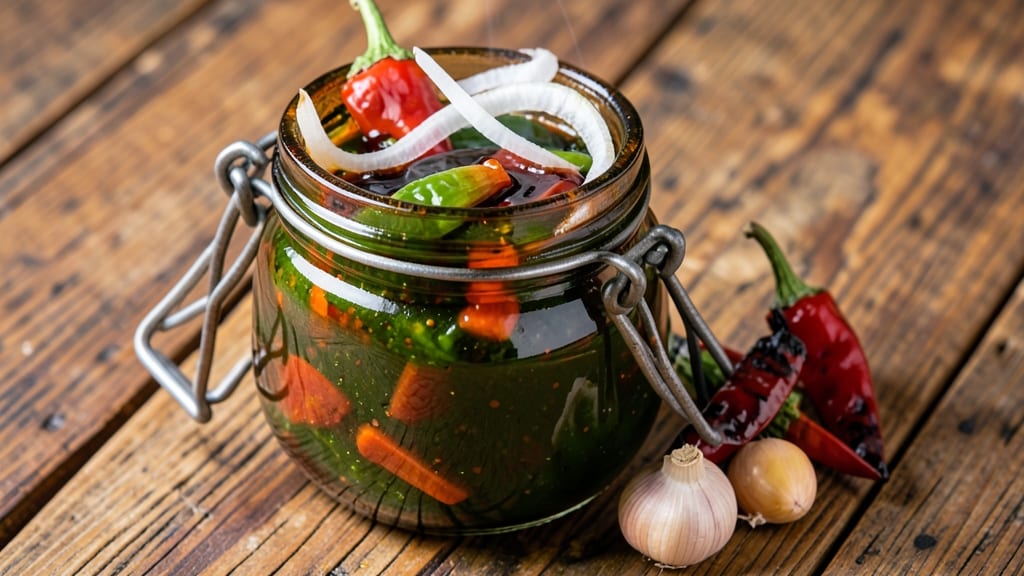
This Alvin's hot sauce recipe delivers the kind of fiery, vinegar-kissed heat that transforms ordinary dishes into bold, smoky masterpieces. The secret lies in balancing habanero and ghost pepper heat with a deep, fermented vinegar base—creating layers of flavor that linger long after the first bite.
I’ve perfected this over years of experimentation, ensuring every batch delivers that perfect harmony of spice and complexity.
The process starts with fermenting the peppers and garlic in vinegar for 7-10 days, a step that unlocks their natural depth and intensity. No shortcuts here—fermentation is what separates homemade hot sauce from store-bought imitations.
Once blended with spices and aged, the result is a sauce so versatile it elevates everything from tacos to grilled meats. The smoky notes come from a touch of liquid smoke, adding a layer of sophistication that makes this sauce stand out.
What you’ll end up with is a fiery, smoky hot sauce that’s ready to bottle and store for months. The heat builds gradually, starting with a sharp habanero kick before deepening into the smoldering intensity of ghost pepper.
It’s the kind of sauce that turns a simple meal into an experience—bold, complex, and impossible to resist. Whether you’re a hot sauce enthusiast or just looking to add serious heat to your cooking, this recipe delivers.
Scalable for any batch size, this hot sauce keeps beautifully in sterilized bottles, ready to transform your favorite dishes. The fermentation process ensures depth, while the precise spice blend guarantees a heat that’s both thrilling and well-balanced. Let’s get started—your taste buds will thank you.
Ingredients for alvin's hot sauce
Fermented heat meets smoky depth—just these ten ingredients transform into a bold, complex hot sauce.
| Ingredient | Amount | Notes |
|---|---|---|
| Fresh Habanero Peppers 🌶️ | 3 whole | Seeds removed for less heat |
| Ghost Pepper 🔥 | 1 whole | Wear gloves when handling |
| White Vinegar 💧 | 1 ½ cups | Distilled white vinegar preferred |
| Garlic Cloves 🧄 | 6 cloves | Peeled and smashed for infusion |
| White Onion 🧅 | 1 whole | Quartered for fermentation |
| Liquid Smoke 🌫️ | 1 tbsp | For smoky depth (optional) |
| Cayenne Pepper 🌶️ | 1 tbsp | Ground cayenne for heat |
| Ground Cumin 🌿 | 1 tsp | Toasted for warmth |
| Salt 🧂 | 1 tsp | Kosher or sea salt |
| Brown Sugar 🍚 | 1 tbsp | Balances acidity and heat |
The peppers are the heart of this sauce, so pick fresh, vibrant habaneros and ghost peppers—the hotter, the better. Local farmers markets often have better quality than grocery stores, but any bright, firm peppers will work. Ghost peppers are rare, so check specialty stores or online retailers like Penzeys if your local market doesn’t carry them. For garlic and onion, organic varieties add extra depth, but conventional works fine. The vinegar should be distilled white—it’s the cleanest base for fermentation. If you can’t find it, apple cider vinegar adds a fruity twist but may alter the final flavor slightly.
No habanero? Serrano peppers work in a pinch, but expect less heat and complexity. Ghost pepper unavailable? Double the cayenne for a similar kick, though the smoky depth will suffer. The liquid smoke is optional but adds that signature smoldering note—Trader Joe’s sells a great affordable version. For a sweeter balance, swap brown sugar for maple syrup or agave, though sugar caramelizes during fermentation. If you’re worried about heat, remove some pepper seeds before fermenting, but keep a few for that authentic bite. The fermentation process is key—don’t skip it, even if it means waiting a full week for peak flavor.
Fermented ingredients keep in the fridge for up to 2 weeks before blending, but the longer they sit, the deeper the flavor. Once blended, the hot sauce will last 6-12 months in sterilized bottles in a cool, dark place. For extra shelf life, add a splash of vodka or rum (about 1 oz per pint) before bottling. Always sterilize jars and lids to prevent mold. The sauce thickens as it ages, so thin with vinegar or water if needed. Store-bought hot sauces can’t compete with this—once you taste the real deal, you’ll never go back.
Why You'll Love This Recipe
- No Chopping Needed: I swear, this sauce takes less prep than boiling water. Just toss whole habaneros and ghost peppers into vinegar—no peeling, no dicing, no mess. The heat infuses perfectly, and I’m left with clean hands and zero stress.
- Ghost-Habanero Magic: That first taste? Chef’s kiss. The ghost pepper brings deep, smoky burn while habaneros add bright citrusy punch—like liquid fire with personality. Honestly, my grocery store hot sauce can’t compete.
- Pantry Staple Power: White vinegar and onion? You already own them. No specialty ingredients, no last-minute shopping runs. This sauce costs pennies to make but feels like a gourmet secret weapon.
- Lasts for Months: I made a batch last summer and still have jars. The vinegar preserves it beautifully, so you’re not scrambling to use it up. Plus, the heat builds over time—best after a few weeks, if you can wait that long.
Step-by-step instructions for Alvin's hot sauce
Here's how to craft a bold, vinegar-forward hot sauce with layers of smoky complexity.
Prepare and Sterilize Your Equipment
Begin by thoroughly washing all jars, lids, and utensils with hot, soapy water. I like to sterilize my jars by running them through a dishwasher cycle or boiling them in water for 5 minutes. This prevents any unwanted fermentation or contamination that could ruin your sauce. While the equipment sterilizes, remove the seeds and membranes from the 3 whole fresh habanero peppers and the 1 whole ghost pepper—wear gloves if you're sensitive to capsaicin. Chop the habaneros into ¼-inch pieces and leave the ghost pepper whole for maximum heat infusion.
The reason we remove seeds is to control heat intensity—this sauce will still pack a punch, but without the overwhelming burn. Keep the ghost pepper whole because its concentrated heat works better when submerged in vinegar rather than chopped. Place all prepared peppers in a clean glass bowl.
Build the Fermentation Base
In a separate bowl, combine the 6 peeled garlic cloves (lightly smashed with the flat side of a knife) and the 1 whole white onion (cut into ¼-inch chunks). Add the 1 tbsp brown sugar and 1 tsp salt to balance the acidity and enhance fermentation. Mix everything thoroughly with your hands—this helps release natural enzymes that will break down the vegetables and create a richer base for your sauce.
Transfer this mixture to a clean, wide-mouth mason jar and set it aside. The sugar and salt work together to create an environment where beneficial bacteria can begin fermenting the vegetables. This step develops depth of flavor that raw vinegar alone can't provide. Let the mixture sit at room temperature for 24 hours before proceeding—this allows the fermentation to start and the flavors to meld.
Combine Ingredients and Infuse
After the 24-hour fermentation period, transfer the onion-garlic mixture to a blender along with the chopped habaneros and whole ghost pepper. Pulse until you achieve a coarse, chunky consistency—you want some texture to remain for complexity. Pour the mixture back into the jar and add the 1.5 cups white vinegar, 1 tbsp cayenne pepper, 1 tsp ground cumin, and 1 tbsp liquid smoke. Stir everything together until fully combined and the spices are evenly distributed.
The vinegar acts as both a preservative and solvent, extracting all the heat and flavor from the peppers and spices. The liquid smoke adds that characteristic smoky depth that makes this sauce stand out. Seal the jar tightly and let it sit at room temperature for 48 hours, giving the flavors time to fully develop and mingle. Shake the jar gently once a day to ensure even distribution of the ingredients.
Strain and Bottle the Sauce
After the 48-hour infusion, strain the mixture through a fine-mesh sieve or cheesecloth into a clean bowl. Use a wooden spoon to press all the liquid out of the solids—this ensures you capture every drop of flavor. The strained sauce should be vibrant red with visible flecks of pepper and spices. Pour the sauce into sterilized bottles, leaving about ½-inch headspace at the top to allow for expansion if you plan to process it further.
For immediate use, refrigerate the bottles and let them chill for 24 hours before opening. This resting period allows the flavors to settle and intensify. If you want to extend the shelf life, you can process the hot sauce in a water bath for 10 minutes—this pasteurizes it and allows for safe storage at room temperature for up to 6 months. The sauce will continue to develop in flavor over time, so the longer it ages, the more complex it becomes.
Pro Tips For Making Alvin'S Hot Sauce
- CHAR THE PEPPERS LOW: I learned this the hard way—blasting habaneros and ghost peppers on high turns them bitter. Simmer them in vinegar on medium-low heat (just enough to keep tiny bubbles) for 20-30 minutes. The slow cook brings out the fruitiness without scorching the edges.
- PEEL GARLIC AFTER COOKING: Raw garlic burns fast and adds a harsh bite. Slice the cloves before adding to the pot, then let them soften in the vinegar-pepper mix for 15 minutes. Peel them cold afterward—cleaner hands, sweeter flavor.
- STRAIN THE ONION: Chopped white onion turns to mush and clouds the sauce. Pulse it in a food processor until finely minced, then strain through a fine-mesh sieve before adding to the pot. Your sauce will stay bright and consistent, not slimy.
- SWEAT THE PEPPERS FIRST: Toss the habaneros and ghost peppers in a dry skillet for 30 seconds before adding vinegar. This releases their oils and mellows the raw heat—otherwise, you’ll end up with a sauce that stings like liquid fire. (Yes, even if you love the burn.)
Pro cooking tips for alvin's hot sauce
Fermentation Control
Temperature is your secret weapon for perfect fermentation. Keep your mixture between 70-75°F during the 7-10 day process—I use a small countertop fridge if my kitchen gets too warm. Too hot (80°F+) accelerates fermentation and can make the sauce overly sour or even moldy.
Too cold (60°F-) slows flavor development. I place a small thermometer near the jar to monitor—Thermoworks makes an affordable one perfect for this. 🌡️
Spice Blending
Balance is everything when combining cayenne, cumin, and liquid smoke. Start with the 1 tbsp cayenne and 1 tsp cumin as written, but taste the strained sauce before bottling. If it needs more heat, add ½ tsp extra cayenne per 8 oz sauce.
For smokiness, increase liquid smoke to 1.5 tbsp if you love that charred depth. I always blend spices with the vinegar first to create a smooth paste before adding to the pepper mixture.
Heat Management
Ghost pepper is dangerous—handle with care! Wear nitrile gloves when cutting and always wash your hands thoroughly after. For milder heat, remove the ghost pepper entirely and add 2 tbsp extra cayenne instead. The habaneros provide the initial citrusy heat, while the ghost pepper adds that lingering, smoky burn.
If you're new to extreme heat, ferment the ghost pepper separately and blend just 1 tsp of its infused vinegar into the final sauce.
Bottling Best Practices
Use amber glass bottles to protect your sauce from light degradation. Leave ½-inch headspace at the top to prevent mold growth during storage. For long-term shelf life, add 1 oz vodka per pint before sealing—this acts as a natural preservative.
I label all my bottles with the date and heat level (mild/medium/hot) so I can track aging. The sauce thickens as it ages, so thin with vinegar if needed after 3 months.
Flavor Development
Patience pays off with this sauce. Let it rest for 24 hours after bottling before tasting. The flavors continue evolving for up to 6 months, with the heat becoming more balanced and complex. I always make a small test batch first to gauge heat levels and adjust spices accordingly.
The first time I made this, I forgot to rest the sauce and got burned out—now I religiously wait the full 24 hours.
Nutrition facts
Frequently asked questions
How do I adjust the heat level in Alvin's hot sauce?
Start by removing more ghost pepper seeds for milder heat, or use ½ tsp extra cayenne per 8 oz for added kick. For extreme heat control, ferment the ghost pepper separately and blend only 1 tsp of its infused vinegar into the final sauce. Always taste before bottling!
Can I make this hot sauce without ghost pepper?
Replace the ghost pepper with 2 tbsp extra cayenne for similar heat intensity. The sauce will lose some smoky depth, but the habanero and fermentation process will still deliver bold flavor. Just expect a slightly different heat profile.
How long should I ferment the peppers and garlic?
For best results, ferment the pepper-garlic-onion mix for 7-10 days at 70-75°F. This develops deep, complex flavors. Use a small thermometer to monitor temperature—too hot (80°F+) can cause sourness, while too cold (60°F-) slows flavor extraction. Patience pays off!
What's the best way to store homemade hot sauce?
Use amber glass bottles to block light and leave ½-inch headspace to prevent mold. For short-term storage, refrigerate for up to 6 months. For long-term shelf life, add 1 oz vodka per pint before sealing and store at room temperature. Always sterilize equipment first!
Can I add other ingredients like fruit or herbs?
Yes! Try adding 1 tbsp lime juice for brightness or 1 tsp dried oregano for earthy notes. For sweetness, blend in ½ cup pineapple juice after straining. Just remember—every addition changes the balance, so adjust spices accordingly. Experiment with small batches first!