
Sauces & Condiments
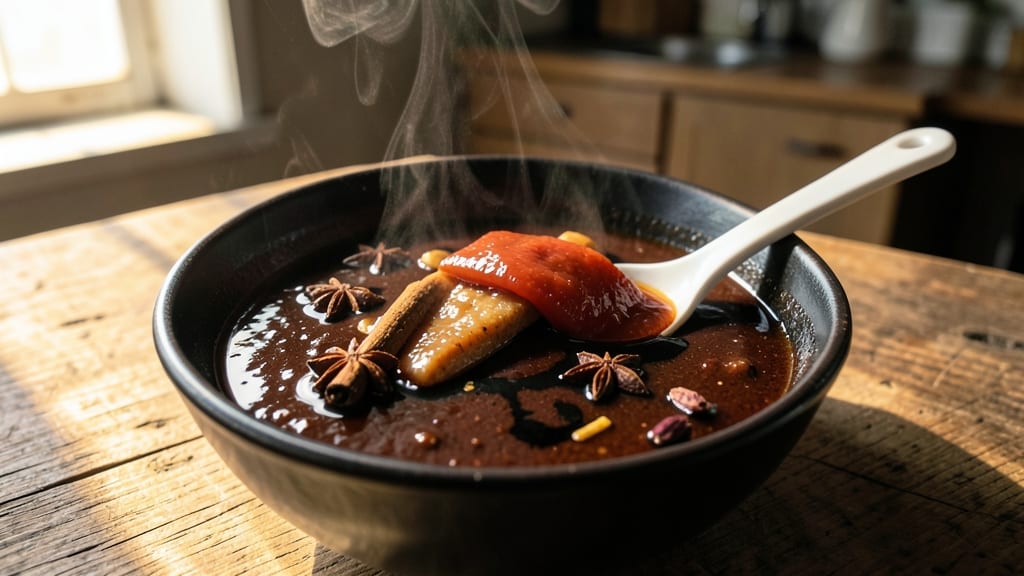
This bak kut teh sauce transforms simple pork ribs into a fragrant, smoky masterpiece with its deep umami base and signature vinegar brightness. The secret lies in fermented bean curd (tauco) and slow-simmered spices that develop complex layers of flavor—earthy, tangy, and subtly sweet.
What sets this sauce apart is the celery crown crunch, adding fresh texture that cuts through the richness while keeping the broth vibrant and aromatic.
The foundation begins with a dark soy sauce base, where star anise, cinnamon, and cloves infuse warmth before the vinegar brightens the profile. Unlike many recipes that rely on pre-made pastes, this version builds flavor from whole spices, ensuring depth without bitterness.
The key technique? A long, gentle simmer that allows the bean curd to dissolve into a velvety, umami-rich consistency—no lumps, just pure flavor.
What you’ll end up with is a sauce that’s as versatile as it is bold: perfect for braising ribs, glazing noodles, or even drizzling over stir-fried vegetables. The celery crown adds a refreshing crunch that balances the sauce’s richness, while the vinegar keeps it bright and complex.
Store it in the fridge for up to a week, letting the flavors deepen with each passing day.
This isn’t just a sauce—it’s the soul of bak kut teh, capturing the smoky, vinegary essence that makes this dish unforgettable. Whether you’re cooking for a crowd or meal prepping for the week, this recipe delivers restaurant-quality results with minimal effort. Let’s get simmering!
Ingredients for bak kut teh sauce
Nine ingredients blend to create this restaurant-quality bak kut teh sauce, rich with umami and vinegar brightness.
| Ingredient | Amount | Notes |
|---|---|---|
| Dark Soy Sauce 🍶 | ½ cup | High-quality, for deep umami base |
| Fermented Bean Curd (Tauco) 🧀 | ¼ cup | Crumbled for velvety texture |
| White Vinegar 🍋 | ¼ cup | Brightens and balances flavors |
| Star Anise Pods 🌿 | 2 whole | Whole, for aromatic infusion |
| Cinnamon Sticks 🌿 | 2 whole | For subtle warmth and depth |
| Cloves 🌿 | 4 whole | Lightly crushed for flavor |
| Celery Stems 🧅 | ½ cup | For celery crown crunch |
| Garlic Cloves 🧄 | 4 cloves | Minced for aromatic punch |
| Ginger 🌿 | 1 tbsp | Freshly grated, zesty kick |
| Brown Sugar 🍯 | 2 tbsp | Balances tangy and smoky notes |
The star anise, cinnamon, and cloves are non-negotiable for that signature smoky warmth. Whole spices from Penzeys or local Asian markets deliver the best flavor—pre-ground loses potency fast. Fermented bean curd (tauco) is the umami secret; look for it in the refrigerated section of Asian grocery stores like H Mart or 99 Ranch. Dark soy sauce should be thick and glossy, not thin or watery—Lee Kum Kee is a reliable brand. Celery stems for the crown crunch? Save the tough bottoms from your celery bunches—no waste, all flavor.
No star anise? Anise seeds work in a pinch, but the flavor won’t be identical. Substitute white vinegar with rice vinegar for a milder tang, though it’ll lack the sharpness. Brown sugar can be swapped for coconut sugar or even a touch of honey (if not vegan). For the celery crown, blanch the stems first to soften them slightly—this prevents a harsh bite. Fresh ginger and garlic are ideal, but powdered works at half the amount if you’re in a rush. The bean curd should dissolve completely; if it doesn’t, blend it first before adding to the sauce.
This sauce tastes even better the next day as flavors meld. Store it in a glass jar in the fridge for up to 1 week. For longer storage, freeze portions in ice cube trays—thaw as needed for braising or glazing. The celery crown stays crisp if stored separately in a damp paper towel and added just before serving. Double the batch if you’re prepping for the week—it’s that good.
Why You'll Love This Recipe
- Pantry Magic: I swear, this sauce comes together with stuff I already had—dark soy, tauco, and a few spices. No fancy shopping list, just open jars and cabinets.
- Deep Umami Bomb: That fermented bean curd? It’s the secret weapon—salty, funky, and rich. One sniff and you’ll understand why this sauce tastes like a hug from Singapore.
- Leftovers That Shine: Simmered sauce doubles as a marinade or stir-fry glaze. I’ve used it on pork, tofu, even noodles—it’s the kind of leftover that gets better the second time around.
- Budget-Friendly Luxury: Star anise and cinnamon sticks cost pennies but transform this into something restaurant-worthy. Honestly, it’s the most affordable way to feel fancy without breaking the bank.
Step-by-step instructions for bak kut teh sauce
This smoky, vinegar-kissed umami sauce builds layer by layer—each spice and ingredient plays a crucial role.
Bloom the Spices in Vinegar
In a medium saucepan, combine the 0.25 cup white vinegar, 2 whole star anise pods, 2 whole cinnamon sticks, and 4 whole cloves. Bring to a gentle simmer over medium heat and let steep for 5 minutes. You'll notice the spices release their aromatic oils—this infusion forms the sauce's warm, earthy backbone. Keep the heat low to prevent scorching; you want subtle depth, not bitterness.
After 5 minutes, remove the pan from heat and let the spice mixture steep off the heat for another 5 minutes. This resting period allows the flavors to meld fully. Strain the liquid through a fine-mesh sieve into a clean bowl, pressing gently on the spices to extract every last drop of flavor. Discard the solids—no need to rinse the bowl yet, as those residual oils will contribute to the sauce's complexity.
Build the Umami Base
Return the strained spiced vinegar to the saucepan and add the 0.5 cup dark soy sauce, 0.25 cup fermented bean curd (tauco), and 2 tbsp brown sugar. Increase heat to medium-high and bring the mixture to a gentle boil. Here's where the magic happens: the tauco will begin to break down, creating a velvety texture that's the signature of bak kut teh sauce.
Stir constantly for 3-4 minutes until the mixture thickens slightly and the sugar dissolves completely. You'll see the sauce transform from a thin liquid to a glossy, syrupy consistency. If it reduces too quickly, add 1-2 tablespoons of water to maintain the right balance—you want it thick enough to coat the back of a spoon but still pourable. This step ensures the sauce clings to pork ribs later, creating that signature sticky glaze.
Infuse with Aromatics
Reduce heat to medium-low and add the 4 cloves minced garlic, 1 tbsp freshly grated ginger, and 0.5 cup celery stems. Stir gently to combine, then let the mixture simmer for 8-10 minutes. The celery stems will soften slightly but retain their subtle crunch, adding texture that contrasts beautifully with the smooth sauce. This is where the sauce develops its signature complexity—garlic's sharpness, ginger's zing, and celery's herbal brightness all harmonize with the smoky-sweet base.
Taste the sauce as it simmers. It should balance tangy (vinegar), sweet (brown sugar), umami (tauco and soy sauce), and aromatic (spices and ginger). If it needs more depth, add 1-2 teaspoons of dark soy sauce; if it's too sharp, a pinch of sugar will mellow the acidity. The sauce should coat your spoon with a glossy, slightly sticky texture—this is your target consistency.
Finish and Rest
Once the sauce reaches your desired balance, remove it from heat and let it cool to room temperature. This resting period, 15-20 minutes, allows the flavors to fully integrate. The sauce will thicken further as it cools, so don't be tempted to reduce it more on the stove—patience here ensures the perfect texture.
For best results, store the sauce in an airtight container in the refrigerator for at least 4 hours (or overnight) before using. This resting time deepens the flavors and makes the sauce even more cohesive. When ready to use, reheat gently over low heat, stirring occasionally, until warmed through. The sauce should be smooth, glossy, and perfectly balanced—ready to elevate your pork ribs to restaurant-quality.
Pro Tips For Making Bak Kut Teh Sauce
- CRUSH THE SPICES FIRST: Toss whole star anise and cinnamon sticks into a dry pot and toast them over medium heat for 30 seconds—just until fragrant, not browned. I learned this the hard way after burning three batches; the aroma extracts immediately, and skipping this step leaves your sauce tasting flat.
- STRAIN THE TAUCO: Fermented bean curd (tauco) is thick and gritty—press it through a fine-mesh sieve or cheesecloth to remove the fibrous bits before adding it to the sauce. Yes, it’s messy, but the result is silky smooth, not chalky. (Your future self will thank you.)
- BUILD FLAVOR IN STAGES: Don’t dump all the dark soy sauce and vinegar at once. Simmer the spices in a splash of water first, then add vinegar gradually to balance acidity. I was skeptical until I tried it—this prevents an overpowering, harsh finish.
- SAVE THE STAR ANISE: After simmering, remove the whole spices while the sauce is still hot—this keeps their oils suspended. Strain them out and crush them lightly in a mortar or bag; toss the crushed pieces back in for a second infusion. It’s extra work, but the depth of flavor makes it worth it.
Best sauces and condiments for this recipe
Umami Boosters
Fermented bean curd (tauco) is the star of this sauce, delivering a deep, savory punch that transforms simple ingredients into something extraordinary. For extra umami depth, add 1 tbsp fish sauce (like Red Boat) to the simmering mixture—it enhances the soy and tauco without overpowering the delicate balance.
If you're vegetarian, swap fish sauce for ½ tsp mushroom powder or an additional 1 tsp soy sauce. 💪
Vinegar Variations
The white vinegar here provides that signature tang, but don’t be afraid to experiment. For a milder brightness, try apple cider vinegar—it adds subtle sweetness that pairs beautifully with the pork.
If you prefer a sharper kick, black vinegar (common in Asian cooking) introduces a funky depth that’s perfect for adventurous eaters. Just remember: vinegar is the flavor balancer, so adjust to taste after simmering.
Sweet-Savory Balance
Brown sugar caramelizes during simmering, creating a natural gloss and rounding out the sauce’s acidity. For a more complex sweetness, replace half the brown sugar with date syrup or honey—both add floral notes that complement the smoky spices.
If your sauce tastes too sweet, a splash of vinegar at the end will reset the balance. Pro tip: Taste as you go, especially when adding sugar—it’s easy to overdo it!
Celery Crown Crunch
The celery stems aren’t just for texture—they infuse the sauce with a subtle herbal brightness that cuts through the richness. For an extra-crunchy finish, blanch the stems in boiling water for 30 seconds before adding them to the sauce, then drain and pat dry.
This softens them slightly while preserving their structure. Store the celery crown separately in a damp paper towel-lined container; add it to the sauce just before serving to keep it crisp. 🧅
Spice Swaps
No star anise? Use ½ tsp ground anise seed or ¼ tsp fennel seeds, but know the flavor will be more subtle. For warmth, add a pinch of cayenne pepper or a ½-inch piece of fresh galangal (if you’re feeling adventurous).
The key is to maintain the sauce’s aromatic backbone—whole spices always deliver the best results, but these swaps work in a pinch. Always taste as you go!
Storage Secrets
This sauce tastes even better the next day as the flavors meld. Store it in a glass jar in the fridge for up to 1 week, or freeze in ice cube trays for up to 3 months.
To reheat, warm gently over low heat and stir occasionally—never microwave, as it can break the sauce’s delicate balance. For meal prep, double the batch and use it to glaze ribs, noodles, or even roasted vegetables. The versatility is what makes it a pantry staple! ✨
Nutrition facts
Frequently asked questions
Can I make this sauce without fermented bean curd (tauco)?
The tauco is essential for that signature umami depth, but you can substitute 1 tbsp miso paste or 2 tbsp soy sauce in a pinch. For extra richness, add 1 tsp fish sauce (or mushroom powder for vegetarian). The texture won't be identical, but the flavor will still shine!
How do I adjust the sauce for a milder or spicier flavor?
For milder heat, reduce the ginger or omit the cayenne. For extra spice, add ½ tsp chili flakes or a dash of Sichuan peppercorns during simmering. Taste as you go—vinegar and sugar are your best friends for balancing flavors!
Can I use this sauce for dishes other than pork ribs?
This versatile sauce works beautifully with tofu stir-fries, noodle dishes, or even as a marinade for chicken or shrimp. The celery crown adds a refreshing contrast to any rich protein. Just reduce the sugar slightly if using with sweeter ingredients like pineapple.
Why does my sauce look too thin or too thick?
A thin sauce needs 5-10 more minutes of simmering to reduce. For thickness, stir in 1 tsp cornstarch mixed with 1 tbsp water while heating. If it's too thick, thin with 1 tbsp water or vinegar. The ideal consistency coats the back of a spoon but remains pourable.
How long can I store the celery crown separately?
Wrap the celery stems in a damp paper towel and store in an airtight container in the fridge for up to 3 days. For longer storage, blanch first (30 seconds), then freeze for up to 1 month. Add it fresh to keep that signature crunch!