
Sauces & Condiments
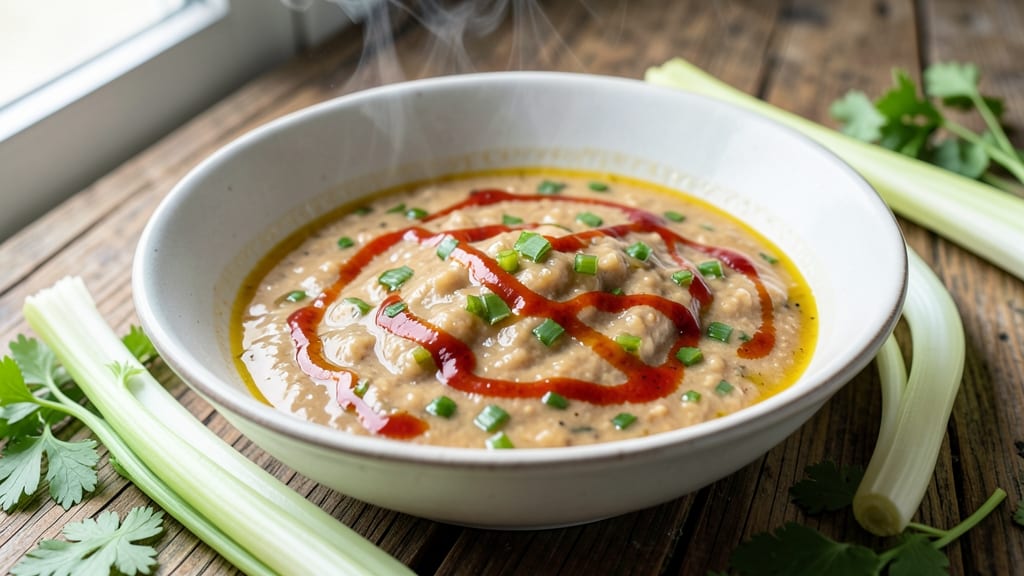
A Bang Bang Stir Fry Sauce Recipe transforms ordinary stir-fries into addictive, creamy, spicy masterpieces with just five minutes of prep. This recipe balances tangy vinegar, celery-infused creaminess, and a slow-building heat that keeps you reaching for seconds—perfect for tofu, chicken, or crispy vegetables. The secret lies in blending fresh celery with mayo and sriracha for a sauce that's both restaurant-quality and effortlessly homemade.
The magic happens when you pulse celery stalks into the base, creating a subtle earthy depth that cuts through the richness. A splash of rice vinegar adds bright acidity, while a touch of fish sauce (or soy sauce for vegetarian) rounds out the flavor profile.
What makes this sauce special is how it clings to ingredients without overwhelming them—each bite delivers a perfect harmony of creamy, spicy, and tangy notes.
With just 5 ingredients and 5 minutes of prep, this sauce is your secret weapon for weeknight dinners. It stores beautifully in the fridge for up to a week, making it ideal for meal prep.
Whether you're tossing it with crispy tofu, grilled chicken, or stir-fried veggies, the sauce will elevate your dish to new heights.
For extra heat, add more sriracha; for creaminess, stir in a splash of coconut milk. The possibilities are endless—let this sauce transform your stir-fries into unforgettable meals.
Ingredients for bang bang stir fry sauce
Celery's earthy crunch meets creamy mayo and vinegar's tang for a sauce that's addictively balanced.
| Ingredient | Amount | Notes |
|---|---|---|
| Fresh Celery Stalks 🧅 | 2 whole | Pulse in food processor for celery-infused base |
| Mayonnaise 🥫 | ½ cup | Use full-fat for creaminess |
| Rice Vinegar 🍶 | 2 tbsp | Unseasoned for bright acidity |
| Sriracha 🌶️ | 1 tbsp | Adjust for heat preference |
| Vegetarian Fish Sauce 🍜 | 1 tbsp | Or soy sauce for vegetarian version |
| Vegetable Oil 🫒 | 1 tbsp | For thinning if needed |
| Salt 🧂 | ½ tsp | Diamond Crystal preferred |
| Black Pepper 🌶️ | ¼ tsp | Freshly ground for best flavor |
The celery is non-negotiable—fresh, crisp stalks create that signature depth. Organic markets or the produce section at Whole Foods have the best quality. Skip the pre-chopped celery (it's usually wilted). For mayo, Hellmann's or Duke's are reliable, but any full-fat brand works. The rice vinegar should be unseasoned—Kikkoman or Mushroom Town are my go-tos. If you can't find vegetarian fish sauce, soy sauce works perfectly—just reduce the amount slightly to avoid overpowering the sauce.
No sriracha? Substitute with 1 tsp of hot sauce plus 1/2 tsp of cayenne for similar heat. Running low on mayo? Greek yogurt thinned with a splash of water gives a similar tangy creaminess. The vegetable oil is just for thinning if your sauce gets too thick—avocado oil works best for high-heat stir-frying. For extra richness, stir in 1 tbsp of coconut milk after blending. If you're making this ahead, add the sriracha last to preserve its heat.
This sauce keeps for up to 1 week in the fridge, sealed in an airtight container. The flavors actually improve overnight as everything melds. For meal prep, double the batch—it's perfect for tossing with tofu, chicken, or veggies straight from the fridge. If it thickens, just whisk in 1 tsp of water or oil to loosen. Freezes beautifully for up to 3 months, though the texture may separate slightly—just stir before using.
Why You'll Love This Recipe
- Five-Ingredient Magic: I swear, this sauce comes together faster than a microwave dinner. Chop celery, mix mayo with vinegar and sriracha—boom. No fancy techniques, no waiting for anything to simmer. The fish sauce ties it all together while I’m still rinsing the knife.
- Tangy-Creamy Obsession: That celery adds this fresh, grassy crunch that cuts through the richness of the mayo, while the sriracha brings the heat. Honestly, the rice vinegar makes it bright enough to wake up even the blandest takeout noodles—like a wake-up call for your taste buds.
- Game for Any Meal: Drizzle it over cold noodles, toss it with roasted veggies, or slather it on a grilled cheese. I’ve used it as a marinade for tofu and even as a dip for fries—it’s the kind of sauce that makes you wonder why you didn’t invent it first.
- Leftovers That Don’t Suck: This stuff keeps for days in the fridge, and it only gets better as the flavors meld. Between us, I’ve had it last a full week, and it’s still the star of my lunchbox. Plus, the fish sauce stretches my grocery budget without sacrificing flavor—win-win.
Step-by-step instructions for Bang Bang stir fry sauce
Here's how to craft this addictive sauce with perfect balance—creamy, tangy, and packed with umami depth.
Create the Celery Base
Pulse the 2 whole fresh celery stalks in a food processor until you achieve a fine, wet pulp—about ¼ cup. This celery-infused base forms the sauce's signature texture and subtle earthy flavor. The moisture from the celery will help emulsify the mayonnaise later, so don't strain out any liquid.
Transfer the celery pulp to a mixing bowl. I like to use a glass or stainless steel bowl at this stage because it's easier to see the color changes as we incorporate ingredients. The pulp should be bright green and slightly watery—this is exactly what we want for that authentic bang bang texture.
Whisk in Creamy and Acidic Elements
Add the 0.5 cup mayonnaise to the celery pulp and whisk vigorously for 2 minutes until fully combined. The mayonnaise should look smooth and homogenous, with no visible celery chunks. This is where the sauce starts to take shape—you'll notice it immediately thickens as the mayonnaise incorporates.
Next, add the 2 tablespoons rice vinegar and whisk continuously for another minute. The vinegar will make the mixture look slightly curdled at first, but keep whisking—it will come together into a smooth, tangy emulsion. This is the moment where the sauce transforms from creamy to properly balanced. Taste at this point, and you'll notice the bright acidity cutting through the richness of the mayonnaise.
Build Flavor with Heat and Umami
Drizzle in the 1 tablespoon sriracha while whisking constantly. Start with just a few drops at first, then gradually add the rest to control the heat level. You're aiming for a sauce that's noticeably spicy but not overwhelming—think of it as a gentle kick rather than a fiery punch. The sriracha will begin to disperse evenly throughout the mixture, giving it a beautiful pinkish hue.
Add the 1 tablespoon vegetarian fish sauce and the 0.5 teaspoon salt. Whisk for 30 seconds to fully incorporate. The fish sauce adds that essential umami depth that makes this sauce so addictive, while the salt helps all the flavors come together. At this point, the sauce should be thick, glossy, and properly balanced between creamy, tangy, spicy, and savory.
Finish and Adjust Texture
Add the 0.25 teaspoon black pepper and the 1 tablespoon vegetable oil. Whisk for another minute until the oil is fully emulsified. The oil helps create that signature silky texture while preventing the sauce from becoming too thick. If the sauce is still too thick for your liking, add 1 teaspoon of water at a time until you reach your desired consistency—it should coat the back of a spoon but still be pourable.
Taste and adjust seasoning if needed. You might need a touch more salt to balance the acidity, or perhaps a bit more sriracha for extra heat. The sauce should be perfectly balanced—creamy from the mayonnaise, tangy from the rice vinegar, spicy from the sriracha, and umami-rich from the fish sauce. Transfer to a clean jar and refrigerate for at least 1 hour before using to let the flavors fully meld together.
Pro Tips For Making Bang Bang Stir Fry Sauce
- FINELY CHOP THE CELERY: Use a sharp knife and work in batches—small, even dice (about 1/8-inch) blend better into the sauce and won’t leave awkward texture. I used to rush this, but the sauce tastes smoother when the celery’s uniform.
- TEMPER THE MAYO: Mix the mayo with the rice vinegar first, then slowly add the sriracha—this prevents the sauce from breaking or becoming too hot too fast. I learned this the hard way after ending up with a grainy mess.
- BALANCE THE FISH SAUCE: Start with half the recommended vegetarian fish sauce, taste, then adjust—it’s saltier than you’d think. Add a pinch of sugar (or a splash of honey) if the acidity feels too sharp.
- WHISK IT WELL: After combining everything, whisk vigorously for 30 seconds to emulsify the mayo properly. A quick pulse in a food processor works too—just don’t overdo it, or the sauce will turn greasy.
Regional styles of this recipe
Thai-Inspired Origins
Bang Bang sauce traces its roots to Thai street food culture, where it was traditionally used to elevate simple dishes like pad thai or stir-fried noodles. The name itself comes from the Thai phrase "bang bang," meaning "splash splash," referencing how the sauce is generously drizzled over dishes.
This version often included fish sauce, chilies, and lime juice, creating a perfect balance of salty, spicy, and tangy flavors. 🌶️
In Thailand, the sauce was originally thicker and more pungent, designed to stand up to the bold flavors of wok-cooked dishes. Over time, it evolved into the creamier, more approachable version we know today—thanks to the addition of mayo and celery.
The celery infusion became a signature element, adding a subtle earthiness that rounds out the heat and acidity.
Vietnamese Fusion Twist
Vietnamese adaptations of Bang Bang sauce often incorporate nuoc cham (fish sauce) and chili oil for a deeper, more complex flavor profile. In cities like Ho Chi Minh City, you'll find versions that include garlic-infused oil and a touch of black pepper, giving the sauce a slightly nutty depth.
This version works beautifully with grilled pork or crispy spring rolls.
The Vietnamese approach also emphasizes fresh herbs like cilantro or mint, which are often mixed into the sauce just before serving. This adds a bright, herbaceous note that cuts through the richness.
For a Vietnamese-inspired twist, try blending in 1 tbsp of finely chopped cilantro or ½ tbsp of mint leaves at the end.
Americanized Adaptations
In the U.S., Bang Bang sauce has been adapted to suit local tastes, often with milder heat levels and a focus on creaminess. Many American versions replace fish sauce with soy sauce or vegetarian fish sauce to accommodate vegetarian and vegan diets.
Brands like Sweet Baby Ray's or Huy Fong sriracha are commonly used, making the sauce more accessible to home cooks.
Popular American pairings include crispy tofu, grilled chicken, or stir-fried veggies, often served with steamed jasmine rice. Some chefs even use the sauce as a dipping sauce for fried dumplings or spring rolls, adding a creamy, spicy kick.
The Americanized version is also a staple in fusion restaurants, where it’s drizzled over burgers or tacos for a bold flavor boost.
Japanese-Inspired Variations
In Japan, Bang Bang sauce is sometimes blended with mirin or sake to create a sweeter, more umami-rich version. This adaptation works wonderfully with yaki soba (grilled noodles) or teriyaki chicken.
The addition of mirin adds a subtle sweetness that balances the heat, making it a favorite in Japanese fusion cuisine.
For a Japanese-inspired twist, replace the rice vinegar with 1 tbsp of mirin and add ½ tbsp of soy sauce instead of fish sauce. The result is a sauce that’s slightly sweeter and more complex, perfect for pairing with grilled skewers or stir-fried vegetables.
The texture remains creamy, but the flavor profile shifts toward a more balanced, savory-sweet profile.
Korean-Inspired Heat
Korean adaptations of Bang Bang sauce often include gochujang (Korean chili paste) for a deeper, smokier heat. This version is thicker and slightly grainier, thanks to the gochujang’s natural texture.
It pairs exceptionally well with bulgogi beef, kimchi, or crispy potato wedges. The gochujang adds a fermented depth that elevates the sauce’s complexity.
To make a Korean-inspired Bang Bang sauce, swap the sriracha for 1 tbsp of gochujang and reduce the rice vinegar to 1 tbsp. Add ½ tbsp of honey or agave to balance the heat.
The result is a sauce that’s rich, spicy, and slightly sweet—ideal for drizzling over grilled meats or stir-fried greens. 🔥
Nutrition facts
Frequently asked questions
Can I make this sauce without mayo?
For a lighter version, replace the mayo with ½ cup Greek yogurt mixed with 1 tbsp water to thin. Or try ¼ cup coconut milk blended with 1 tbsp rice vinegar for a dairy-free option. The texture will be slightly thinner but still creamy and delicious.
How do I adjust the heat level?
Start with 1 tbsp sriracha for mild heat, then add more in ½ tbsp increments until you reach your preferred spice level. For extra heat, blend in ½ tsp of chili flakes or 1 tsp of chili garlic sauce. Remember, the sauce mellows slightly after refrigeration.
What's the best way to store leftover sauce?
Transfer to an airtight container and refrigerate for up to 1 week. The flavors actually improve overnight! For longer storage, freeze in 1-tbsp portions for up to 3 months. Thaw in the fridge and stir well before using. The texture may separate slightly when frozen, but it blends right back together.
Can I use this sauce on non-Asian dishes?
This versatile sauce works beautifully on burgers, tacos, fries, or even as a dip for spring rolls. For burgers, mix with 1 tbsp ketchup for balance. On tacos, drizzle over grilled meats or veggies. The creamy-spicy profile elevates any dish!
Why does my sauce look curdled?
This happens when acidic ingredients (vinegar) and fats (mayo) aren't emulsified properly. Whisk vigorously for 2-3 minutes after adding vinegar, then slowly drizzle in mayo while whisking. If it still separates, blend with 1 tsp of water to help combine. The sauce should be smooth and glossy when finished.