
Sauces & Condiments
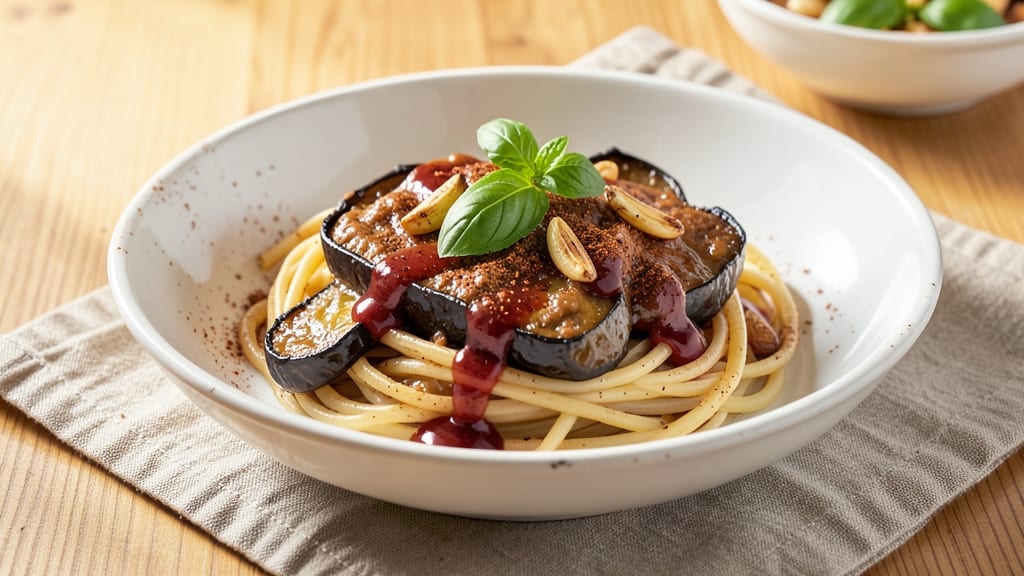
This aubergine pasta sauce recipe transforms humble eggplant into a velvety, smoky masterpiece with a secret tang from vinegar that elevates every forkful. 💛 The key lies in slow-roasting the eggplant until caramelized—this deepens its natural sweetness while avoiding bitterness.
What starts as a simple blend of roasted eggplant, garlic, and olive oil becomes a luxurious sauce with layers of umami and brightness.
The process is straightforward yet transformative: roast the eggplant until tender, then blend it with a splash of vinegar (the game-changer) and a touch of cream or coconut milk for richness.
Season with smoked paprika and red pepper flakes for warmth, then simmer until the flavors meld into a silky, clingy sauce. This isn’t just a veggie side—it’s a restaurant-quality pasta topping that pairs perfectly with penne, gluten-free noodles, or even grilled chicken.
What makes this sauce special is its versatility. Use it as a vegetarian or vegan base (depending on your cream choice) or stir in Parmesan for a classic touch. The vinegar’s sharpness cuts through the eggplant’s creaminess, creating balance in every bite.
Store it in the fridge for up to 5 days, where the flavors deepen with time—proof that the best sauces taste better the next day.
Ready in under 45 minutes, this sauce delivers foolproof results with minimal effort. Whether you’re feeding a crowd or meal prepping for the week, it’s the kind of recipe that turns simple pasta night into a standout meal. Let’s make it—your taste buds will thank you.
Ingredients for aubergine pasta sauce
Six ingredients transform eggplant into a velvety sauce with smoky depth and vinegar zing.
| Ingredient | Amount | Notes |
|---|---|---|
| Eggplant 🍆 | 2 lbs | Medium-sized, skin-on preferred |
| Extra-Virgin Olive Oil 🫒 | ½ cup | High quality, fruity |
| Garlic Cloves 🧄 | 6 cloves | Fresh, peeled, roughly chopped |
| Red Wine Vinegar 🍷 | 2 tbsp | For tangy brightness |
| Smoked Paprika 🌶️ | 1 tbsp | For smoky depth |
| Red Pepper Flakes 🌶️ | ½ tsp | Adjust for heat preference |
| Heavy Cream 🥛 | ½ cup | Full-fat for richness |
| Parmesan Cheese 🧀 | ¼ cup | Freshly grated, optional |
| Salt 🧂 | 1 tsp | Diamond Crystal preferred |
| Black Pepper 🌶️ | ½ tsp | Freshly ground |
The eggplant is the star—look for firm, glossy skins at the store, not the shriveled ones. Trader Joe's and Whole Foods usually carry the best quality. Medium-sized ones (about 1 lb each) roast evenly. Skip the pre-cut eggplant—it bruises fast. If you can't find eggplant, zucchini or butternut squash work in a pinch, though the texture will differ slightly. The vinegar is non-negotiable—it's what cuts through the richness and gives this sauce its signature tang. Balsamic vinegar adds extra depth if you want to get fancy.
No heavy cream? Full-fat coconut milk works perfectly for a vegan version—just use the same amount. The Parmesan is optional but adds that classic Italian touch. Pre-grated cheese gets clumpy, so if you use it, pulse it in a food processor first. Smoked paprika is key for that restaurant-quality smokiness—Penzeys or McCormick are solid brands. The red pepper flakes can be adjusted to taste, but don't skip them entirely—they balance the sauce beautifully. For extra richness, add a splash of vegetable broth when blending, but keep it to 1-2 tablespoons max.
This sauce tastes even better the next day—make extra and store it in an airtight container. Keeps in the fridge for 5 days and freezes beautifully for 3 months. I like to portion it into ice cube trays first, then transfer to freezer bags—perfect for quick pasta nights. The eggplant skins should be easy to peel after roasting, but if any stick, just leave them on. They won't hurt anything, and they add subtle texture. Always let the sauce come to room temperature before serving—it'll be silky smooth, not clumpy.
Why You'll Love This Recipe
- Charred in Minutes: I swear by the grill pan here—just slice the eggplant, sear until blackened, then toss with garlic and olive oil. No peeling, no fuss, just that smoky depth that makes it taste like a restaurant dish.
- Smoky-Sweet Magic: That smoked paprika and red wine vinegar combo? It’s what turns this into something special. The vinegar brightens the richness of the eggplant, while the paprika adds this warm, earthy kick that lingers.
- Leftover Hero: This sauce actually improves the next day. The flavors meld, the eggplant softens just right, and it reheats like a dream. I keep a jar in the fridge for those nights when I just need something quick.
- Budget Pantry Star: Eggplant’s cheap, olive oil’s a staple, and garlic? Always on hand. This recipe proves you don’t need fancy ingredients to make something that feels like a splurge—especially when it’s this easy.
Step-by-step instructions for smoky eggplant cream sauce
Here's how to transform simple eggplant into a velvety, smoky sauce with bright vinegar notes.
🔥 Step 1: Char the Eggplant for Deep Flavor
Preheat your broiler to high. Cut the 2 lbs eggplant into 1-inch cubes (skin on). Arrange them on a rimmed baking sheet in a single layer, leaving space between pieces. Broil for 8-10 minutes, turning once, until the edges are deeply charred and blackened in spots.
This charring step is crucial—it develops a smoky depth that infuses the entire sauce. I like to work in batches if my baking sheet is crowded, as overcrowding steams the eggplant instead of charring it. Once charred, transfer the eggplant to a bowl and cover with a kitchen towel to steam slightly—this makes peeling the skin easier later.
🍳 Step 2: Sauté Aromatics Until Fragrant
Heat 0.25 cup of the extra-virgin olive oil in a large skillet over medium heat. Add the 6 cloves garlic cloves and cook for 1-2 minutes until they're golden and fragrant, not browned. Immediately add the 1 tbsp smoked paprika and 0.5 tsp red pepper flakes, stirring constantly for 30 seconds.
Watch the garlic closely—it burns quickly. The paprika should dissolve completely into the oil, creating a fragrant base. Remove the skillet from heat and let it cool slightly. This aromatic foundation will carry through the entire sauce, giving it that smoky complexity we're after.
🥘 Step 3: Blend Eggplant into Silky Texture
Peel the charred skin from the eggplant (it should come off easily now) and transfer the flesh to a food processor or blender. Add the sautéed garlic mixture, remaining 0.25 cup extra-virgin olive oil, 2 tbsp red wine vinegar, and 1 tsp salt. Pulse until completely smooth, scraping down the sides as needed.
Here's the thing—don't rush this blending. You want a completely smooth sauce with no visible texture. If it's too thick, add 2-3 tablespoons water at a time until it reaches a pourable consistency. The vinegar might seem like too much at first, but it brightens the rich eggplant flavor beautifully.
🍳 Step 4: Simmer and Finish with Cream
Pour the eggplant mixture into a saucepan and bring to a gentle simmer over medium-low heat. Let it cook uncovered for 10-12 minutes, stirring occasionally, until it thickens slightly and the vinegar aroma mellows into a bright tang. Taste and adjust seasoning with more salt if needed.
In the last 2 minutes of cooking, stir in the 0.5 cup heavy cream and 0.25 cup parmesan cheese. The sauce should become luxuriously smooth and slightly thickened. If it's too thin, simmer for another minute or two to reduce. Remove from heat and stir in the 0.5 tsp black pepper.
🍽️ Step 5: Serve Over Pasta Immediately
Toss the sauce with cooked pasta (about 12 oz dried pasta) and serve immediately while still warm. The sauce should coat the pasta beautifully with a velvety sheen. For extra richness, top with additional grated parmesan and a sprinkle of fresh basil if you have it.
This sauce keeps well in the refrigerator for 3-4 days, but it's best enjoyed fresh. The flavors meld beautifully over time, but the texture is most luxurious when served immediately. The smoky eggplant flavor pairs perfectly with al dente pasta—each bite delivers that perfect balance of creamy, tangy, and smoky notes.
Pro Tips For Making Aubergine Pasta Sauce
- Salting Eggplant First: Toss sliced eggplant with 1-2 teaspoons of salt and let it sit in a colander for 20 minutes before cooking. This draws out the bitterness and excess moisture—my grandmother swore by this, and it makes the sauce silky instead of watery.
- Roast Eggplant Until Charred: Don’t just soften it—roast eggplant at 400°F (200°C) until the edges are blackened and crispy. That char adds depth to the sauce; I used to stop too soon and wondered why my dish lacked complexity.
- Toast Garlic Low and Slow: Cook minced garlic in olive oil over the lowest heat possible—just until fragrant and golden, not browned. Burning it turns the sauce bitter; I learned this the hard way after ruining three batches.
- Finish with Vinegar Late: Stir in red wine vinegar off the heat at the very end—just a splash—to brighten the sauce without cooking it off. Add it too early, and the acidity fades; I skip this when I’m lazy, but the dish is noticeably better when I don’t.
Perfect pairings for aubergine pasta sauce
Pasta Pairings
This velvety eggplant sauce clings beautifully to rigatoni or penne, where its creamy texture clings to the ridges. For a lighter option, try gluten-free spaghetti or bucatini—the sauce's richness complements the noodles' slender shape perfectly.
I love serving it over farfalle (bowtie pasta) for an elegant presentation that lets the sauce's smoky notes shine. 🍝
Protein Additions
For a heartier meal, toss the sauce with grilled chicken breast or pan-seared shrimp—the protein absorbs the smoky flavors while adding satisfying texture. If you're keeping it vegetarian, stir in white beans or crispy chickpeas for extra substance.
The vinegar's tang cuts through the richness of the eggplant beautifully, balancing any protein you add.
Bread & Side Dishes
Serve with garlic bread or crusty sourdough to soak up any leftover sauce—it’s the perfect way to use up every last drop. For a fresh contrast, add a simple arugula salad with lemon vinaigrette.
The peppery greens cut through the sauce’s creaminess, creating a balanced bite. Warm roasted cherry tomatoes also pair wonderfully, adding a sweet-tart dimension. 🥗
Dessert Pairings
Yes, you read that right—this sauce works as a sweet-savory drizzle over vanilla ice cream or ricotta cheesecake. The smoky depth and vinegar tang create an unexpected but delicious contrast.
For a savory-sweet twist, drizzle it over warm apple slices or toasted nuts—the creaminess balances the fruit’s natural acidity beautifully. Trust me, it’s a crowd-pleaser!
Beverage Matchups
A crisp Italian Pinot Grigio or Sauvignon Blanc complements the sauce’s bright vinegar notes and creamy texture. For a non-alcoholic option, try sparkling water with lemon or iced hibiscus tea—the effervescence cleanses the palate between bites.
If you prefer beer, a light lager like Peroni or a wheat beer keeps the flavors fresh and refreshing. 🍷
Global Variations
For a Middle Eastern twist, stir in pomegranate molasses and toasted pine nuts—the sweet-tart contrast is divine. In Southern Italian style, add sun-dried tomatoes and basil for a classic touch.
For a spicy kick, mix in harissa paste or gochujang—the heat balances the sauce’s creaminess perfectly. Each variation keeps the eggplant as the star while adding exciting new flavors. 🌶️
Nutrition facts
Frequently asked questions
Can I make this eggplant sauce without heavy cream?
For a lighter version, substitute the 0.5 cup heavy cream with 0.5 cup full-fat coconut milk (vegan) or 0.25 cup Greek yogurt (vegetarian). The sauce will still be creamy, though slightly thicker. For extra richness, add 1 tablespoon olive oil when blending. The vinegar's tang will still shine through beautifully.
Why does my eggplant sauce taste bitter?
Bitter flavor usually means undercooked eggplant or unripe fruit. Always roast eggplant until completely tender—it should collapse easily when pierced with a fork. For extra insurance, soak cubed eggplant in salted water for 10 minutes before roasting to draw out bitterness. The vinegar in this recipe helps balance any lingering bitterness, but proper roasting is key.
How do I adjust the heat level in this sauce?
The 0.5 tsp red pepper flakes provide mild heat, but you can easily adjust. For more kick, add 0.25 tsp cayenne pepper with the smoked paprika. For a smoky-spicy variation, stir in 1 tsp harissa paste during the final simmer. Remember, the vinegar's acidity will mellow the heat slightly as it cooks. Start with less and add more to taste.
Can I make this sauce ahead of time?
Yes! This sauce actually improves overnight. Store it in an airtight container in the fridge for up to 5 days. The flavors meld beautifully, and the texture becomes even silkier. For freezing, portion into ice cube trays first, then transfer to freezer bags for 3 months. Thaw overnight in the fridge before reheating gently on low heat. The vinegar's brightness intensifies when chilled, making it perfect for quick pasta meals.
What's the best pasta shape for this creamy eggplant sauce?
Look for pasta shapes with ridges or hollows that trap the sauce—penne, rigatoni, or farfalle work perfectly. For gluten-free options, bucatini or gluten-free spaghetti let the creamy sauce cling beautifully. Avoid smooth, round shapes like orecchiette—the sauce won't adhere as well. The sauce's velvety texture pairs especially well with al dente pasta that has texture.