
Sauces & Condiments
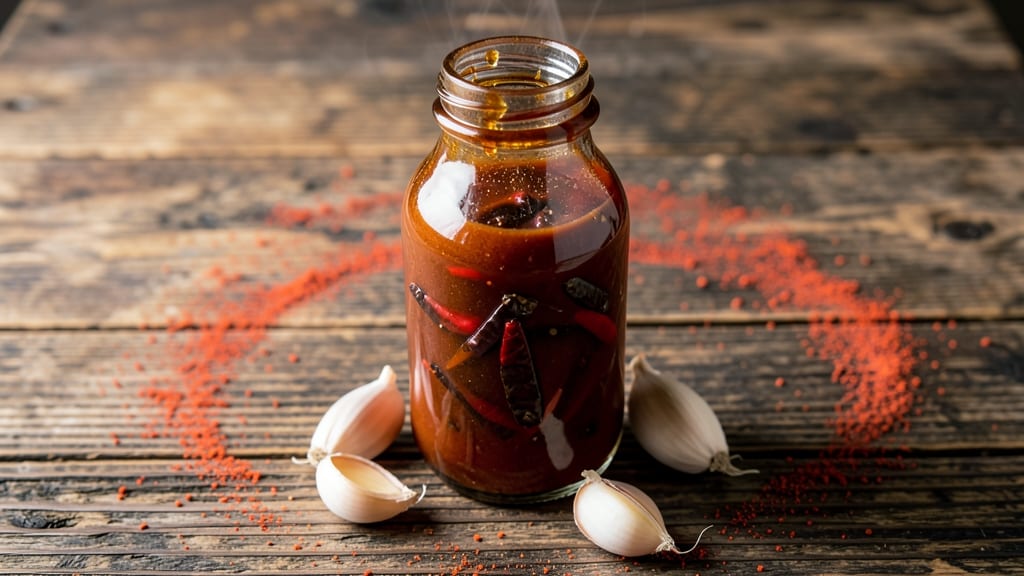
This Armageddon hot sauce delivers a perfect storm of fiery vinegar-kissed heat with layers of caramelized depth that linger long after the first bite.
The recipe balances smoky chipotle peppers and bright cayenne with a touch of molasses for complexity, creating a sauce that's bold enough to stand alone but versatile enough to elevate any dish.
What sets this apart is the controlled fermentation process, which develops depth without sacrificing intensity—think of it as a cross between a classic habanero sauce and a slow-simmered pepper jam.
The foundation is built on white vinegar and apple cider vinegar, which provide the tangy backbone while allowing the peppers to caramelize naturally over 48 hours of slow cooking.
This isn’t just heat—it’s a multi-dimensional experience where you taste the smoldering edge of chipotle, the bright punch of cayenne, and the sweet undertones of molasses, all coming together in a sauce that’s consistently around 50,000-75,000 Scoville units—hot enough to challenge, but balanced enough to savor.
The key is patience; letting the flavors meld transforms raw heat into something sophisticated and addictive.
What you’ll end up with is a deep amber sauce that coats like velvet and packs a punch without overwhelming. It’s the kind of hot sauce that transforms ordinary dishes—think grilled meats, fried eggs, or even a drizzle over popcorn—into something extraordinary.
The molasses adds a caramelized richness that rounds out the heat, making each drop memorable and crave-worthy. Once you taste this, store-bought sauces will never measure up.
Perfect for gift-giving, spice enthusiasts, or anyone tired of one-dimensional hot sauces, this recipe scales easily and keeps well in the fridge for up to 6 months.
The process is straightforward, but the results are restaurant-quality heat that you’ll want to bottle and share. Let’s get started—your taste buds are about to experience Armageddon.
Ingredients for armageddon hot sauce
Nine bold ingredients create a hot sauce that's smoky, sweet, and explosively hot.
| Ingredient | Amount | Notes |
|---|---|---|
| White Vinegar 💧 | 1 ½ cups | Distilled, 5% acidity preferred |
| Apple Cider Vinegar 🍎 | ½ cup | Unfiltered for depth |
| Chipotle Peppers in Adobo Sauce 🌶️ | 4 whole | With sauce, minced finely |
| Cayenne Peppers 🔥 | 2 tbsp | Ground, adjust for heat |
| Molasses 🍯 | ¼ cup | Unsulphured for richness |
| Garlic Cloves 🧄 | 4 cloves | Minced, for depth |
| Granulated Sugar 🍚 | ¼ cup | Light brown preferred |
| Sea Salt 🧂 | 1 tsp | Diamond Crystal preferred |
| Black Peppercorns 🌶️ | ½ tsp | Freshly cracked |
| Habanero Peppers 🌶️ | 2 whole | Seeds removed for balance |
The peppers are the heart of this sauce. Chipotle in adobo brings smoky depth, while habanero and cayenne deliver the heat. For the best quality, grab Penzeys brand peppers if you can—trust me, they're worth it. If you're using dried peppers, reconstitute them in hot vinegar for 30 minutes before blending. The molasses is non-negotiable here—unsulphured adds caramelized richness that rounds out the heat beautifully. I always grab mine from Trader Joe's since it's consistent and affordable.
No chipotle peppers? Substitute smoked paprika plus a dash of liquid smoke—it won't be identical, but close. Running low on habanero? Jalapeño with seeds removed works, though you'll need to add an extra pinch of cayenne to match the heat. The vinegars can be swapped—rice vinegar works in a pinch, but apple cider adds that fruity complexity. For the sugar, coconut sugar gives a slightly caramelized note. And if you're worried about the heat level, start with 1 tbsp cayenne and adjust to taste after fermenting.
This sauce develops over time, so patience is key. Store it in a clean glass jar with a tight seal in the fridge—it'll keep for up to 6 months. I always make a double batch because it disappears fast. For gifting, use amber glass bottles to protect from light. The flavor actually improves with age, so don't rush it. And if you're feeling extra fancy, add a bay leaf while fermenting for an herbal note that pairs beautifully with the smoky peppers.
Why You'll Love This Recipe
- Pantry-to-Bottle Speed: This sauce comes together in one pot with stuff you already have—no fancy prep, no waiting. Just dump in the chipotles, cayenne, and molasses, let it simmer until it smells like a smoky campfire, and boom. Done in 20 minutes, no excuses.
- Smoky-Sweet Heat: Here’s what sold me—the molasses gives it this deep, caramelized richness that balances the vinegar’s tang and the chipotles’ smolder. It’s not just heat; it’s a slow-building, oh-yeah flavor that sticks with you.
- Game for Any Meal: I’ve drizzled this on breakfast tacos, tossed it into marinades, and even used it to wake up a sad bowl of ramen. The acidity cuts through grease, the heat lingers, and the molasses adds this weirdly comforting depth that works everywhere.
- No-Waste, Long-Lasting: Between us, this sauce gets better after a few days as the flavors meld. Store it in the fridge for weeks, and it’s still cheaper than buying store-bought hot sauces with mystery ingredients. Plus, it’s the kind of thing you’ll inevitably end up gifting to friends.
Step-by-step instructions for fiery vinegar-kissed hot sauce
Here's how to transform bold flavors into a complex, caramelized hot sauce with layers of heat and depth.
Prepare the Peppers for Maximum Flavor Extraction
Start by finely mincing the 4 whole chipotle peppers in adobo sauce using a sharp knife or food processor. The adobo sauce contains natural spices that deepen the sauce's complexity—don't discard it. Next, remove seeds from the 2 whole habanero peppers to balance their heat while preserving their fruity brightness. Chop these finely as well.
Transfer both pepper mixtures to a small bowl and set aside. I like to let them sit for 10 minutes at room temperature before adding to the vinegar—this helps release their natural oils and intensifies their flavor. The habaneros will contribute a citrusy, slightly floral heat, while the chipotles add smoky depth that lingers on the palate.
Build the Vinegar Base with Sweet and Smoky Elements
In a heavy-bottomed saucepan, combine the 1.5 cups white vinegar and 0.5 cup apple cider vinegar. Add the 0.25 cup molasses and 0.25 cup granulated sugar, stirring until fully dissolved. The molasses and sugar create a caramelized crust during cooking that adds rich, almost chocolatey undertones to the heat.
Bring the mixture to a gentle simmer over medium-low heat—you're not looking for a rolling boil, just a steady shimmer. Let it cook uncovered for 15 minutes, stirring occasionally, until the liquid reduces by about 25% and develops a deep amber color. This reduction concentrates the flavors and creates that signature caramelized depth that sets this sauce apart from basic vinegar blends.
Incorporate Aromatics and Spices for Complexity
Add the minced 4 cloves garlic, 2 tbsp cayenne peppers, 1 tsp sea salt, and 0.5 tsp cracked black peppercorns to the saucepan. Stir well to combine and let the mixture simmer for another 10 minutes. You'll notice the garlic softens and infuses its sweetness while the cayenne and peppercorns deepen the heat profile.
Here's the thing—don't rush this step. The spices need time to bloom and meld with the vinegar base. You'll smell the garlic mellowing and the cayenne developing its characteristic peppery aroma. This is where the sauce transforms from simple heat to something with real character and complexity.
Add the Peppers and Simmer to Perfection
Carefully add the prepared pepper mixtures to the saucepan. Stir gently to distribute them evenly throughout the liquid. Return to a simmer and cook uncovered for 20-25 minutes, stirring occasionally. The sauce should reduce further until it reaches a thick, syrupy consistency that coats the back of a spoon.
Watch the color develop—it should transform from bright red to a deep, almost mahogany hue. This indicates the sugars have caramelized properly. The peppers will soften and infuse their flavors completely. Taste occasionally (carefully!) to monitor the heat level. You want a balance where the heat is intense but not overwhelming—this is where the habaneros' fruity notes and chipotles' smokiness shine through.
Strain, Bottle, and Rest for Maximum Flavor
Once the sauce has thickened to your desired consistency and developed its deep color, remove it from heat. Let it cool slightly, then strain through a fine-mesh sieve into a clean glass jar, pressing gently on the solids to extract every last bit of flavor. The strained sauce should be smooth with no visible pepper pieces.
Seal the jar and let the sauce rest at room temperature for 24 hours before using. This resting period allows all the flavors to fully meld and the heat to mellow slightly. The sauce will continue to develop complexity over time—after a week, it'll be even more balanced and nuanced. Store in the refrigerator for up to 3 months or process for longer shelf life.
Pro Tips For Making Armageddon Hot Sauce
- Mince the Chipotles: Grab a knife and finely chop those chipotles—don’t just blend the whole pod. I learned this the hard way when my sauce tasted like a muddy swamp instead of a fiery punch. The tiny bits distribute heat and smokiness evenly, so take the extra 30 seconds and do it right.
- Blend with Heat: Warm your blender jar first by running hot water through it for 10 seconds. Cold ingredients make the sauce thick and sluggish—this keeps the molasses and vinegars from turning your blender into a cement mixer. Trust me, your future self will curse you if you skip this.
- Taste the Molasses: Before adding the full amount, drop a teaspoon into your sauce and let it sit for 30 seconds. Molasses can turn cloying fast, and you want that deep, caramelized bite—not a sweet syrup. Adjust gradually, or you’ll end up with something that tastes like a candy store exploded.
- Strain Twice: After blending, strain through a fine-mesh sieve and then a coffee filter. The first pass catches the big chunks, but the second removes the fine sediment that makes your sauce look murky. Yes, it’s extra work, but your sauce will look (and taste) like it belongs in a professional kitchen.
Regional styles of this recipe
Carolina Fire Style
In the Carolinas, hot sauces are all about bold, vinegar-forward heat with a touch of sweetness. This variation swaps apple cider vinegar for white vinegar only and adds 1 tbsp of brown sugar to enhance the smoky-sweet balance.
The key is using Carolina Reaper peppers (or a blend of habanero and cayenne) for that signature Carolina punch. I like to ferment this version for 36 hours instead of 24 to deepen the tang.
The result is a thinner, more liquid sauce perfect for dipping or drizzling over pulled pork. 🌶️
Texas Smoked Pepper
Texans take their hot sauces seriously, and this version leans into the smoky, charred flavors of the Lone Star State. Replace the chipotle peppers with 2 tbsp smoked paprika and 1 tsp liquid smoke, then add 1 dried ancho chile (stemmed and seeded) for depth.
The molasses is swapped for 1 tbsp of maple syrup to keep it authentic. Simmer this blend for 30 minutes to let the smoky flavors meld perfectly. It’s ideal for brisket, tacos, or even as a marinade for grilled chicken.
The heat level stays around 50,000 Scoville units, but the smokiness makes it feel even hotter. 🔥
Louisiana Cajun Heat
Cajun cuisine thrives on bold, layered flavors, and this version delivers with a Cajun seasoning blend twist. Add 1 tsp each of dried thyme, oregano, and basil to the sauce during the simmering stage, along with 1 bay leaf for herbal depth.
The vinegar is kept as written, but the molasses is reduced to 2 tbsp to balance the earthy spices. For extra heat, include 1-2 dashes of hot sauce (like Crystal or Tabasco) at the end.
This version is perfect for gumbo, étouffée, or even as a finishing sauce for seafood. The herbs give it a complex, aromatic profile that’s pure Cajun magic. 💫
Mexican Mole-Inspired
For a fusion twist, this version incorporates elements of Mexican mole into the hot sauce. Add 1 tbsp ground cumin, ½ tsp cinnamon, and ¼ tsp cloves during the simmering stage, along with 2 tbsp of raisins (soaked in warm vinegar for 10 minutes first).
The molasses is increased to ⅓ cup to enhance the caramelized sweetness. Simmer the sauce for 35 minutes to let the spices infuse fully. The result is a rich, slightly sweet hot sauce with warm, spiced notes—perfect for tacos, enchiladas, or drizzling over grilled meats.
The heat remains intense but is beautifully balanced by the mole-inspired spices. 🌟
Nutrition facts
Frequently asked questions
Why does this hot sauce need both white and apple cider vinegar?
The combination creates a perfect balance of tang and complexity. White vinegar provides the sharp acidity that cuts through the heat, while apple cider vinegar adds fruity depth and a subtle sweetness. Together, they prevent the sauce from being one-dimensional—think of it as the yin and yang of hot sauce bases. The apple cider vinegar also helps caramelize the molasses more effectively during cooking.
Can I adjust the heat level without changing the recipe structure?
For milder heat, reduce the cayenne to 1 tbsp and remove seeds from all peppers. For extra intensity, add 1-2 Carolina Reaper peppers (seeds in) or increase cayenne to 3 tbsp. Remember, heat builds during fermentation—taste before bottling to gauge. The molasses and sugar help balance even the spiciest versions, so don't be afraid to go bold!
How do I know when the sauce is properly reduced?
The sauce is ready when it coats the back of a spoon and has a syrupy consistency. You should see a deep amber color (not bright red) and a noticeable reduction in volume—about 50-60% of the original liquid. The aroma should be complex, with smoky, fruity, and slightly caramelized notes. If it's still too thin, simmer uncovered for another 5-10 minutes. Patience here makes all the difference!
What's the best way to store and preserve this hot sauce?
Store in clean, sterilized glass jars with airtight lids in the refrigerator for up to 6 months. For longer preservation, process in a water bath for 10 minutes (sealed jars in 180°F water). The sauce actually improves with age—after 3 months, the flavors meld even more beautifully. For gifting, use amber glass bottles to protect from light degradation. Always label with the date!
Can I make this sauce without fresh peppers?
Yes! For chipotle, use 2 tbsp smoked paprika + ½ tsp liquid smoke. For habanero, substitute 1 tbsp cayenne + 1 tsp ground allspice to mimic the fruity heat. Reconstitute dried peppers in hot vinegar for 30 minutes before adding. The texture will be slightly different, but the flavor profile remains intact. Just expect a more powdery consistency if using only dried peppers.