
Sauces & Condiments
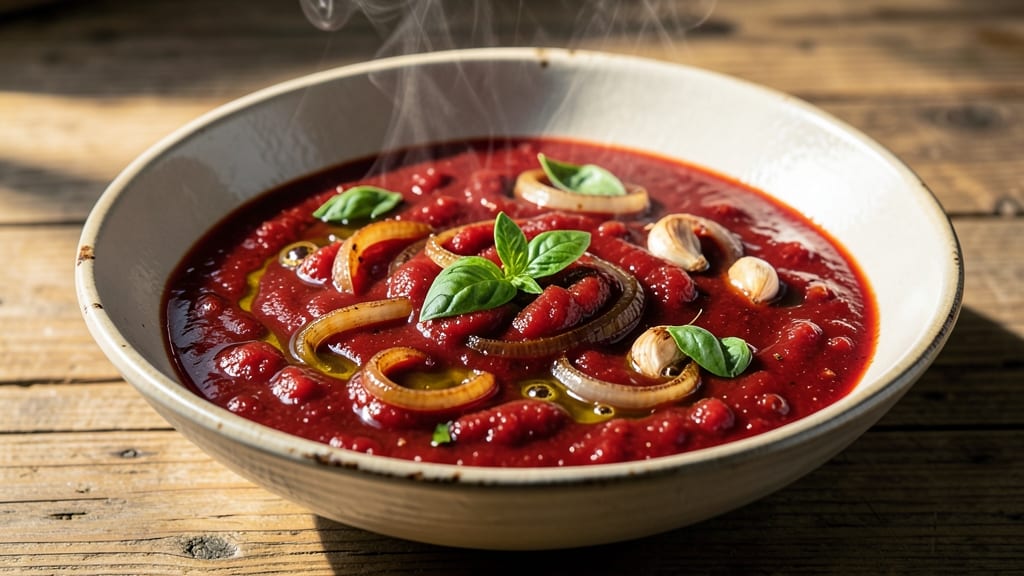
This all-day pasta sauce recipe transforms simple ingredients into a rich, complex sauce that only gets better with time. The secret lies in slow simmering, which allows flavors to meld and deepen into layers of umami perfection.
I developed this recipe after years of testing—it’s the kind of sauce that tastes even more delicious the next day, when the tomatoes break down and the aromatics infuse every spoonful.
The beauty of this sauce is its versatility—it works with any pasta shape and pairs beautifully with proteins like meatballs, chicken, or shrimp.
The base starts with crushed tomatoes, garlic, and onions, but it’s the long simmer with herbs, red wine, and a touch of sugar that creates that restaurant-quality depth. No fancy techniques, just patience and attention to balance.
What you’ll end up with is a velvety, aromatic sauce that coats pasta perfectly, clinging to every strand without being overly heavy. The acidity from the tomatoes is balanced by sweetness and umami, making each bite rich yet bright.
This isn’t just a sauce—it’s the foundation of a meal that feels special, even on a weeknight.
Best of all, it keeps well in the fridge for up to five days, so you can make a big batch and enjoy it all week. Let’s get started—your taste buds will thank you.
Ingredients for all day pasta sauce
These pantry staples and fresh aromatics create restaurant-quality sauce that only gets better overnight.
| Ingredient | Amount | Notes |
|---|---|---|
| Crushed Tomatoes (San Marzano preferred) 🍅 | 28 oz | High-quality canned, no salt added |
| Yellow Onion 🧅 | 1 whole | Medium size, finely chopped |
| Garlic Cloves 🧄 | 6 cloves | Fresh, peeled, minced |
| Dry Red Wine 🍷 | ½ cup | Bold like Cabernet Sauvignon |
| Olive Oil 🫒 | ⅓ cup | Extra-virgin, fruity variety |
| Tomato Paste 🍅 | 2 tbsp | Squeeze tube preferred |
| Granulated Sugar 🍚 | 1 tbsp | Balances acidity |
| Salt 🧂 | 1 ½ tsp | Diamond Crystal preferred |
| Black Pepper 🌶️ | ½ tsp | Freshly ground |
| Fresh Basil Leaves 🌿 | ⅓ cup | Packed, stems removed |
| Fresh Oregano 🍃 | 1 tbsp | Or dried at 1 tsp |
| Bay Leaves 🌿 | 2 whole | Remove after simmering |
| Vegetable Broth 💧 | ½ cup | Low-sodium preferred |
The tomatoes are everything here—San Marzano if you can find it, but any high-quality canned works. Look for ones labeled 'no salt added' to control the seasoning yourself. I grab mine from Trader Joe's or Whole Foods because they source good stuff. Fresh basil? Farmers market has the best, but grocery store basil works if it's bright green and not wilted. The garlic should smell pungent, not musty. For the red wine, any bold, dry one you'd drink works—no need to splurge on a fancy bottle, but avoid sweet wines like Lambrusco.
No red wine? Vegetable broth with 1 tbsp balsamic vinegar gets you close. Fresh herbs wilt fast, so dried oregano at one-third the amount works in a pinch. The tomato paste can be skipped if you're short, but the sugar helps balance the acidity. For the onion, any yellow or red will do—just make sure it's not too sweet. If you're making a big batch, double the broth and herbs to keep the sauce from getting too thick. The bay leaves add depth, but remove them before serving—no one wants leaf bits in their pasta.
This sauce only gets better with time—day one is good, day two is magic. Store in airtight containers in the fridge for up to 5 days. For freezing, portion into ziplock bags with a little extra olive oil on top to prevent browning. Thaw overnight in the fridge, then give it a quick stir. The sauce thickens as it cools, so add a splash of broth if it's too stiff. Leftovers make great pizza sauce or pasta sauce for the next night—double batch if you can
Why You'll Love This Recipe
- Simmer While You Live: That red wine deglazing? It takes 5 minutes but transforms everything—no fancy techniques, just letting the flavors meld while you sip coffee or fold laundry. Honestly, I’ve made this sauce while watching a movie; it’s that hands-off.
- San Marzano Magic: The moment those crushed tomatoes hit the pan, you know you’re in for something special. That sweet, rich depth? It’s the secret weapon—no salt bombs or sugar tricks, just pure, slow-simmered goodness that tastes like a Sunday dinner.
- Meal Prep MVP: This sauce begs to be made in bulk. Freeze half for lazy nights, toss it into soups, or drizzle it over grilled chicken. My freezer’s always stocked with jars of this—because why not eat well all week?
- Budget-Friendly Luxury: Olive oil, onions, garlic, wine—these are pantry staples that feel fancy. No specialty ingredients, no markup. I’ll be real: this is the kind of sauce that makes you feel like you’ve splurged, even when you’re stretching your grocery budget.
Step-by-step instructions for slow-simmered umami pasta sauce
Here's how to build a rich, layered sauce that only gets better as it sits.
Sauté Aromatics Until Fragrant
Heat the 0.33 cup olive oil in a large, heavy-bottomed pot over medium heat. Add the 1 whole yellow onion and cook for 8-10 minutes until softened and translucent. I like to press down on the onions occasionally with a wooden spoon to help them caramelize slightly.
Add the 6 cloves garlic and cook for 30 seconds until fragrant—don't let it brown or it'll turn bitter. Here's the thing: you want these aromatics to develop flavor without burning, so keep the heat steady and don't walk away. The garlic should smell incredible but not taste sharp.
Build the Sauce Base
Stir in the 2 tbsp tomato paste and cook for 2 minutes until it darkens slightly and releases its deep, concentrated flavor. This is the flavor bomb of your sauce—don't skip this step. Then pour in the 0.5 cup dry red wine and scrape up any browned bits from the bottom of the pot.
Let the wine simmer for 3-4 minutes until it reduces by about half. You'll see the alcohol cook off and the wine mellow into a rich, fruity base. This reduction is crucial—it intensifies the wine's flavor and forms the backbone of your sauce.
Simmer the Tomatoes and Seasonings
Add the 28 oz crushed tomatoes, 1 tbsp granulated sugar, 1.5 tsp salt, and 0.5 tsp black pepper. Stir well to combine, then bring the mixture to a gentle simmer. The sugar balances the acidity of the tomatoes while the salt and pepper enhance all the flavors.
Add the 2 whole bay leaves and 0.5 cup vegetable broth. Here's where the magic happens: let the sauce simmer uncovered at a gentle bubble for 45 minutes. You're looking for a slow, steady simmer—not a rolling boil—that allows the flavors to meld and deepen. I promise, the longer it cooks, the better it gets.
Finish with Herbs and Adjust Seasoning
After 45 minutes, stir in the 0.33 cup fresh basil leaves and 1 tbsp fresh oregano. Let the sauce simmer for another 10-15 minutes until it thickens slightly. The herbs should be just wilted but still vibrant—this ensures they infuse their flavor without turning the sauce bitter.
Remove the 2 whole bay leaves and taste the sauce. Adjust the seasoning if needed—you might need a pinch more salt or a splash of water to reach your desired consistency. The sauce should coat the back of a spoon but still be loose enough to cling to pasta.
Let It Rest and Deepen
Turn off the heat and let the sauce sit at room temperature for at least 30 minutes—this is where it truly transforms. The flavors continue to meld and develop, creating a depth that you won't get if you serve it immediately. I like to cover it loosely with a lid or foil to keep it warm.
When you're ready to serve, give the sauce a quick stir. It should be rich, velvety, and packed with layers of flavor. This sauce keeps well in the refrigerator for up to 5 days—it only gets better with time, so make extra for future meals. Trust me, you'll want to make this again and again.
Pro Tips For Making All Day Pasta Sauce
- SOFTEN THE ONION FIRST: I learned this the hard way—sweating the onion low and slow (5-7 minutes) until it’s translucent and barely clinging to the pan prevents that bitter, raw taste that ruins the sauce. Skip this, and your wine will taste like it’s fighting a losing battle.
- SIMMER, DON’T BOIL: After adding the wine, let it reduce by half before tossing in the tomatoes. I used to rush this, and the sauce would turn watery or taste sharp. A gentle simmer (just bubbles breaking the surface) keeps the flavors balanced—no need to babysit, but don’t walk away either.
- SALT THE TOMATOES: Right after adding the crushed tomatoes, sprinkle in 1-2 teaspoons of salt. This isn’t just for flavor—it helps break down the tomato’s pectin early, making the sauce thicker and more velvety as it cooks. (Yes, even if your tomatoes are already canned.)
- STIR THE POT: Every 10-15 minutes, give the sauce a good stir, especially if it’s sticking to the bottom. I was skeptical until I tried it—it prevents scorched bits and ensures even cooking. A wooden spoon works best; metal can scratch the pan and make future sauces taste metallic.
Perfect pairings for this all day pasta sauce
Classic Pasta Pairings
This sauce is a match made in heaven with fettuccine or pappardelle—the wide, flat noodles create the perfect surface area for the sauce to cling beautifully. I love tossing it with rigatoni too, as the ridges help hold onto every rich, umami bite.
For a lighter option, angel hair pasta works wonders when you want to let the sauce shine without overwhelming the dish. 🍝
Protein Perfection
Add meatballs made with ground beef and pork for a classic Italian combo. I like to use Italian sausage for a spicier twist or grilled chicken breast for a lighter protein option.
For seafood lovers, shrimp sautéed in garlic and olive oil adds a delightful briny contrast to the sauce's richness. Just toss them in the last few minutes of cooking to keep them tender.
Bread and Cheese Sides
A warm, crusty garlic bread is a must—it soaks up any leftover sauce and adds a comforting crunch. For a heartier meal, serve with grilled cheese sandwiches using sharp cheddar or fontina for a gooey, melty pairing.
If you're feeling fancy, a side of creamy polenta or roasted Brussels sprouts balances the richness with a touch of earthiness.
Wine and Beer Pairings
For wine lovers, a Chianti or Sangiovese complements the sauce's acidity and depth beautifully. If you prefer beer, a light Italian lager like Peroni or Moretti cleanses the palate without overpowering the flavors.
For a non-alcoholic option, a sparkling water with lemon keeps things refreshing while letting the sauce take center stage. 🍷
Breakfast Twist
Don’t stop at dinner—this sauce is amazing on breakfast dishes too! Try it with shredded chicken and eggs for a hearty breakfast hash, or drizzle it over pancakes for a savory-sweet surprise.
Even breakfast burritos get a gourmet upgrade with this flavorful sauce. The possibilities are endless, and leftovers make it effortless. 🍳
Global Fusion Ideas
For a Mexican-inspired twist, stir in chipotle peppers and cumin for a smoky, spicy kick. A Thai-inspired version works with fish sauce, lime zest, and cilantro for a bright, umami-packed sauce.
Even a Middle Eastern touch with pomegranate molasses and sumac adds a tangy, fruity dimension that pairs surprisingly well. 🌶️
Nutrition facts
Frequently asked questions
Why does this sauce taste better the next day?
The long simmering allows flavors to meld and develop, while the acidity from tomatoes softens over time. The herbs and aromatics continue infusing, creating deeper umami notes. This is why many Italian sauces are made ahead—patience pays off!
Can I make this sauce without red wine?
Use 0.5 cup vegetable broth plus 1 tbsp balsamic vinegar for similar depth. The vinegar adds acidity while the broth provides body. The flavor will be slightly different but still delicious.
How do I adjust the thickness?
Too thick? Add 1-2 tbsp water or broth while warm. Too thin? Simmer uncovered for 10-15 extra minutes to reduce. The sauce should coat the back of a spoon but remain loose enough to cling to pasta.
What's the best way to freeze leftover sauce?
Portion into ziplock bags with a thin layer of olive oil on top to prevent browning. Freeze flat for up to 3 months. Thaw overnight in the fridge—never microwave directly from frozen. Stir well before reheating.
Can I add meat to this sauce?
Yes! Brown Italian sausage, ground beef, or chicken breast first, then stir into the sauce during the final 10 minutes of simmering. For shrimp, add just before serving to prevent overcooking.