
Sauces & Condiments
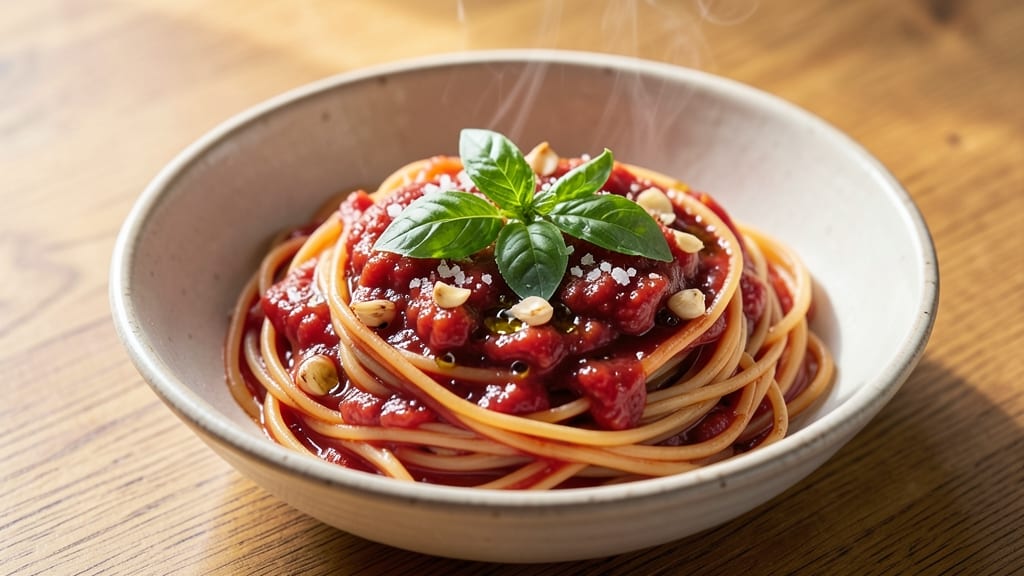
Angel hair pasta with red sauce transforms a simple weeknight dinner into an Italian-inspired masterpiece—silky noodles perfectly coated in a velvety tomato sauce that balances acidity and sweetness. The key lies in al dente pasta and a sauce that simmers just long enough to develop depth without losing brightness. I’ve perfected this recipe over years of testing, ensuring every bite delivers that restaurant-quality harmony of textures and flavors.
What sets this dish apart is the technique: boiling the pasta until tender but still firm, then finishing it in the sauce to absorb flavor without turning mushy.
A simple blend of canned tomatoes, garlic, olive oil, and fresh basil creates the foundation, while a touch of sugar and red pepper flakes add balance. The result? A dish that’s elegant enough for company but quick enough for weeknights—ready in under 30 minutes.
Imagine twirling that first forkful: delicate angel hair clinging to a sauce that’s rich yet bright, with flecks of fresh herbs and a hint of garlic’s warmth. The sauce clings perfectly to each strand, creating a silky texture that melts in your mouth.
This isn’t just pasta—it’s a dish that feels special, with minimal effort and maximum impact.
Pair it with garlic bread for dipping, a simple arugula salad for freshness, or grilled shrimp for added protein. The versatility makes it perfect for any occasion, from casual dinners to dinner parties. Let’s get started on creating this timeless classic.
Ingredients for angel hair pasta red sauce
Silky angel hair meets velvety tomato sauce—just eight ingredients for restaurant-quality weeknight Italian.
| Ingredient | Amount | Notes |
|---|---|---|
| Angel Hair Pasta 🍝 | 8 oz | Dried, high-quality preferred |
| San Marzano Tomato Cans 🍅 | 2 cans | Crushed, 28 oz each |
| Extra-Virgin Olive Oil 🫒 | ½ cup | For richness and flavor |
| Garlic Cloves 🧄 | 4 cloves | Freshly minced for aroma |
| Fresh Basil Leaves 🌿 | ½ cup | Packed, stems removed |
| Granulated Sugar 🍚 | 1 tbsp | Balances acidity |
| Red Pepper Flakes 🌶️ | ½ tsp | Adjust for heat preference |
| Salt 🧂 | 1 ½ tsp | Diamond Crystal preferred |
| Black Pepper 🌶️ | ½ tsp | Freshly ground |
| Red Wine Vinegar 🍷 | 1 tbsp | Brightens sauce |
| Vegetable Broth 💧 | ½ cup | Low-sodium preferred |
| Parmesan Cheese 🧀 | ¼ cup | Freshly grated |
The tomatoes make all the difference here. San Marzano cans from Whole Foods or Trader Joe's have that perfect balance of sweetness and acidity—don't skimp on quality. Fresh basil? Farmers market has the best, but grocery store bunches work too if they're bright and perky. The olive oil should be extra-virgin—anything less tastes flat. For the pasta, De Cecco or Barilla are my go-tos, but any good dried brand will do. Look for angel hair that's uniformly thin—thicker strands won't get that signature silky texture.
No San Marzano? Crushed tomatoes in a 28 oz can work in a pinch, just add an extra pinch of sugar. Short on basil? Dried oregano at one-third the amount gets you close, but fresh is ideal. The red pepper flakes can be swapped for crushed red pepper if that's what you've got. Need more depth? A splash of red wine instead of vinegar adds complexity. The vegetable broth keeps the sauce from being too acidic—low-sodium is key so you don't over-salt later. And if you're feeling fancy, toasted pine nuts add a nice crunch on top.
Pasta keeps best in an airtight container for 3 days—it's better the next day as the flavors meld. The sauce? 5 days in the fridge, 3 months frozen. I always double the sauce and freeze half—perfect for lazy nights. Store the sauce in a jar with a thin layer of olive oil on top to preserve freshness. And if you're prepping ahead, cook the pasta just one minute less than package instructions—it'll finish perfectly in the sauce later.
Why You'll Love This Recipe
- I swear by this: just toss in whole garlic cloves while the sauce simmers—they soften perfectly, no mincing required. That rich San Marzano juice does the work for you.
- Same sauce, different vibes: toss it with grilled shrimp for a fancy night in, or keep it simple with crusty bread for a lazy Sunday. The angel hair soaks up the sauce like a dream, so you’re never left with dry pasta.
Step-by-step instructions for angel hair pasta with red sauce
This method delivers perfectly al dente angel hair with a velvety, balanced tomato sauce every time.
Prepare the Tomato Sauce Base
Heat the 0.5 cup extra-virgin olive oil in a large skillet over medium heat until shimmering but not smoking. Add the 4 cloves minced garlic cloves and sauté for 30 seconds until fragrant—don't let it brown or it'll turn bitter. Immediately add the 2 cans crushed San Marzano tomato cans, 1 tbsp granulated sugar, 0.5 tsp red pepper flakes, 1.5 tsp salt, and 0.5 tsp black pepper. Stir well to combine.
Bring the mixture to a gentle simmer and let it cook uncovered for 15 minutes, stirring occasionally. This reduces the sauce and deepens the flavors. You'll notice the sauce thickens slightly and the acidity mellows—this is when the sugar begins balancing the tomatoes' natural acidity. Keep the heat at medium-low to prevent boiling, which can make the sauce cloudy.
Build Depth and Brightness
After 15 minutes, stir in the 1 tbsp red wine vinegar and 0.5 cup vegetable broth. The vinegar brightens the sauce while the broth adds subtle depth without overwhelming the tomatoes. Let the sauce simmer for another 5 minutes, stirring occasionally. You'll see the sauce become glossier and more cohesive—this is the moment the flavors meld together perfectly.
Taste the sauce and adjust seasoning if needed. I typically add a pinch more salt or a splash of vinegar if the tomatoes were particularly acidic. The sauce should be balanced—sweet, tangy, and slightly spicy from the red pepper flakes. If it's too thick, add 1-2 tablespoons water to reach your desired consistency.
Cook the Angel Hair Pasta
While the sauce simmers, bring a large pot of water to a rolling boil. Add 1.5 tsp salt (the water should taste like the sea) and cook the 8 oz angel hair pasta according to package directions—usually 3-4 minutes for al dente texture. The pasta is done when it floats to the surface and a taste test reveals a slight resistance in the center.
Reserve 1 cup pasta water before draining—the starch in this water helps emulsify the sauce. Drain the pasta and return it to the pot, tossing with a splash of the reserved pasta water to prevent sticking. Keep the pot warm over low heat while you finish the sauce.
Combine and Finish
Add the cooked angel hair pasta to the skillet with the sauce and toss gently to coat evenly. The residual heat from the pasta will help the sauce cling to each strand. If the sauce seems too thick, add 2-3 tablespoons reserved pasta water to loosen it. Let the mixture simmer together for 2 minutes, allowing the pasta to absorb the flavors.
Remove the skillet from heat and stir in the 0.5 cup packed fresh basil leaves and 0.25 cup freshly grated Parmesan cheese. The basil adds freshness while the Parmesan contributes a nutty, salty finish. Taste one last time and adjust seasoning if needed—this is your final opportunity to perfect the balance.
Serve Immediately
Divide the pasta among serving plates and garnish with additional fresh basil leaves and grated Parmesan cheese. Serve immediately while the pasta is still hot and the sauce clings beautifully to each delicate strand. The dish should be vibrant in color—deep red from the tomatoes, bright green from the basil, and creamy white from the cheese.
Each bite should deliver perfectly al dente pasta with a velvety sauce that coats the noodles without being overly thick. The flavors should be bright, balanced, and full of depth from the slow simmering. For best results, serve with a simple arugula salad and crusty bread to soak up any remaining sauce.
Pro Tips For Making Angel Hair Pasta Red Sauce
- CRUSH THE GARLIC: Use a knife instead of a press—smash 3 cloves flat with the blade’s heel, then slice thin. Pressing bruises garlic, turning the sauce bitter; slicing releases flavor without turning it to mush.
- SIMMER LOW AND SLOW: After adding tomatoes, drop heat to a bare simmer (just tiny bubbles) and walk away for 20 minutes. Rushing this turns the sauce watery—patience thickens it naturally, no stirring required.
- SALT THE PASTA WATER: Use 1.5 tablespoons of salt per 4 quarts of water—angel hair needs bold flavor to stand out. Taste the pasta before draining; if it’s bland, the sauce won’t save it.
- FINISH WITH COLD BASIL: Toss in a handful of torn basil leaves after turning off the heat. Hot water wilts them to sludge; cold water keeps them bright and peppery—no need to chop, just rip and scatter.
Essential equipment for this recipe
Skillet Essentials
Start with a 12-inch heavy-bottomed skillet—I swear by All-Clad stainless steel or Lodge cast iron for even heat distribution. The sauce needs to simmer gently, and these materials prevent hot spots that can burn your garlic.
A medium heat setting is crucial here—too high, and your sauce will break or develop a skin. 🔥
Pasta Pot Must-Haves
Use a large, deep pot (at least 8-quart capacity) to hold the boiling water for angel hair. I prefer Cuisinart stainless steel pots—they heat up fast and maintain a rolling boil.
Add 1.5 tsp Diamond Crystal salt to the water (it dissolves better than table salt) and stir before adding pasta. A fine-mesh colander with long handles makes draining easier—OXO Good Grips is my go-to.
Garlic Tools
Freshly minced garlic makes all the difference, so invest in a garlic press or a sharp chef's knife with a mandoline for even slices. I use a Microplane to grate garlic cloves directly into the oil—it distributes perfectly without clumping.
For extra efficiency, keep a small cutting board dedicated to garlic prep near your stove.
Sauce Thickeners
While this recipe doesn’t require flour or cornstarch, having arrowroot powder on hand helps adjust consistency if needed. A small whisk (like Mercer Culinary Genius) blends the sauce smoothly, while a wooden spoon prevents scratching your skillet.
For measuring small amounts like red pepper flakes, a spice scoop ensures precision.
Basil Handling
Fresh basil bruises easily, so use kitchen shears to snip stems cleanly. I recommend Weston stainless steel shears for durability. Store any leftover basil in a glass jar with ½ inch water—cover loosely with plastic wrap and refrigerate for up to 5 days.
A small mortar and pestle also works for crushing basil leaves lightly into the sauce for extra aroma.
Parmesan Prep
For that perfect grated Parmesan, use a box grater with large holes or a microplane for fine shavings. I like to grate directly over the pasta to prevent clumping. A small bowl nearby catches excess cheese—this is where I taste-test the final seasoning before serving.
Keep a cheese brush handy to clean any stray bits from your grater between uses.
Nutrition facts
Frequently asked questions
Why does the recipe call for San Marzano tomatoes specifically?
San Marzano tomatoes are grown in Italy's volcanic soil, giving them a naturally sweeter, less acidic profile than regular canned tomatoes. Their meaty texture and balanced flavor create a richer sauce without needing extra sugar or vinegar. For a budget-friendly swap, use high-quality crushed tomatoes and add ½ extra teaspoon of sugar to balance acidity.
Can I make this sauce ahead of time?
The sauce tastes even better the next day as flavors meld. Store it in an airtight container in the fridge for up to 5 days. For freezing, portion into jars with a thin layer of olive oil on top to preserve freshness—thaw overnight in the fridge before reheating. The pasta is best cooked fresh, but you can cook it ahead and reheat with a splash of pasta water to prevent drying.
What's the secret to preventing angel hair pasta from turning mushy?
Three key factors: al dente cooking (3-4 minutes max), reserved pasta water (1 cup), and low heat finishing. The starch in the pasta water helps emulsify the sauce, while gentle tossing prevents breaking the delicate strands. Never overcook—angel hair should have a slight bite when bitten. If it feels too soft after combining with sauce, cook it 30 seconds less next time.
How can I make this dish vegetarian-friendly?
This recipe is already vegetarian! For extra protein, add sautéed mushrooms or spinach to the sauce during the final 5 minutes of simmering. You could also stir in white beans or lentils after combining with the pasta. The tomato base pairs beautifully with plant-based proteins—just ensure they're cooked through before serving. For a vegan version, use vegetable broth and omit the Parmesan (or substitute with nutritional yeast).
What if my sauce turns out too acidic?
Don't worry—it's easily fixable! Add ½ teaspoon more sugar or 1 tablespoon vegetable broth to mellow the acidity. For immediate balance, stir in 1 teaspoon tomato paste or a pinch of salt to round out the flavors. If you catch it early, simmering an extra 2-3 minutes** can also help reduce acidity. Taste as you go—this sauce is meant to be adjusted to your preference!