
Sauces & Condiments
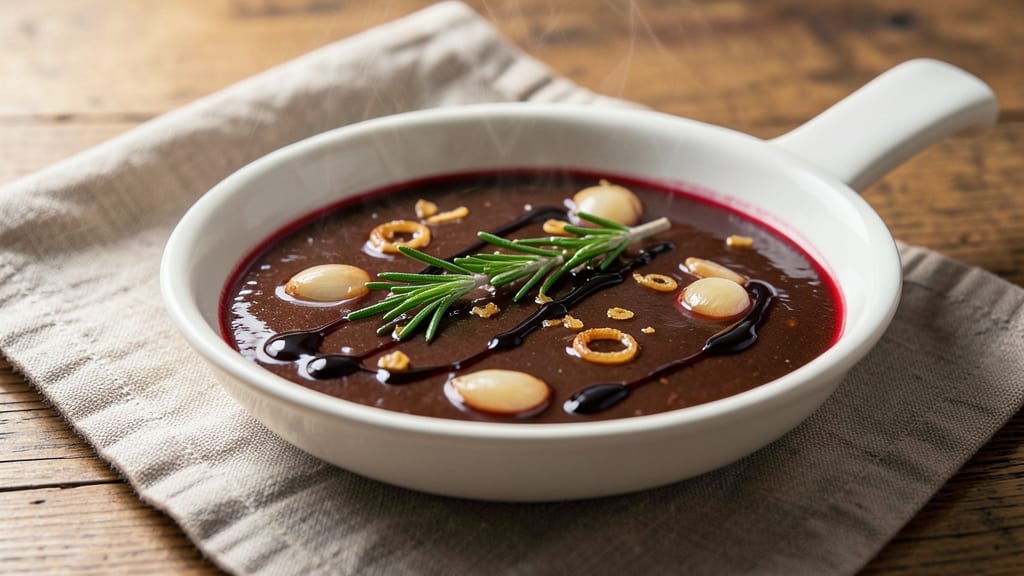
This au jus sauce recipe without drippings delivers restaurant-quality depth using simple pantry staples and a technique that transforms basic stock into something extraordinary. The key lies in a wine reduction that builds rich, caramelized flavors—no pan drippings required.
I developed this method after years of perfecting au jus for home cooks who want that velvety, meaty essence without the fuss of collecting drippings.
The foundation is a beef stock reduction combined with red wine and vinegar, which creates the signature tangy-sweet balance. Aromatics like shallots and garlic infuse the sauce with layers of flavor, while a touch of tomato paste adds depth that mimics traditional drippings.
The sauce thickens just enough to coat proteins beautifully, making every bite feel luxurious.
What sets this apart is how versatile it is—use it to elevate roasted meats, drizzle over grilled steaks, or even serve as a dipping sauce for crusty bread. The recipe yields about 1 ½ cups, perfect for a family dinner or leftovers that reheat beautifully.
Store any extras in the fridge for up to 5 days or freeze for 3 months without losing flavor.
Between you and me, this sauce is a game-changer for weeknight dinners. It takes less than 30 minutes to make and requires minimal effort, yet the results taste like you spent hours in the kitchen. The secret? Patience in the reduction—rushing it means missing out on that deep, savory richness.
Ingredients for au jus sauce recipe without drippings
Nine simple ingredients transform basic stock into velvety, restaurant-worthy au jus—no drippings needed.
| Ingredient | Amount | Notes |
|---|---|---|
| Beef Stock 🥩 | 2 cups | High-quality, homemade preferred |
| Dry Red Wine 🍷 | ½ cup | Bold, dry variety like Cabernet Sauvignon |
| Red Wine Vinegar 🍶 | 2 tbsp | For tangy depth |
| Tomato Paste 🍅 | 1 tbsp | Smooth, not chunky |
| Shallots 🧅 | 2 whole | Finely minced, not chopped |
| Garlic Cloves 🧄 | 3 cloves | Freshly minced |
| Unsalted Butter 🧈 | 2 tbsp | Cold, cubed for finishing |
| Diamond Crystal Kosher Salt 🧂 | ½ tsp | Adjust to taste |
| Black Peppercorns 🌶️ | ¼ tsp | Freshly cracked |
| Fresh Thyme Leaves 🌿 | 1 tsp | Or 0.5 tsp dried thyme |
The beef stock is non-negotiable here—homemade yields the deepest flavor, but high-quality store-bought like Kirkland or Pacific Foods works in a pinch. For the wine, Cabernet Sauvignon or Merlot add the best structure, but any bold, dry red will do. Shallots should be fresh and pale purple, not green or sprouting. I always buy them pre-peeled at Whole Foods to save time. The tomato paste? San Marzano is ideal, but any smooth brand without added salt works. Fresh thyme is preferable, but dried at half the amount won't ruin the dish.
No red wine? Substitute beef broth with an extra splash of balsamic vinegar—it mimics the acidity. Short on shallots? Double the garlic for a similar aromatic punch. The butter at the end is crucial—don't skip it, as it emulsifies the sauce for that silky texture. For extra richness, add a teaspoon of beef tallow instead of butter. The sauce thickens as it reduces, so if it's too thin, simmer uncovered for another 2-3 minutes. If you prefer a smoother finish, strain through a fine-mesh sieve before serving.
This sauce peaks after 2-3 days in the fridge—flavors meld beautifully. Store in an airtight container with a thin layer of oil on top to preserve freshness. For freezing, portion into ice cube trays, then transfer to a bag—3 months max. Reheat gently on low heat, stirring constantly to prevent scorching. A splash of water or stock helps restore consistency if it thickens too much during storage. The sauce pairs perfectly with roasted meats, grilled steaks, or even as a dipping sauce for crusty bread.
Why You'll Love This Recipe
- Here’s what sold me: that splash of dry red wine and vinegar cuts through the richness of the stock like a knife. It’s not sweet, not heavy—just deep, savory, and bright enough to make even a simple steak feel like a restaurant dish.
- No Pan Required: I swear by this sauce because it’s all about the pot—no crowded skillets, no drippings to strain. Just toss the shallots, tomato paste, and beef stock in a saucepan, let it simmer until the wine’s alcohol cooks off, and boom—you’ve got rich, velvety sauce with zero fuss.
- Wine’s Secret Umami: Here’s what sold me: that splash of dry red wine and vinegar cuts through the richness of the stock like a knife. It’s not sweet, not heavy—just deep, savory, and bright enough to make even a simple steak feel like a restaurant dish.
- Steak Night Every Night: Between us, this sauce is my weeknight shortcut for roast beef, meatloaf, or even mashed potatoes. I keep a jar in the fridge because it turns ordinary meals into something that feels special—no fancy prep, just flavor.
Step-by-step instructions for crafting au jus from scratch
Transform simple pantry ingredients into a restaurant-quality au jus using precise technique.
Develop the Flavor Base with Shallots and Garlic
Heat a heavy-bottomed saucepan over medium-low heat and add the 2 tablespoons unsalted butter. Allow it to melt completely, then add the 2 whole shallots that have been finely minced. Cook gently for 5-6 minutes until the shallots become translucent and begin to caramelize slightly at the edges.
Add the 3 cloves freshly minced garlic and continue cooking for another 30 seconds until fragrant. The key here is patience—cooking the aromatics too quickly will burn them, creating bitter flavors. You'll know they're ready when the garlic releases its signature aroma and the shallots take on a soft, golden hue.
Build Depth with Wine and Vinegar
Pour in the 0.5 cup dry red wine and the 2 tablespoons red wine vinegar, scraping up any browned bits from the bottom of the pan. This deglazing step captures all the concentrated flavor you've built. Allow the mixture to simmer gently for 3-4 minutes until the wine reduces by about half and the liquid becomes slightly syrupy.
Next, stir in the 1 tablespoon tomato paste and cook for another 1 minute to blend it smoothly into the mixture. The tomato paste adds subtle sweetness and body that balances the acidity from the vinegar. Keep the heat at medium-low to prevent the sauce from developing a raw tomato taste.
Simmer and Infuse with Stock and Herbs
Gradually pour in the 2 cups beef stock while whisking continuously to prevent separation. Add the 1 teaspoon fresh thyme leaves, 0.5 teaspoon Diamond Crystal kosher salt, and 0.25 teaspoon freshly cracked black peppercorns. Bring the mixture to a gentle simmer over medium heat.
Reduce the heat to low and let the sauce simmer uncovered for 15-20 minutes until it thickens slightly and reduces by about one-third. The sauce should coat the back of a spoon but still remain pourable. Stir occasionally to prevent any burning at the bottom of the pan. The thyme will infuse its earthy aroma while the stock deepens the beefy flavor.
Finish with Butter for Richness and Texture
Remove the saucepan from heat and stir in the remaining 2 tablespoons cold unsalted butter, cut into small cubes. This finishing step adds luxurious mouthfeel and helps emulsify the sauce, creating a velvety texture. Let the butter melt completely, then taste and adjust the seasoning if needed—you may need a pinch more salt or pepper to balance the flavors.
The sauce should now have a glossy sheen and a rich, complex flavor profile with notes of caramelized shallots, wine, and thyme. For the best results, serve immediately while warm. If needed, reheat gently over low heat, stirring occasionally to maintain its silky consistency. This au jus pairs beautifully with roasted meats, grilled steaks, or even as a dipping sauce for crusty bread.
Pro Tips For Making Au Jus Sauce Recipe Without Drippings
- Simmer Slow and Steady: I learned this the hard way—rushing the reduction turns your au jus into a thin, vinegary glaze. After the wine and vinegar cook off, drop the heat to a gentle simmer (just small bubbles, not a rolling boil) and let it reduce by about 50% over 15-20 minutes. Patience here keeps the sauce rich, not sharp.
- Sweat Shallots First: Skipping this step means your shallots burn before they soften, adding bitter notes to the sauce. Finely dice them (smaller than a pea) and cook them in a cold pan with a splash of stock or wine for 5-6 minutes before adding anything else. They’ll melt into the sauce instead of floating as raw chunks.
- Deglaze with Stock, Not Water: I used to grab water for the deglaze after browning shallots, and the sauce always tasted flat. Use the beef stock instead—it adds depth immediately. Add it hot to the pan, scraping up every last bit of fond (those browned bits are flavor gold), then reduce by half before adding wine.
- Balance Vinegar Last: Red wine vinegar is potent, and adding it too early can make your sauce taste sour before the flavors meld. Stir it in only after the wine and stock have reduced by 25%, then taste and adjust. A pinch of sugar (½ tsp) here can also soften the acidity if needed.
Flavor customization for these flavors
Wine Swaps
No red wine? No problem. A ½ cup beef broth with 1 tablespoon balsamic vinegar mimics the acidity and depth perfectly. For a smoky twist, use ½ cup apple cider instead—it adds subtle sweetness that balances the tang.
I once used dry sherry in a pinch when out of wine, and it worked beautifully with beef dishes. 🍷
Vinegar Variations
Swap red wine vinegar for white wine vinegar if that's what you have, but expect a slightly sharper finish. For a sweeter profile, use rice vinegar—just reduce it by 1 tablespoon and add ½ teaspoon sugar to balance.
My go-to backup is apple cider vinegar, which adds fruity notes that pair wonderfully with pork or chicken.
Herb Substitutions
Fresh thyme unavailable? Use ½ teaspoon dried thyme or swap for 1 teaspoon fresh rosemary, which adds piney brightness. For a parsley finish, add 1 tablespoon chopped fresh parsley at the end. I've also used ½ teaspoon dried tarragon for a licorice-like depth—it works surprisingly well with beef.
Thickness Adjustments
If your sauce reduces too much, whisk in 1 tablespoon warm beef stock to loosen it. For extra body, add ½ teaspoon cornstarch mixed with 1 teaspoon water and simmer for 1 minute.
I once accidentally made the sauce too thin and saved it by whisking in 1 teaspoon cold butter—it emulsified beautifully.
Umami Boosters
Add ½ teaspoon soy sauce or 1 teaspoon Worcestershire sauce for extra depth. For a vegetarian version, use ½ teaspoon miso paste instead of beef stock. I love adding 1 teaspoon fish sauce for a Southeast Asian-inspired twist—it works surprisingly well with grilled meats. 🌶️
Sweet-Tangy Balance
Need more sweetness? Add ½ teaspoon honey or maple syrup. For extra tang, increase the vinegar by ½ teaspoon. I once balanced a too-tangy batch by adding 1 teaspoon brown sugar—it smoothed out the acidity perfectly. The key is tasting as you go and adjusting gradually.
Nutrition facts
Frequently asked questions
Can I make this au jus sauce vegetarian?
Yes! Replace the beef stock with 2 cups mushroom or vegetable stock, and add ½ teaspoon miso paste or 1 teaspoon soy sauce for umami depth. The wine and vinegar components remain the same, but you may want to add 1 teaspoon tomato paste for extra richness. The sauce will have a slightly different profile but still deliver that signature tangy-sweet balance.
Why does my au jus turn cloudy when I reheat it?
Cloudiness usually means the sauce separated during storage. To fix it, gently reheat over low heat and whisk in 1 teaspoon cold butter or 1 tablespoon warm stock to emulsify. For prevention, always cool the sauce quickly in an ice bath before refrigerating, and avoid storing it in shallow containers where the top layer can dry out.
How do I adjust the sauce for different meats?
For poultry or pork, reduce the vinegar to 1 tablespoon and add ½ teaspoon honey or maple syrup to balance the flavors. With lamb, increase the thyme to 1.5 teaspoons and add ½ teaspoon ground cumin for warmth. For seafood, swap the beef stock for fish stock and reduce the wine to ¼ cup—the sauce should be lighter and more delicate.
Can I make this sauce in a slow cooker?
Sauté the shallots and garlic in a skillet first, then transfer everything to the slow cooker. Cook on low for 3-4 hours instead of simmering, stirring occasionally. The slow cooker method is great for hands-off prep, but you may need to add 1 extra tablespoon tomato paste at the end to thicken it properly. Taste and adjust seasoning before serving.
What's the best way to store leftovers?
Let the sauce cool completely, then transfer to an airtight container. It keeps in the fridge for up to 5 days, but for longer storage, freeze in ice cube trays. To reheat, thaw overnight in the fridge, then warm gently on low heat with a splash of stock or water. Never microwave—it can break the sauce's emulsification and make it grainy.