
Sauces & Condiments
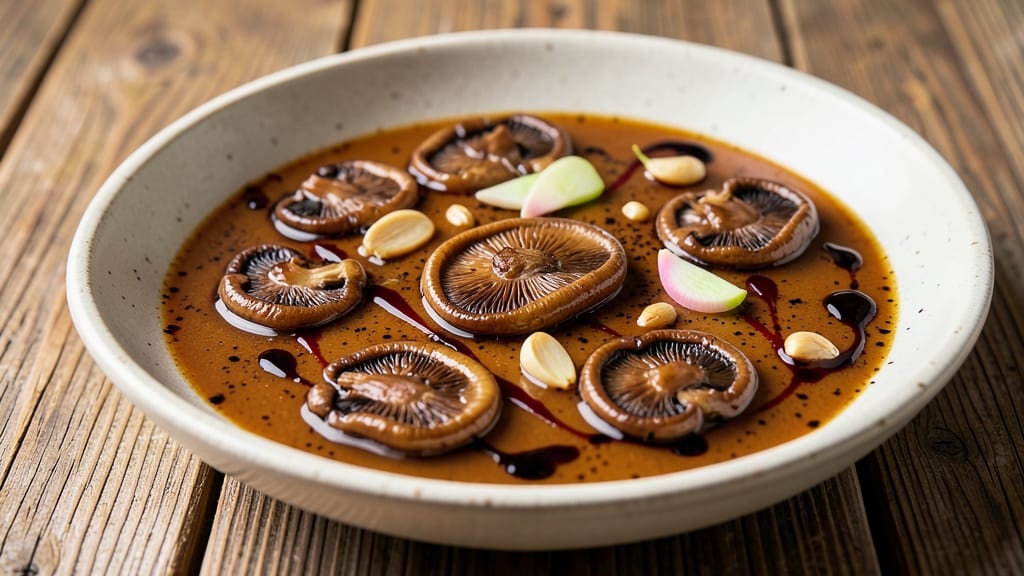
This mushroom oyster sauce recipe transforms simple ingredients into a deep, umami-packed sauce that elevates stir-fries, noodles, and marinades in just 15 minutes. 💛 The secret lies in mushrooms' natural umami, which mimics traditional oyster sauce without the seafood.
I developed this after realizing how often I reached for store-bought versions—until I realized how easy homemade could be.
The process is straightforward: mushrooms simmered with soy sauce, garlic, and ginger until rich and caramelized, then blended with a touch of sugar for balance. No special equipment needed—just a pot and immersion blender (or regular blender).
The result? A sauce that's bold, glossy, and packed with layers of savory depth, perfect for adding to any dish where you'd normally use oyster sauce.
What makes this version special is its versatility—use it as a stir-fry sauce, marinade, or even a dipping sauce for dumplings. The vegetarian-friendly formula doesn't skimp on flavor, proving that mushrooms can deliver the same umami punch as traditional oyster sauce.
Plus, it keeps well in the fridge for up to two weeks, making it a pantry staple worth making ahead.
For those who love customization, try adding a splash of rice wine or a pinch of white pepper for extra complexity. The sauce thickens as it cools, so adjust with a little water if needed. This is the kind of recipe that transforms everyday meals into something restaurant-worthy—without the fuss.
Ingredients for mushroom oyster sauce
Eight simple ingredients transform into a restaurant-quality sauce that rivals traditional oyster sauce.
| Ingredient | Amount | Notes |
|---|---|---|
| Dried Shiitake Mushrooms 🍄 | ½ cup | Rehydrated in warm water |
| Light Soy Sauce 🥢 | ½ cup | Kikkoman preferred for balance |
| Dark Soy Sauce 🥢 | 1 tbsp | For deeper color and richness |
| Garlic Cloves 🧄 | 4 cloves | Minced for aromatic depth |
| Fresh Ginger 🌿 | 1 tbsp | Grated, not powdered |
| Granulated Sugar 🍚 | 1 tbsp | Balances umami and acidity |
| Rice Vinegar 🍶 | 1 tbsp | White vinegar works in pinch |
| Sesame Oil 🫒 | 1 tsp | Toasted for nutty aroma |
| Cornstarch 🌾 | 1 tsp | For thickening consistency |
| Water 💧 | ¼ cup | For blending and thinning |
The mushrooms are the heart of this sauce—shiitake delivers the most umami, but shiitake and cremini mix works too. Grab dried shiitake from the bulk section at Whole Foods or the Asian market—they keep for months and rehydrate perfectly. Fresh mushrooms? Use cremini or oyster, but they'll add moisture, so reduce the water slightly. The soy sauces are non-negotiable: light for base, dark for depth. I always double-check the label for high-quality brands like Kikkoman or Lee Kum Kee—avoid the cheap stuff with additives.
No shiitake? Portobello mushrooms work in a pinch, but they lack the earthy depth. Running low on rice vinegar? Apple cider vinegar at half the amount gives similar tang. Sesame oil missing? Toasted peanut oil adds a different but complementary nuttiness. For extra umami, add a splash of vegetable broth**>—just 1 tbsp makes a difference. The cornstarch is key for that glossy, restaurant-style finish—don't skip it. If you're making a big batch, double everything and store in jars for up to 3 months.
This sauce thickens as it cools, so start with slightly less water if you prefer it runnier. Store in an airtight jar in the fridge for 2 weeks—it actually improves with age. For freezing, portion into ice cube trays and transfer to a bag. Thaw overnight in the fridge. The sauce pairs perfectly with stir-fries, noodles, or even grilled meats. Make a double batch—you'll want it on hand for everything.
Why You'll Love This Recipe
- Pantry Magic: I swear by this sauce because it turns shelf-stable shiitakes into something special—no fancy shopping required. Just soak those dried mushrooms, and boom, you’ve got umami depth without the grocery run.
- Umami Bomb: That combo of light and dark soy sauce with garlic and ginger? It’s like a flavor explosion in a jar. The mushrooms soak up all the richness, giving every bite this addictive, savory punch that sticks with you.
- Weeknight Hero: Slap this sauce on noodles, toss it with tofu, or drizzle it over grilled chicken—it’s my secret weapon when I’m too tired to think. Even my picky-eating teen asks for seconds when it’s involved.
- Budget Stretch: A little goes a long way, and it keeps for days in the fridge. I make a big batch, freeze half, and suddenly I’ve got a flavorful, cheap sauce ready for whenever I need it—no takeout required.
Step-by-step instructions for mushroom oyster sauce
Here's how to craft a velvety, umami-packed sauce that elevates stir-fries in minutes.
🍳 Step 1: Rehydrate and Sauté the Shiitake Mushrooms
Place the 0.5 cup dried shiitake mushrooms in a heatproof bowl and pour 1 cup hot water over them. Let them soak for 20 minutes until they've absorbed the water and softened significantly. Drain, reserving the soaking liquid for later.
Heat a small saucepan over medium heat and add the rehydrated mushrooms along with 1 tablespoon sesame oil. Sauté for 3-4 minutes until the mushrooms release their deep, earthy aroma and begin to caramelize slightly at the edges. This step builds the sauce's rich umami foundation.
👨🍳 Step 2: Build the Flavor Base with Aromatics
Add the 4 minced garlic cloves and 1 tablespoon grated fresh ginger to the pan. Cook for 1 minute until the garlic turns golden and the ginger becomes fragrant—don't let them burn, or they'll turn bitter. Here's the thing: these aromatics are the secret to that restaurant-quality depth in homemade sauces.
Pour in the 0.5 cup light soy sauce and 1 tablespoon dark soy sauce, stirring constantly. Let the mixture simmer for 2 minutes until it reduces slightly and the colors begin to meld beautifully. The dark soy sauce adds that signature rich color while balancing the lighter soy's flavor profile.
🥘 Step 3: Sweeten and Acidify the Sauce
Add the 1 tablespoon granulated sugar and 1 tablespoon rice vinegar to the pan. Stir well and let the mixture simmer for 3-4 minutes until it thickens slightly and the sugar dissolves completely. The sugar helps balance the sauce's umami intensity while the vinegar adds brightness that cuts through the richness.
Here's where it gets fun: Taste the sauce now. You should detect layers of savory, slightly sweet, and tangy flavors. If it needs more depth, add a splash of the reserved mushroom soaking liquid—just enough to reach your desired consistency without thinning it too much.
⏰ Step 4: Thicken and Finish the Sauce
In a small bowl, whisk together the 1 teaspoon cornstarch with 2 tablespoons of the reserved mushroom soaking liquid until smooth. Slowly pour this mixture into the simmering sauce while stirring constantly. Let it cook for 2-3 minutes until it reaches a glossy, velvety consistency that coats the back of a spoon.
Remove the sauce from heat and let it cool for 5 minutes. This resting period allows the flavors to meld completely and the sauce to thicken further. The final texture should be smooth yet still pourable—thick enough to cling to stir-fry ingredients but not so stiff it becomes gluey.
🍽️ Step 5: Adjust and Serve
Taste the sauce one final time and adjust the seasoning if needed. You might want to add a touch more light soy sauce for saltiness, a bit of rice vinegar for acidity, or even a pinch of sugar to balance flavors. The sauce should be complex—umami-forward with bright, slightly sweet, and tangy notes.
Use your freshly made mushroom oyster sauce immediately over stir-fried vegetables, meats, or noodles. For best results, toss it with hot ingredients right before serving to maintain that perfect balance of textures and temperatures. This sauce keeps well in the refrigerator for up to 1 week, making it perfect for meal prep.
Pro Tips For Making Mushroom Oyster Sauce
- SOAK SHIITAKES LONGER: Dried shiitakes need at least 30 minutes in hot water to fully rehydrate—rushing this step leaves them tough and chewy. I learned this the hard way after serving a batch where the mushrooms still crunched like cardboard.
- STIR CONSTANTLY AT FIRST: The sauce burns faster than you think, especially when garlic hits the pan. Keep the heat medium-high and stir every 10 seconds until the garlic fragrant but not browned—this prevents bitter flavors from creeping in.
- USE DARK SOY SAUCE LATE: Add dark soy sauce only in the last 2 minutes of cooking, or it’ll darken too much and overpower the dish. I used to dump it all in early, and the sauce always looked muddy instead of glossy.
- GINGER: GRATE, DON’T CHOP: Fresh ginger loses its punch when chopped—grate it fine for this sauce, and you’ll taste it more. (Yes, it’s messier, but your future self will notice the difference.)
Essential equipment for perfect results
Basic Sauce Pan
You don’t need anything fancy—just a medium-sized stainless steel saucepan with a tight-fitting lid. I use my trusty All-Clad pan because it distributes heat evenly, but any heavy-bottomed pan (like a Cuisinart MultiClad) works perfectly.
Avoid thin aluminum pans—they burn easily and make it hard to control the sauce’s consistency. A 3-quart pan is ideal for this recipe, giving enough room to stir without splattering. 🔥
Immersion Blender
An immersion blender (like the Ninja Foodi Immersion Blender) is my go-to for this sauce because it keeps everything in one pot—no transferring to a separate blender. If you don’t have one, a regular blender works, but you’ll need to strain the sauce afterward to remove any mushroom chunks.
For a smoother texture, I recommend blending while the sauce is still warm but not boiling. The immersion blender also lets you adjust thickness on the fly by blending longer or shorter.
Fine-Mesh Strainer
A fine-mesh strainer (like the OXO Good Grips) is essential if you’re using fresh mushrooms or blending in a regular blender. It catches any unwanted bits while letting the sauce pass through smoothly.
I keep one in my kitchen specifically for sauces—it’s saved me from serving up lumpy oyster sauce more times than I can count. For this recipe, strain the sauce into a clean bowl before returning it to the pan to finish cooking. This step ensures a silky, restaurant-quality finish. ✨
Measuring Spoons
Precision matters with sauces, so grab your set of stainless steel measuring spoons (I love the OXO Good Grips ones—they’re durable and easy to read). You’ll need to measure 1 teaspoon cornstarch, 1 tablespoon sugar, and 1 tablespoon rice vinegar accurately.
A cheap set can lead to over-sweetening or a sauce that’s too thin. Pro tip: Use a small bowl to mix the cornstarch slurry—it’s easier to whisk and pour smoothly into the simmering sauce without making a mess.
Wooden Spoon
A heat-resistant wooden spoon (like the OXO Good Grips one) is perfect for stirring this sauce because it won’t scratch your pan or react with the acidic ingredients. I avoid metal spoons when cooking soy sauce and vinegar because they can react and alter the flavor.
The wooden spoon also helps scrape up any browned bits from the bottom of the pan, ensuring you get every last bit of umami-rich flavor. Keep it handy while the sauce simmers—constant stirring prevents burning and builds depth. 💫
Optional: Spatula
For extra control, especially when adding the cornstarch slurry, a heat-resistant silicone spatula (like the Epicurean) comes in handy. It’s flexible enough to scrape every last drop from the pan and won’t melt or warp under high heat.
I use it to fold in the slurry gently, ensuring even distribution without breaking the sauce’s emulsion. If you’re short on tools, a rubber spatula works in a pinch, but silicone is more durable and easier to clean. 💪
Nutrition facts
Frequently asked questions
Can I make this mushroom oyster sauce without dried shiitake?
Yes! Use 1 cup fresh cremini or oyster mushrooms instead, but reduce the water by 2 tablespoons since fresh mushrooms release moisture. Sauté them first until deeply browned to concentrate their umami flavor before adding other ingredients. For extra depth, add 1 teaspoon mushroom powder> (available at Asian markets) to mimic dried shiitake's intensity.
How do I adjust the thickness for different uses?
For stir-fries, keep it medium-thick>—like honey. For dipping sauces, thin with 1-2 teaspoons warm water> per 2 tablespoons sauce. If too thick after resting, whisk in ½ teaspoon cornstarch slurry> (mix ¼ tsp cornstarch + 1 tsp water). For marinades, use it as-is—it'll cling perfectly without being gluey.
What's the best way to store leftover sauce?
Transfer to an airtight glass jar> and refrigerate for up to 2 weeks. The sauce actually improves with age! For freezing, portion into ice cube trays>, cover with plastic wrap, and transfer to a bag. Thaw overnight in the fridge—never microwave, as it destroys texture. Label with dates to track freshness.
Can I make this sauce spicier or sweeter?
For heat, add ½ teaspoon chili flakes> or 1 tsp sriracha> at the end. For extra sweetness, increase sugar to 2 tablespoons> or add 1 tsp honey>. For complexity, stir in ½ teaspoon toasted sesame seeds> before serving. Adjust gradually—taste as you go! The sauce's balance makes it easy to modify.
Why did my sauce turn cloudy or separate?
This usually happens from over-blending> (breaking sauce's emulsion) or adding cold water> too quickly. Fix it by whisking vigorously while reheating gently on low heat> for 2-3 minutes. For prevention, blend just until smooth, then stir constantly while cooking. If using fresh mushrooms, strain thoroughly—their fibers can cause cloudiness.