
Sauces & Condiments
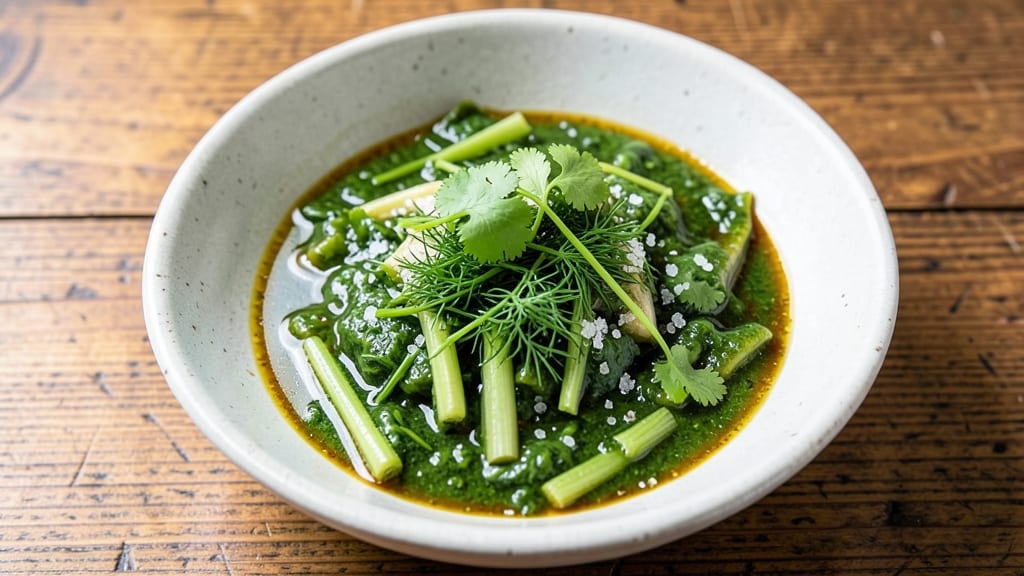
This banh cuon sauce recipe delivers the perfect balance of tangy, creamy, and spicy flavors that elevate every bite of Vietnamese spring rolls.
The secret lies in blending traditional fish sauce with fresh herbs, vinegar, and a touch of sweetness—creating a sauce that's both restaurant-quality and easy to replicate at home.
The foundation of this sauce is a smooth, creamy base made with dill and cilantro, which adds freshness and depth. A splash of rice vinegar brightens the flavors, while fish sauce and sugar create the signature umami-sweet balance.
The final touch? A dash of chili for heat that lingers without overpowering.
What sets this sauce apart is its versatility—it works perfectly with fresh spring rolls, summer rolls, or even grilled meats. The creamy texture coats every bite, while the celery-vinegar zing cuts through richness, making it a must-have for any Vietnamese-inspired meal.
With just 8 ingredients and 10 minutes of prep, you’ll have a sauce that’s as impressive as it is simple. The key is letting the flavors meld for a few minutes before serving, ensuring each dip is bursting with harmony.
Ingredients for banh cuon sauce
Eight ingredients blend into a restaurant-quality sauce that transforms simple spring rolls into a gourmet experience.
| Ingredient | Amount | Notes |
|---|---|---|
| Fresh Dill 🌿 | ½ cup | Finely chopped, stems removed |
| Fresh Cilantro 🌿 | ½ cup | Finely chopped, roots trimmed |
| Celery Stems 🧅 | ¼ cup | Finely minced, bright green |
| White Rice Vinegar 💧 | ¼ cup | Seasoned or plain variety |
| Fish Sauce 🐟 | 2 tbsp | Red Boat preferred for quality |
| Granulated Sugar 🍯 | 1 tbsp | White or light brown |
| Fresh Chili Peppers 🌶️ | 1 whole | Thinly sliced, Thai or serrano |
| Water 💧 | ¼ cup | Room temperature preferred |
The herbs form the sauce's signature freshness. Fresh dill and cilantro should be vibrant, not wilted—pick them the same day you cook. For celery, use the green leafy tops and stems; they pack more flavor than the stalks. Red Boat fish sauce is a must for authentic umami depth, though Red Boat or Three Crabs brands work well. If your fish sauce smells funky, it's past its prime. Store-bought celery often lacks vibrancy, so opt for organic or farmers' market celery when possible—its bright green hue signals freshness.
No fresh dill? Substitute with 1 tbsp dried dill, but reduce the amount by one-third. Out of cilantro? Fresh parsley works at the same quantity, though it lacks the signature Vietnamese brightness. For heat, adjust chili slices to taste—remove seeds for mild heat or keep them for intensity. The rice vinegar can be swapped for apple cider vinegar in a pinch, though it'll have a slightly different tang. If you're avoiding fish sauce, soy sauce plus a pinch of sugar mimics the umami-sweet balance, though purists will notice the difference. The water helps thin the sauce for dipping consistency—adjust as needed for your preferred thickness.
This sauce keeps beautifully in the fridge for up to 5 days, though flavor peaks within the first 24 hours. For longer storage, transfer to a sealed jar and freeze for up to 3 months. Thaw overnight in the fridge before using. The celery-vinegar base makes this sauce ideal for batch cooking—double the recipe and store portions separately. When reheating, stir gently over low heat to maintain the creamy texture without breaking down the herbs. A splash of water or vinegar can revive the consistency if it thickens upon storage.
Why You'll Love This Recipe
- No-Chop Struggle: I’ll be real—this sauce only needs three things chopped (dill, cilantro, celery), and you can hack those with a knife or even your hands. The rest? Just stir, taste, adjust. Done.
- Umami Magic: That fish sauce and vinegar combo? It’s the secret weapon—bright, tangy, with just enough funk to make your banh cuon taste like a Vietnamese street stall. No fancy ingredients, just pure flavor.
- Leftover Hero: I’ve saved this sauce for days—it doesn’t spoil, it improves. Drizzle it on rice, toss with noodles, or even use it as a quick marinade. Versatile enough to eat it three ways before it gets boring.
- Budget Brightener: Fresh herbs are cheap, vinegar’s a pantry staple, and a splash of fish sauce costs pennies. This sauce turns $5 worth of ingredients into something that feels like a splurge—without the price tag.
Step-by-step instructions for banh cuon sauce
This vibrant Vietnamese sauce balances creamy dill with bright vinegar and aromatic chili.
Prepare the Herb Base
In a medium bowl, combine the 0.5 cup finely chopped fresh dill and 0.5 cup finely chopped fresh cilantro. Use your fingers to gently crush the herbs to release their oils while keeping the texture slightly chunky. This step ensures maximum flavor extraction without turning the sauce into a paste.
Add the 0.25 cup finely minced celery stems and mix thoroughly. The celery provides a subtle crunch that contrasts beautifully with the creamy texture. Set this herb mixture aside—it's the foundation of your sauce's signature flavor profile.
Create the Vinegar-Chili Mixture
In a separate small bowl, whisk together the 0.25 cup white rice vinegar, 2 tbsp fish sauce, and 1 tbsp granulated sugar until the sugar completely dissolves. The vinegar should smell tangy and bright, with the fish sauce adding umami depth. Taste this mixture—it should balance sweet, salty, and acidic notes.
Add the thinly sliced fresh chili peppers and stir gently to distribute them evenly. The chili should infuse the mixture with heat while maintaining visual appeal. Let this mixture sit for 5 minutes at room temperature to allow the flavors to meld slightly before combining with the herbs.
Combine and Emulsify the Sauce
Pour the vinegar-chili mixture into the herb bowl and gently fold everything together using a silicone spatula. Add the 0.25 cup room temperature water gradually while mixing continuously. The water helps create the perfect creamy consistency without making the sauce watery.
Continue folding until you achieve a thick, creamy texture that coats the back of a spoon. The sauce should be smooth but still retain some visible herb flecks for texture. If it's too thick, add 1 teaspoon water at a time until it reaches your desired consistency. This sauce should be thick enough to cling to banh cuon but still flow smoothly.
Rest and Adjust Seasoning
Cover the bowl with plastic wrap and let the sauce rest at room temperature for 15-20 minutes. This resting period allows all the flavors to fully develop and meld together. After resting, taste the sauce and adjust the seasoning if needed—add more fish sauce for saltiness, sugar for sweetness, or vinegar for acidity.
The final sauce should have a perfect balance of creamy dill, bright vinegar, umami fish sauce, and subtle chili heat. Serve immediately over your banh cuon for the most authentic experience, where the sauce's creamy texture contrasts beautifully with the delicate rice rolls.
Pro Tips For Making Banh Cuon Sauce
- Pulse Celery Stems Fine: I learned this the hard way—chopping celery stems into rough bits leaves a gritty texture that ruins the sauce’s smoothness. Use a food processor or mortar and pestle to grind them into a paste before mixing with the herbs; this dissolves their fiber and releases more flavor.
- Balance Vinegar Slowly: White rice vinegar’s acidity can overpower if added all at once. Start with half the amount, taste, then adjust—you’re aiming for bright, not sour. If it’s too sharp, a pinch of sugar (or a splash of water) fixes it without dulling the herbs.
- Skip the Pre-Wilted Herbs: Wilting dill and cilantro in hot water or oil kills their fresh aroma. Instead, chop them just before mixing and add them raw—this keeps their bright, grassy punch intact. Yes, it looks messy, but the flavor pays off.
- Stir in Fish Sauce Last: Add fish sauce after everything else is combined and let it sit for 5 minutes. This lets the umami meld without overpowering the herbs. If using low-quality fish sauce, double the amount—but better yet, invest in a good brand and use half.
Troubleshooting great banh cuon sauce
Herb Texture Issues
If your sauce turns into a mushy paste instead of having that perfect creamy-herby texture, you’ve likely over-chopped or crushed the herbs too finely. I’ve found that gently crushing the dill and cilantro with your fingers—rather than using a blender—preserves the right amount of texture.
For celery, stick to finely minced (not pureed) to maintain subtle crunch. If it’s already too smooth, fold in 1-2 extra celery leaves, torn by hand, for instant freshness and bite. 🌿
Sauce Too Thin
A watery sauce usually means you added too much liquid or the herbs released excess moisture. To fix this, let the sauce sit uncovered in the fridge for 30 minutes—the water will evaporate naturally.
If you need immediate results, stir in 1 teaspoon cornstarch mixed with 1 teaspoon cold water until thickened. For prevention, measure your water precisely and add it gradually while folding, stopping when the sauce clings to the spoon. 💧
Fish Sauce Overpowering
If the fish sauce dominates the flavor profile, balance it by adding ½ teaspoon sugar or 1 teaspoon lime juice to brighten the sauce. I’ve also found that a splash of 1 teaspoon honey (instead of granulated sugar) can soften the umami intensity while adding depth.
For a milder option, reduce the fish sauce to 1.5 tablespoons and boost the vinegar to 3 tablespoons to sharpen the tang instead. 🐟
Chili Heat Too Strong
If the chili heat is overwhelming, remove the chili slices and replace them with ½ teaspoon chili flakes (adjust to taste). For a smoother heat, blend the sauce briefly with an immersion blender—this distributes the chili oils more evenly.
If you prefer no heat, omit the chili entirely and add 1 extra teaspoon of sugar to compensate for the missing sweet-spicy balance. 🌶️
Sauce Separates
Separation happens when the herbs and liquid aren’t properly emulsified. To fix it, whisk the sauce vigorously for 30 seconds or use an immersion blender for 5 seconds to recombine the ingredients. For prevention, fold the sauce gently but thoroughly, ensuring the herbs are fully incorporated before adding water.
If it still separates, stir in 1 teaspoon mayonnaise (trust me, it works!) to help bind the mixture. 💡
Flavor Fades Too Quickly
Fresh herbs lose their vibrancy fast, so if your sauce tastes bland after resting, boost the flavor by adding 1 extra tablespoon of fish sauce and 1 extra teaspoon of sugar. For extra brightness, stir in 1 teaspoon fresh lime juice right before serving.
To extend freshness, store the sauce in an airtight container with a piece of plastic wrap pressed directly on the surface to minimize air exposure. ✨
Nutrition facts
Frequently asked questions
Can I make this sauce without fresh herbs?
While fresh dill and cilantro give the best flavor, you can substitute with 1 tbsp dried dill and 1 tbsp dried cilantro (reduce by ⅓). For celery, use 1 tbsp dried parsley instead—just know the texture and brightness will differ slightly. The sauce will still taste good, but the authentic herby aroma is harder to replicate.
How long does this sauce keep in the fridge?
This sauce stays fresh for up to 5 days when stored in an airtight container. For longer storage, freeze it in a sealed jar for up to 3 months. Thaw overnight in the fridge before using. The celery-vinegar base helps preserve freshness, but the herbs will lose some vibrancy over time.
What's the best way to adjust the heat level?
For milder heat, remove the chili slices and replace with ½ teaspoon chili flakes (adjust to taste). For no heat, omit the chili entirely and add 1 extra teaspoon of sugar to balance flavors. If you want more heat, add 1 extra thin slice of chili or a pinch of cayenne pepper. Always taste as you go!
Can I use this sauce for other dishes besides banh cuon?
This versatile sauce works beautifully with Vietnamese summer rolls, grilled shrimp, or even as a marinade for tofu. The creamy-herb base pairs well with anything that needs a bright, tangy kick. For a different twist, drizzle it over pho or use it as a dip for fresh spring vegetables.
Why does my sauce look separated?
Separation happens when the herbs and liquid aren't fully emulsified. Fix it by whisking vigorously for 30 seconds or blending briefly with an immersion blender. For prevention, fold the sauce gently but thoroughly, ensuring the herbs are fully incorporated before adding water. A 1 teaspoon of mayonnaise can also help bind the mixture if needed.