
Sauces & Condiments
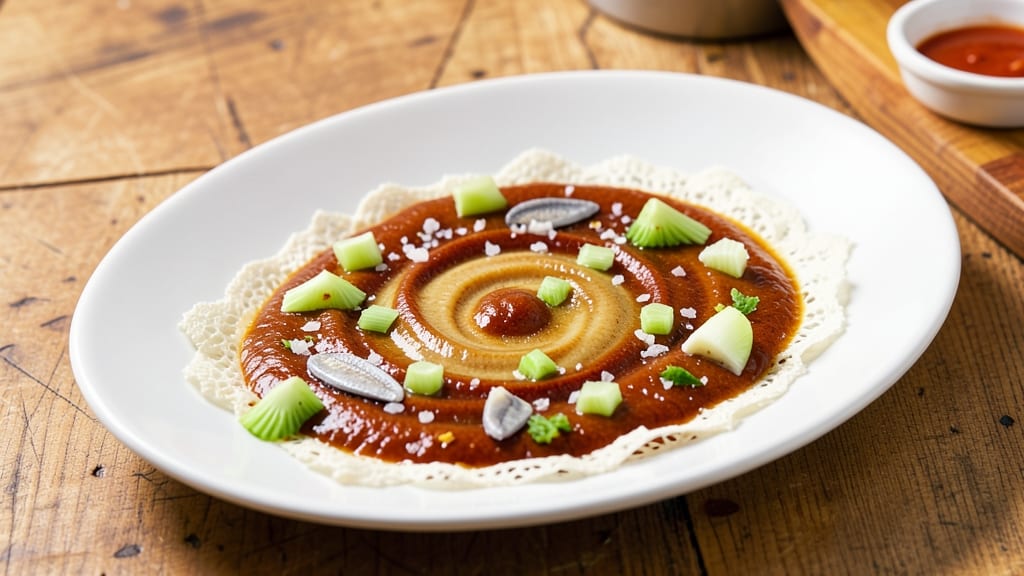
This Balmoral sauce recipe delivers the rich, velvety depth that elevates classic British dishes like steak and kidney pie. The secret lies in blending a creamy celery crown with a tangy tomato base, anchored by anchovies, capers, and a touch of Worcestershire sauce for unmistakable umami.
What makes this sauce truly special is how it transforms simple proteins into something restaurant-worthy with minimal effort.
The foundation begins with a roux of butter and flour, which forms the creamy base before introducing the celery, tomato paste, and a splash of red wine for brightness.
Anchovies and capers add that signature savory punch, while a sprinkle of nutmeg and cayenne brings warmth and just a hint of spice. The sauce simmers until it thickens into a glossy, velvety consistency that coats every bite.
What you'll end up with is a sauce that's rich yet balanced—creamy enough to cling to meat and potatoes, but with enough acidity from the tomatoes to cut through the richness. It's the kind of sauce that makes even the simplest roast feel like a special occasion.
The best part? It keeps beautifully in the refrigerator for up to a week, ready to transform last-minute meals into something extraordinary.
Perfect for slathering over pies, drizzling on roasted meats, or even using as a dip for crusty bread. Here's how to make it—your taste buds will thank you.
Ingredients for balmoral sauce
Rich celery crown meets tangy tomato—these 13 ingredients create velvety Balmoral sauce magic.
| Ingredient | Amount | Notes |
|---|---|---|
| Unsalted Butter 🧈 | ½ cup | Cold, cubed for roux |
| All-Purpose Flour 🌾 | ½ cup | For smooth roux |
| Celery Crowns 🧅 | 1 ½ cups | Finely chopped, fresh preferred |
| Tomato Paste 🍅 | ½ cup | Smooth, not chunky |
| Dry Red Wine 🍷 | ½ cup | Bold, like Cabernet |
| Anchovy Fillets 🐟 | 2 tbsp | High-quality, rinsed |
| Capers 🫒 | 2 tbsp | Chopped, with juice |
| Worcestershire Sauce 🍶 | 1 tbsp | Lea & Perrins preferred |
| Ground Nutmeg 🌿 | ¼ tsp | Freshly grated |
| Cayenne Pepper 🔥 | ⅛ tsp | Adjust for heat |
| Salt 🧂 | 1 tsp | Kosher or sea salt |
| Black Pepper 🌶️ | ¼ tsp | Freshly cracked |
| Chicken Stock 💧 | 1 cup | Low-sodium preferred |
The celery crown is non-negotiable—fresh celery from the grocery store's produce section (not the pre-chopped kind) gives the best flavor. Trader Joe's and Whole Foods usually have the brightest stalks. For anchovies, Conaglio or Colosimo brands are worth the splurge—they dissolve cleanly without fishy aftertaste. The tomato paste? San Marzano is ideal, but any smooth paste works. If you're using wine, go for something bold like Cabernet—it adds depth that cheaper wines miss. The Worcestershire sauce should be Lea & Perrins—the original, not the vinegar-heavy knockoffs.
No anchovies? Extra Worcestershire sauce (1.5 tbsp) plus 1 tsp fish sauce mimics the umami, though it won't be identical. Short on celery? Substitute 1 cup finely chopped fennel—it's sweeter but works in a pinch. The cayenne is optional, but if you skip it, add an extra pinch of nutmeg for warmth. For the roux, don't rush the cooking—it's the foundation, and burning it means starting over. The chicken stock can be swapped for vegetable stock if needed, though the flavor will be slightly milder. The red wine adds brightness, but if you're avoiding alcohol, substitute extra chicken stock—just reduce the sauce longer to concentrate the flavor.
This sauce tastes even better the next day as the flavors meld. Store in an airtight container in the fridge for up to 7 days. For longer storage, freeze portions in ice cube trays—thaw and reheat gently for pies or drizzling. The texture will thicken further when chilled, so add a splash of stock if it's too stiff when you're ready to use it. A little goes a long way—2-3 tbsp per serving is plenty for drizzling, but you can use up to 1 cup for saucy dishes like steak and kidney pie.
Why You'll Love This Recipe
- Pantry-Only Magic: I swear by this sauce when I’m staring at a half-empty fridge. Butter, flour, celery—stuff I always have—and suddenly, dinner’s saved. No last-minute grocery runs, no stress.
- Wine’s Secret Boost: That splash of dry red wine? It’s the game-changer. Deepens the flavor without overpowering, and honestly? It makes me feel like I’m cooking something fancy, even if it’s just weeknight dinner.
- Steakhouse at Home: Slather it on grilled chicken, toss it with pasta, or drizzle it over roasted veggies. It’s my go-to for anything that needs that rich, savory lift—no matter the occasion.
- Leftovers That Lie: Between us, this sauce tastes better the next day. Thickens up perfectly, so I make a double batch, freeze half, and pretend I’m a meal-prep master. (Spoiler: I’m not.)
Step-by-step instructions for Balmoral sauce
This rich, velvety sauce builds layer by layer—each step unlocks deeper flavor.
Create a Golden Roux
Melt the ½ cup unsalted butter in a heavy-bottomed saucepan over medium heat. Once fully melted, whisk in the ½ cup all-purpose flour all at once. Cook for 2-3 minutes, stirring constantly with a wooden spoon, until the mixture turns a deep golden brown and smells nutty—this is your roux. If it darkens too quickly, reduce the heat slightly.
Here's the thing—don't rush this step. A properly colored roux forms the foundation of your sauce. You'll know it's ready when it coats the back of a spoon smoothly without any raw flour taste. If you see any lumps, strain the roux through a fine-mesh sieve before proceeding.
Build the Tomato-Anchovy Base
Immediately after removing the pan from heat, whisk in the ½ cup tomato paste and let the mixture cool slightly for 1 minute. Return to medium-low heat and gradually add the ½ cup dry red wine, scraping up any browned bits from the bottom of the pan with your wooden spoon.
Now add the 2 tablespoons anchovy fillets, 2 tablespoons capers, 1 tablespoon Worcestershire sauce, ½ teaspoon salt, and ¼ teaspoon black pepper. Stir well and let the mixture simmer gently for 5 minutes until the alcohol smell completely dissipates. This step develops the sauce's complex, savory depth.
Incorporate Celery and Spices
Add the 1½ cups finely chopped celery crowns to the sauce and cook for 8-10 minutes until the celery softens but doesn't brown. Stir in the ¼ teaspoon ground nutmeg and ⅛ teaspoon cayenne pepper, then pour in the 1 cup chicken stock. Bring to a gentle simmer and cook uncovered for 15-20 minutes, stirring occasionally, until the sauce thickens to a creamy consistency.
I like to taste the sauce at this stage—it should be rich, slightly tangy from the tomato and wine, with a subtle heat from the cayenne. If it's too thick, whisk in 1-2 tablespoons water to reach your desired consistency. The celery should be completely tender with no crunch remaining.
Refine and Finish
Transfer the sauce to a blender or use an immersion blender to purée until completely smooth. Return to the saucepan and simmer gently for another 5 minutes to let the flavors meld. Taste and adjust seasoning—you might need a pinch more salt or a splash of lemon juice to brighten the flavors.
The sauce should now be velvety smooth with a perfect balance of creamy richness from the roux and bright acidity from the tomato and wine. For the creamiest texture, whisk in 2 tablespoons heavy cream (optional) during the final simmer. Serve immediately over roasted meats or mashed potatoes for the ultimate comfort food experience.
Pro Tips For Making Balmoral Sauce
- COOK THE FLOUR LOW AND SLOW: I learned this the hard way—blasting the roux with high heat turns it sandy instead of silky. For Balmoral sauce, melt the butter first, then whisk in the flour over medium-low and stir like your life depends on it. If it smells nutty, you’ve gone too far.
- SWEEP OUT THE CELEERY: Celery crowns are stubborn little bastards. Trim the base clean—no stringy bits—then slice them into even ¼-inch pieces. Uneven bits burn faster, and you’ll end up with a bitter, charred mess instead of that smooth, herby depth.
- DEGLAZE WITH THE WINE: Don’t just pour the wine in and walk away. Let it simmer for 2–3 minutes first, scraping up those browned bits from the pan. That’s where the flavor lives, and skipping it means a sauce that tastes like it’s missing something.
- USE GOOD TOMATO PASTE: The cheap stuff tastes like cardboard. Splurge on a small can of high-quality tomato paste—none of that watery, preservative-laden junk. Stir it in after the wine reduces slightly, so it blends in instead of clumping like a sad, thick puddle.
Wine and beer pairings for this recipe
British Red Wine
Balmoral sauce pairs beautifully with bold British reds like Shiraz or Pinotage from South Africa’s Cape Winelands. The dark fruit notes and earthy undertones mirror the sauce’s depth, while the tannins cut through its creaminess.
I reach for a 2018 KWV Shiraz—its blackberry and spice notes complement the celery and anchovies perfectly. 🍷
Port Wine
For a richer pairing, try a Ruby Port like Graham’s 10-Year-Old. The sauce’s tomato and wine base harmonize with Port’s dried fruit and chocolate flavors, creating a luxurious dessert pairing.
Drizzle it over dark chocolate fondue or serve with blue cheese for a sophisticated finish. The alcohol content in Port also helps cleanse the palate between bites.
Beer Pairings
A British bitter like Fuller’s ESB or Timothy Taylor’s Landlord balances the sauce’s richness with hoppy bitterness and malty sweetness. The caramel and toffee notes in these beers echo the sauce’s caramelized roux.
For a lighter option, a Belgian Dubbel like Westmalle Trappist adds fruit-forward complexity that contrasts beautifully with the umami.
Non-Alcoholic Options
Skip the alcohol? A sparkling cranberry juice (like Ocean Spray) mimics the sauce’s tangy brightness without the booze. For a savory option, ginger beer (like Feather’s) adds a zesty kick that cuts through the richness.
I also love sparkling apple cider—its crisp acidity refreshes the palate after each bite. 🍏
Sauce as a Cocktail Ingredient
Get creative by adding a dash of Balmoral sauce to cocktails! Stir 1 tbsp into a Martini (vodka or gin) for an umami twist. Or mix ½ cup with whipped cream and lemon juice for a saucy White Russian variation.
The sauce’s savory depth elevates classic drinks into something unexpected. Just be mindful of the anchovies—some might find them too bold!
Nutrition facts
Frequently asked questions
What makes Balmoral sauce different from other British sauces like gravy?
Balmoral sauce stands out with its rich, creamy texture and complex umami flavor profile from anchovies, capers, and Worcestershire sauce. Unlike traditional gravies that rely on meat drippings, this sauce uses a golden roux, tomato paste, and red wine for a velvety consistency that's perfect for drizzling over roasts or pies. The celery crown adds a subtle sweetness that balances the tangy tomato base.
Can I make Balmoral sauce ahead of time?
This sauce actually tastes better when made a day in advance. Store it in an airtight container in the refrigerator for up to 7 days. The flavors meld beautifully over time, and the texture thickens further. For longer storage, freeze portions in ice cube trays—thaw and reheat gently for pies or drizzling.
What can I substitute if I don't have anchovies?
For a similar umami depth, use 1.5 tablespoons extra Worcestershire sauce plus 1 teaspoon fish sauce. While not identical, this combo mimics the savory punch. If avoiding fish entirely, try 2 tablespoons soy sauce plus 1 teaspoon miso paste—though the flavor will be slightly different. The key is balancing the saltiness with acidity from the tomato and wine.
Is Balmoral sauce gluten-free?
Traditional Balmoral sauce contains flour in the roux, making it not gluten-free. For a GF version, substitute the flour with ½ cup gluten-free all-purpose flour blend or ¼ cup cornstarch mixed with ¼ cup tapioca starch. The texture will be slightly different but still delicious. Always check your flour blend for cross-contamination warnings.
How much Balmoral sauce should I make for a steak and kidney pie?
For a standard 9-inch pie, make the full recipe and use about 1 cup of sauce. Spread 2-3 tablespoons over the meat filling before adding the top crust, then drizzle the remaining sauce over the crust before baking. The sauce will thicken further during baking, so don't worry about overdoing it—it's rich and concentrated!