
Sauces & Condiments
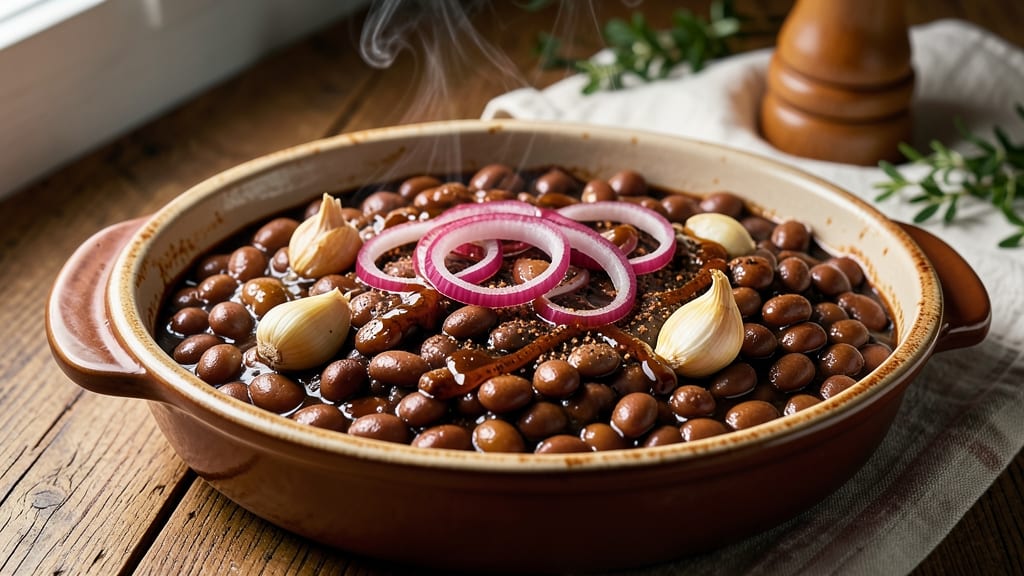
This baked beans with barbecue sauce recipe transforms humble ingredients into a rich, slow-simmered masterpiece that balances smoky depth and sweet caramelized notes. 🔥 The key lies in layering flavors—starting with a savory base of onions, garlic, and molasses before introducing barbecue sauce for that signature tangy kick.
Unlike rushed versions, this method lets the beans tenderize over hours, soaking up all the smoky goodness until they're fall-apart tender.
What sets this recipe apart is the two-stage cooking process: an initial stovetop simmer to build flavor, followed by oven baking that intensifies the sauce into a glossy, sticky glaze. Professional chefs swear by this technique because it creates a texture that's creamy yet slightly thick—never watery.
The result? A dish that's hearty enough for a main course but versatile enough to serve alongside grilled meats or cornbread.
Traditional recipes rely on long cooking times, but modern adaptations (like using a slow cooker) deliver the same results with less hands-on effort. The barbecue sauce choice is critical—opt for a medium-smoke variety to avoid overpowering the beans' natural sweetness.
By the final bite, you'll taste the harmony of slow-cooked beans, caramelized edges, and that unmistakable barbecue tang that makes this dish a crowd-pleaser.
Pair these beans with pulled pork for a full Southern-style meal, or serve them as a standalone side that steals the show. The beauty of this recipe is its flexibility—make a big batch for potlucks or keep it small for weeknight dinners.
Here's how to achieve that perfect balance of smoky, sweet, and savory in every spoonful.
Ingredients for baked beans with barbecue sauce
Six servings of smoky-sweet baked beans that build flavor through slow cooking and oven caramelization.
| Ingredient | Amount | Notes |
|---|---|---|
| Navy Beans 🌱 | 2 cups | Dried, soaked overnight |
| Yellow Onions 🧅 | 1 whole | Medium size, finely chopped |
| Garlic Cloves 🧄 | 4 cloves | Minced for depth of flavor |
| Barbecue Sauce 🍅 | 1 ½ cups | Medium-smoke variety preferred |
| Molasses 🍯 | ¼ cup | Unsulphured for authentic flavor |
| Ketchup 🍅 | ¼ cup | For subtle sweetness balance |
| Tomato Paste 🍅 | 2 tbsp | Squeeze tube or canned |
| Apple Cider Vinegar 🍏 | ½ cup | For tangy brightness |
| Brown Sugar 🍚 | ½ cup | Packed measurement |
| Mustard 🧂 | 1 tbsp | Yellow or Dijon preferred |
| Salt 🧂 | 1 ½ tsp | Kosher or sea salt |
| Black Pepper 🌶️ | ½ tsp | Freshly ground |
| Bay Leaves 🌿 | 2 whole | For aromatic depth |
| Vegetable Oil 🫒 | 1 tbsp | For initial stovetop cooking |
The beans are the foundation, so dried navy beans give the best texture—canned are fine in a pinch, but drained and rinsed. For the onions, yellow onions from the grocery store's produce section work perfectly, but Sweet Onions add subtle sweetness if you prefer. The garlic should be freshly minced—pre-minced jars lose potency fast. I always grab my barbecue sauce from Trader Joe's or Whole Foods for that medium-smoke balance, but any quality brand works. The molasses? Unsulphured is key—it's what gives that authentic depth of flavor.
No molasses? Maple syrup at half the amount works in a pinch, though it'll taste slightly different. Short on apple cider vinegar? White vinegar or lemon juice both work, but reduce to 0.25 cup since they're more acidic. The tomato paste can be the squeeze tube kind—Trader Joe's has great ones that last months. For the brown sugar, pack it down in the measuring cup for accurate sweetness. The mustard is non-negotiable for that signature tang—Dijon adds complexity if you want to get fancy.
This recipe tastes even better the next day as flavors meld. Store leftovers in an airtight container for up to 5 days in the fridge. For freezing, portion into 1-cup servings—they reheat beautifully straight from frozen. The bay leaves can be removed before serving, but I often leave them in until the very end since they infuse so much flavor. Double the batch if you're feeding a crowd—these disappear fast.
Why You'll Love This Recipe
- One-Pot Magic: I swear by this recipe when I’m too tired to wash dishes—just toss everything into a baking dish, pop it in the oven, and walk away. The onions caramelize right into the beans, so you don’t even need to strain anything.
- Smoky-Sweet Obsession: That molasses and barbecue sauce combo? It’s like a hug in a bowl. The deep, smoky notes from the sauce balance the natural sweetness of the beans, and the garlic? It turns this into something you’ll fight over at dinner.
- Lunchbox Hero: Between us, these beans are my secret weapon for meal prep. I’ll make a big batch on Sunday, and by Wednesday, I’m still pulling them out for sandwiches or even as a side with grilled chicken. They taste just as good cold as they do hot.
- Budget Win: Honestly, this recipe is my go-to when I’m pinching pennies. Navy beans are dirt cheap, and a single can of barbecue sauce stretches to feed four. Plus, leftovers? They keep for days and only get better as the flavors meld.
Step-by-step instructions for slow-simmered baked beans
Here's the method for rich, smoky baked beans with perfect texture and depth.
🍳 Step 1: Sauté Onions and Garlic Until Golden
Heat the 1 tablespoon vegetable oil in a large Dutch oven over medium heat. Add the finely chopped yellow onions and cook for 5-6 minutes until soft and translucent. Here's the thing—you want them to caramelize just slightly at the edges for deeper flavor.
Add the minced garlic cloves and cook for another 30 seconds until fragrant. Watch carefully—garlic burns quickly. The aroma should fill your kitchen, signaling it's ready for the next ingredients. This aromatic base forms the flavor foundation for your beans.
👨🍳 Step 2: Combine All Ingredients in the Dutch Oven
Drain the soaked 2 cups navy beans and add them to the Dutch oven along with the 1.5 cups barbecue sauce, 0.25 cup molasses, 0.25 cup ketchup, and 2 tablespoons tomato paste. Stir everything together until the beans are well-coated in the sauce mixture.
Add the 0.5 cup apple cider vinegar, 0.5 cup brown sugar, 1 tablespoon mustard, 1.5 teaspoons salt, 0.5 teaspoon black pepper, and 2 whole bay leaves. The liquid should come about halfway up the beans—if it looks too thick, add ½ cup water to help the beans soften properly. Stir gently to combine all ingredients.
🔥 Step 3: Simmer on the Stovetop
Bring the mixture to a gentle boil over medium-high heat, then immediately reduce to low heat. Let it simmer uncovered for 45-50 minutes, stirring occasionally to prevent sticking. You'll notice the beans begin to soften and the sauce thickens slightly as it simmers.
This stovetop phase is crucial for developing the flavors. The beans should be tender but still hold their shape. If the liquid reduces too much before the beans are tender, add 2-3 tablespoons water to maintain the right consistency. The aroma should be rich and smoky by the end of this step.
⏰ Step 4: Bake Until Thick and Flavorful
Preheat your oven to 325°F. Transfer the Dutch oven to the oven and bake uncovered for 2-2.5 hours. The beans are done when they're fork-tender and the sauce has thickened to a glossy consistency. You'll know they're ready when the sauce coats the back of a spoon and the beans are easily pierced with a fork.
I check for doneness by gently pressing a bean with a fork—it should mash slightly but still have some texture. The top should be slightly caramelized from the oven's dry heat. If the sauce looks too thin, uncover and bake for another 15-20 minutes to reduce it further.
🍽️ Step 5: Rest and Serve
Remove the baked beans from the oven and let them rest for 10 minutes before serving. This resting period allows the flavors to meld and the beans to absorb any remaining sauce. Remove the bay leaves before serving—just pull them out with your fingers or tongs.
Serve the beans warm, straight from the Dutch oven. The perfect baked beans should have a thick, glossy sauce with visible smoky streaks, tender beans that hold their shape, and a balance of sweet, tangy, and smoky flavors. The texture should be creamy yet still have a slight bite from the beans themselves.
Pro Tips For Making Baked Beans With Barbecue Sauce
- Sweat the Onions Low: Don’t rush the onions—they’re the flavor base here. Cook them over medium-low heat with a splash of water or broth until they’re translucent but not browned, about 8-10 minutes. I used to crank the heat and end up with bitter, caramelized bits that overpowered the smoky barbecue sauce.
- Soak Beans Overnight: Skip the quick-soak shortcut—these beans need real hydration. Soak them overnight in plenty of water (at least 4 cups per pound) with a pinch of baking soda to soften them properly. I learned this the hard way after serving mushy, unevenly cooked beans that still tasted raw in spots.
- Balance the Molasses: Too much molasses and your beans turn cloyingly sweet; too little and the depth of flavor disappears. Start with 2 tablespoons per pound of beans and adjust to taste—add it gradually while simmering so you can dial it back if needed. (Yes, even if you’re impatient like me.)
- Simmer, Don’t Boil: Once everything’s in the pot, keep the heat at a gentle simmer (small bubbles, occasional stir) for at least 2 hours. Boiling hard turns the beans to mush and burns the barbecue sauce’s smoky notes. Cover loosely and let the steam do the work—this is where the magic happens.
Make-ahead tips for baked beans with barbecue sauce
Overnight Prep
Start your beans the night before by soaking the 2 cups dried navy beans in plenty of cold water (about 8 cups) for 8-12 hours. This dramatically reduces cooking time and ensures tender results.
I use a large bowl with a lid or a slow cooker insert for easy draining. The key is changing the water once—after 4 hours of soaking, drain and rinse before adding fresh water for the final 4-8 hours. 🌱
Slow Cooker Adaptation
For hands-off cooking, transfer all ingredients (after the stovetop sauté) to a 6-quart slow cooker and cook on LOW for 8 hours or HIGH for 4-5 hours. The slow cooker's gentle heat mimics the oven's low-and-slow approach.
I like adding ½ cup extra barbecue sauce at the 2-hour mark to thicken the sauce. The texture will be slightly creamier than oven-baked but just as flavorful.
Freezer-Friendly Batches
Double the recipe and freeze half for future meals. Portion into 1-quart freezer bags or glass storage containers, leaving 1-inch headspace for expansion. Thaw overnight in the fridge before reheating.
To serve, transfer to a pot and heat with 2-3 tablespoons water or broth over low heat for 10-15 minutes, stirring occasionally. The sauce will thicken back up beautifully. ❄️
Make-Ahead for Potlucks
Prepare the beans up to 3 days in advance and store in an airtight container in the fridge. The flavors deepen as they sit, making them perfect for potlucks. Reheat gently on the stovetop with 1-2 tablespoons water to restore the sauce's glossy texture.
For serving, transfer to a slow cooker on WARM to keep them hot for hours without drying out. This is my go-to strategy for gatherings—minimal last-minute effort, maximum crowd appeal.
Reheating Leftovers
Microwave reheating works in a pinch, but I prefer the stovetop for better texture. Cover the beans with a splash of water or broth and heat over medium-low heat for 8-10 minutes, stirring occasionally. Avoid high heat—it can make the sauce separate.
For extra richness, stir in 1 teaspoon butter or 1 tablespoon barbecue sauce at the end. The beans should be piping hot with a thick, glossy sauce coating every bite. 🔥
Flavor Boost Before Serving
Want to elevate your make-ahead beans? Just before serving, stir in 1 tablespoon apple cider vinegar for brightness or ½ teaspoon smoked paprika for extra smokiness. For a creamy twist, top with ¼ cup sour cream or Greek yogurt and sprinkle with chopped green onions.
These final touches feel like restaurant-quality upgrades with minimal effort. The best part? They work just as well on day-old beans as fresh. ✨
Nutrition facts
Frequently asked questions
Can I use canned beans instead of dried?
Yes, you can substitute 2 cups dried navy beans with 2 (15-ounce) cans of navy beans, drained and rinsed. However, dried beans develop more complex flavors during the long cooking process. If using canned, reduce the stovetop simmer time to 20-25 minutes and bake for 1.5-2 hours to prevent the sauce from becoming too watery. The texture will be slightly softer but still delicious!
What’s the best barbecue sauce for this recipe?
A medium-smoke barbecue sauce works best—it adds depth without overpowering the beans' natural sweetness. Brands like Sweet Baby Ray’s or Stubb’s Original are great choices. Avoid extra-spicy or vinegar-heavy sauces, as they can make the dish too tangy. For a homemade touch, blend 1 cup ketchup + 1 tbsp molasses + 1 tsp smoked paprika for a custom sauce!
Why do my baked beans turn out watery?
Watery beans usually mean the sauce didn’t reduce enough during cooking. To fix this, skip adding extra water during the stovetop phase and bake uncovered for 30 extra minutes to thicken the sauce. For future batches, reduce the liquid by ¼ cup or stir in 1 tbsp cornstarch mixed with 2 tbsp water at the end to thicken. Stirring occasionally while baking also helps prevent separation!
Can I make this in an Instant Pot?
Sauté the onions and garlic as directed, then add all ingredients and cook on HIGH pressure for 20 minutes (natural release). For extra richness, finish with 15 minutes on SAUTE to reduce the sauce. The Instant Pot version cooks faster but may need ½ cup extra barbecue sauce to compensate for the shorter cooking time. The texture will be slightly creamier than oven-baked but just as flavorful!
Are these beans spicy? Can I adjust the heat?
This recipe is naturally mild, but you can control the heat by adjusting the barbecue sauce and mustard. For extra kick, add ½ tsp cayenne pepper or 1 tsp hot sauce at the end. If your sauce is spicy, balance it with 1 extra tbsp molasses to mellow the heat. Always taste as you go—you can always add more spice, but you can’t take it out!