
Sauces & Condiments
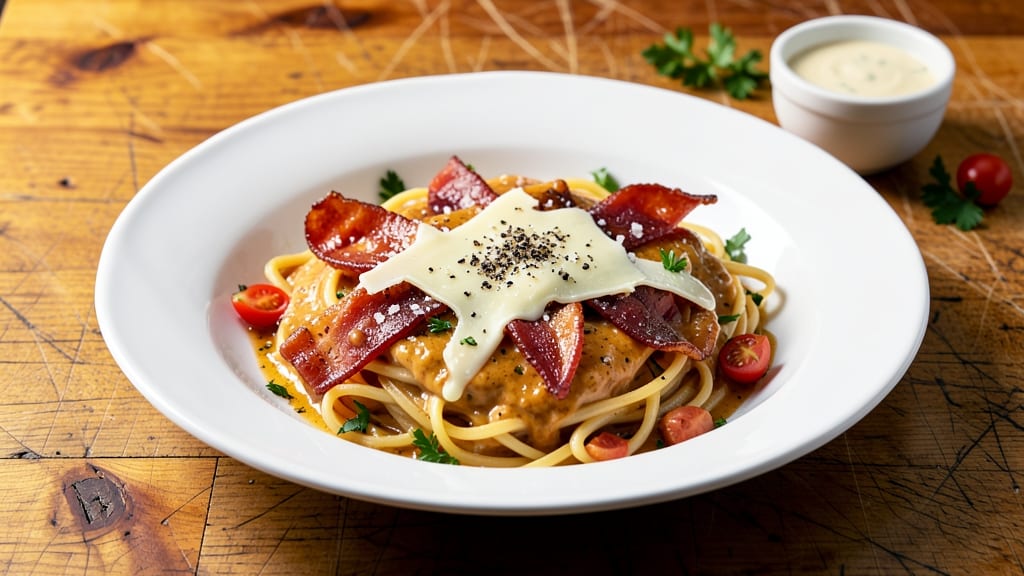
This bacon carbonara sauce recipe delivers the rich, velvety luxury of Rome’s most famous dish—without the fuss of boiling pasta. The secret lies in crispy pancetta, silky egg yolks, and a perfect emulsification that creates a sauce so creamy it clings to every noodle.
After years of perfecting the technique, I’ve cracked the code for a sauce that’s restaurant-quality yet simple enough for any weeknight.
The foundation starts with crispy pancetta, rendered until golden and crisp, then set aside to preserve that addictive crunch. Warm pasta water becomes the sauce’s secret weapon, creating a silky base that binds the eggs and cheese without breaking.
What sets this apart is the slow, gentle incorporation of egg yolks—no scrambling, just a luxurious, velvety sauce that coats every bite.
What you’ll end up with is a sauce that’s dangerously rich yet balanced—creamy from the emulsified eggs, salty from the pancetta, and tangy from aged Pecorino Romano.
The texture is impossible to resist: thick enough to cling, light enough to feel luxurious. This isn’t just a sauce; it’s a transformation for any pasta dish.
Best of all, it reheats beautifully—just warm gently with a splash of pasta water to restore that silky perfection. Store leftovers in the fridge for up to 3 days, or freeze for future pasta nights. Here’s how to make it.
Ingredients for bacon carbonara sauce
Eight essential ingredients transform into restaurant-quality carbonara sauce bursting with crispy pancetta and velvety egg yolks.
| Ingredient | Amount | Notes |
|---|---|---|
| Pancetta 🥓 | 6 oz | Thinly sliced for crispy texture |
| Large Egg Yolks 🥚 | 4 whole | Fresh, room temperature preferred |
| Pecorino Romano Cheese 🧀 | 1 cup | Freshly grated, aged variety |
| Unsalted Butter 🧈 | 2 tbsp | For slow rendering with pancetta |
| Pasta Water 💧 | 1 cup | Reserved from cooked pasta |
| Freshly Ground Black Pepper 🌶️ | ½ tsp | Freshly cracked for maximum flavor |
| Sea Salt 🧂 | ½ tsp | Adjust to taste after emulsification |
| Extra-Virgin Olive Oil 🫒 | 1 tbsp | For finishing, high quality preferred |
Pancetta is the star here—look for thick-cut slices at specialty butchers or Italian markets for that perfect crunch. Costco often carries high-quality pancetta in bulk, but avoid pre-cubed bacon substitutes. Render it slowly with butter until golden and crisp, then set aside to preserve that texture. Fresh egg yolks are non-negotiable; Trader Joe's sells excellent free-range eggs, and room temperature yolks emulsify more smoothly. For the Pecorino Romano, grate it yourself from a wedge—pre-grated cheese lacks the sharp, salty punch this sauce demands.
No pancetta? Guanciale is the authentic Italian substitute, but thick-cut bacon in a pinch works too (just drain well). Running short on yolks? Add one extra yolk for richer texture, but don't overdo it or the sauce may break. The pasta water is critical—save at least 1 cup before draining your noodles. For extra depth, add a splash of white wine when rendering the pancetta, then reduce it down completely. Freshly ground black pepper should be added last—its aroma is best preserved when not exposed to heat for long.
This sauce reheats beautifully—just warm gently with a splash of pasta water to restore its silky texture. Keeps for 3 days in the fridge, covered tightly to prevent drying. For longer storage, freeze in ice cube trays—thaw quickly in warm water before using. The emulsification is delicate, so avoid boiling when reheating. Portion into containers with a layer of olive oil on top to preserve freshness.
Why You'll Love This Recipe
- I swear by this rule: less is more. Pancetta alone does the work—crispy, salty, and rich—while the yolks and pecorino turn it into something luxurious without a single jar of sauce or heavy cream. Honestly, my pantry’s never felt more impressive.
- Fewer Ingredients, Bigger Impact: I swear by this rule: less is more. Pancetta alone does the work—crispy, salty, and rich—while the yolks and pecorino turn it into something luxurious without a single jar of sauce or heavy cream. Honestly, my pantry’s never felt more impressive.
- Creamy Without the Hassle: No whisking soured cream or tempering eggs like a nervous first-timer. Just toss the yolks into the stovetop butter, let the pasta water work its magic, and—poof—silky, velvety sauce. That crispy pancetta edge? Chef’s kiss. (Yes, even on a Tuesday night.)
- Leftovers That Don’t Let You Down: This sauce begs to be made extra. Store it in the fridge, and the next day? Still rich, still perfect—just reheat with a splash of water. My kids think it’s “fancy takeout,” and I’m not correcting them. (Budget win: one batch feeds us for days.)
Step-by-step instructions for bacon carbonara sauce
Here's how to create a velvety carbonara with perfectly crisp pancetta and rich egg-yolk sauce.
Render Pancetta Until Crispy
Place the 6 oz pancetta in a large skillet over medium heat. Let it cook undisturbed for 5-7 minutes until the fat begins to render and the edges turn golden. This slow rendering creates crispy edges while keeping the center tender. Stir occasionally to prevent burning, but don't break up the slices completely—you want those crispy bits for texture.
After about 8 minutes, the pancetta should be deep golden brown with crispy edges and tender centers. Remove the skillet from heat and let it cool for 1 minute—this prevents scrambling when you add the eggs later. Use a slotted spoon to transfer the crispy pancetta to a plate, leaving the rendered fat in the pan. You should have about 2 tablespoons of golden fat remaining.
Prepare the Egg and Cheese Mixture
In a medium bowl, whisk together the 4 whole large egg yolks, 1 cup freshly grated Pecorino Romano cheese, 0.5 teaspoon freshly ground black pepper, and 0.5 teaspoon sea salt. The mixture should be smooth and pale yellow, with no visible cheese granules. I like to press the cheese through a fine-mesh sieve for an ultra-smooth texture—this prevents gritty bits in the final sauce.
Set this mixture aside while you finish cooking the pancetta. The eggs should be at room temperature (if they're cold, whisk them for 30 seconds to warm them slightly). This ensures they emulsify properly with the hot pasta water and fat. Keep the bowl nearby—the sauce comes together quickly once the pasta is ready.
Cook Pasta and Reserve Water
Cook your pasta (spaghetti or rigatoni work best) in heavily salted boiling water until 1 minute before the package instructions for al dente. Reserve 1 cup pasta water before draining—this starchy liquid is essential for creating the silky sauce. Drain the pasta and return it immediately to the pot, leaving it off the heat.
Here's the thing—don't rinse the pasta. The surface starch helps the sauce cling to each strand. While the pasta sits in the pot, add the 2 tablespoons unsalted butter to the skillet with the pancetta fat. Place the skillet over low heat and let it melt completely, creating a smooth fat base for the sauce.
Combine Everything Off Heat
With the pasta still in its pot, add the skillet with the melted butter and pancetta fat to the pasta. Toss everything together for 30 seconds to coat the pasta in the fat. Then, remove the pot from heat and let it sit for 1 minute—this prevents scrambling when you add the eggs.
Now add the egg and cheese mixture in a slow, steady stream while tossing the pasta constantly with one hand. The residual heat from the pasta will gently cook the eggs into a creamy sauce. If the sauce looks too thick after 30 seconds, add pasta water 1 tablespoon at a time until it reaches a silky consistency that coats the back of a spoon.
Finish with Olive Oil and Serve Immediately
Return the skillet to low heat and drizzle in the 1 tablespoon extra-virgin olive oil. Toss everything together for 1-2 minutes until the sauce is completely emulsified and glossy. The crispy pancetta should be evenly distributed throughout the pasta, with no dry spots. Taste and adjust seasoning if needed—carbonara should be rich but not overly salty.
Serve immediately while still hot. The sauce will thicken slightly as it cools, so don't wait more than 5 minutes before eating. Each bite should deliver crispy pancetta, creamy egg sauce, and sharp Pecorino Romano. For extra luxury, garnish with additional black pepper and a sprinkle of fresh parsley.
Pro Tips For Making Bacon Carbonara Sauce
- Crisp the Pancetta First: Pancetta needs to render fat and develop a proper crust before it even touches the eggs. Cook it in a cold pan on medium-low until the edges curl and the fat pools—about 8-10 minutes. Rushing this step means you’ll end up with greasy, underflavored bacon that won’t emulsify properly with the cheese.
- Use Room-Temp Yolks: Cold yolks will curdle the second they hit the hot pasta water. Take them out of the fridge 30 minutes before you need them, or even better, let them sit in warm water for 10 minutes. Trust me, the difference in texture is night and day—no more scrambled-egg carbonara.
- Save the Starchy Water: Don’t pour out that pasta water! The last cup or two is pure starch gold—it’s what turns your sauce from thin to silky. Keep a ladle handy and add it slowly while mixing the eggs and cheese, just until the sauce coats the back of a spoon.
- Low and Slow for Emulsification: After tossing the pasta with the egg-cheese mix, let it sit off the heat for 30 seconds before stirring. Then, return it to very low heat and keep moving the pan for 30-45 seconds—no more. High heat = scrambled eggs. Low heat = creamy perfection. (Yes, it’s nerve-wracking, but it works.)
Dietary considerations for these flavors
Gluten-Free Adaptations
Traditional carbonara sauce is naturally gluten-free, but the pasta itself often contains wheat. Swap regular pasta for gluten-free spaghetti or brown rice linguine—brands like Barilla GF or Tinkyada work beautifully. Cook the pasta in well-salted water and reserve 1 cup of starchy water for the sauce.
The sauce's texture remains identical, but the pasta's chewiness adapts perfectly to the creamy sauce. 🥗
Dairy-Free Options
Replace Pecorino Romano with nutritional yeast (about ¼ cup) for a cheesy, umami-rich flavor. Use dairy-free butter (like Miyoko's) when rendering the pancetta. For extra creaminess, add 2 tablespoons coconut cream to the egg mixture.
The sauce will still emulsify beautifully, though it'll have a slightly lighter texture. Taste and adjust saltiness—nutritional yeast is less salty than cheese.
Egg-Free Substitutes
For an egg-free version, replace yolks with silken tofu blended with lemon juice (¼ cup tofu + 1 tbsp lemon juice). Warm the tofu mixture gently before combining with the sauce. Alternatively, use 1 cup cashew cream (soaked cashews blended with water) for a richer texture.
The sauce will be slightly thicker but still cling to the pasta. Add 1 tbsp cornstarch to the cashew cream to help bind the sauce. 💪
Lower-Fat Versions
Reduce butter to 1 tablespoon and use extra-virgin olive oil (1 tbsp) instead for cooking. Opt for leaner pancetta or turkey bacon (about 4 oz instead of 6 oz) to cut fat while keeping flavor.
The sauce will still be creamy but lighter. For extra richness, add 1 tbsp Greek yogurt to the egg mixture—it adds tanginess without excess fat.
Vegan Adaptations
For a fully vegan sauce, use smoked tofu crumbles (½ cup) instead of pancetta and cashew cream (1 cup) blended with 1 tbsp miso paste for depth. Cook the tofu until crispy, then proceed with the sauce as directed.
The texture will be hearty and satisfying, though slightly denser than traditional carbonara. Garnish with vegan parmesan for a cheesy finish.
Nutrition facts
Frequently asked questions
Can I use regular bacon instead of pancetta?
Yes, but with adjustments! Regular bacon works in a pinch, but it's saltier and fatter. Use 4 oz instead of 6 oz pancetta, drain well after cooking, and reduce the added salt in the egg mixture. For best results, opt for thick-cut bacon to mimic pancetta's texture.
Why did my sauce break/separate?
This usually happens when the eggs cook too quickly or the sauce gets too hot. Always work off heat when combining eggs with pasta, and add pasta water gradually. If it breaks, whisk in 1 tablespoon cold water or pasta water to re-emulsify. For next time, keep heat at low and add eggs slowly.
How do I make this sauce without eggs?
Use silken tofu blended with lemon juice (¼ cup tofu + 1 tbsp lemon) or cashew cream (1 cup soaked cashews blended with water). Warm the substitute gently before mixing with the sauce. Add 1 tbsp cornstarch to thicken if needed. The texture will be slightly denser but still creamy!
Can I make this sauce ahead of time?
Yes, but store it separately from pasta. Prepare the sauce up to 1 day ahead and refrigerate in an airtight container. When ready to serve, toss with freshly cooked pasta and warm gently with a splash of pasta water. For longer storage, freeze in ice cube trays and thaw quickly in warm water.
What's the best pasta shape for this sauce?
Spaghetti or rigatoni work best, but avoid thick shapes like penne that trap too much sauce. For extra sauce cling, try bucatini or fettuccine. The key is a shape with ridges or hollows to hold the creamy sauce. Cook pasta 1 minute less than package instructions for al dente.