
Sauces & Condiments
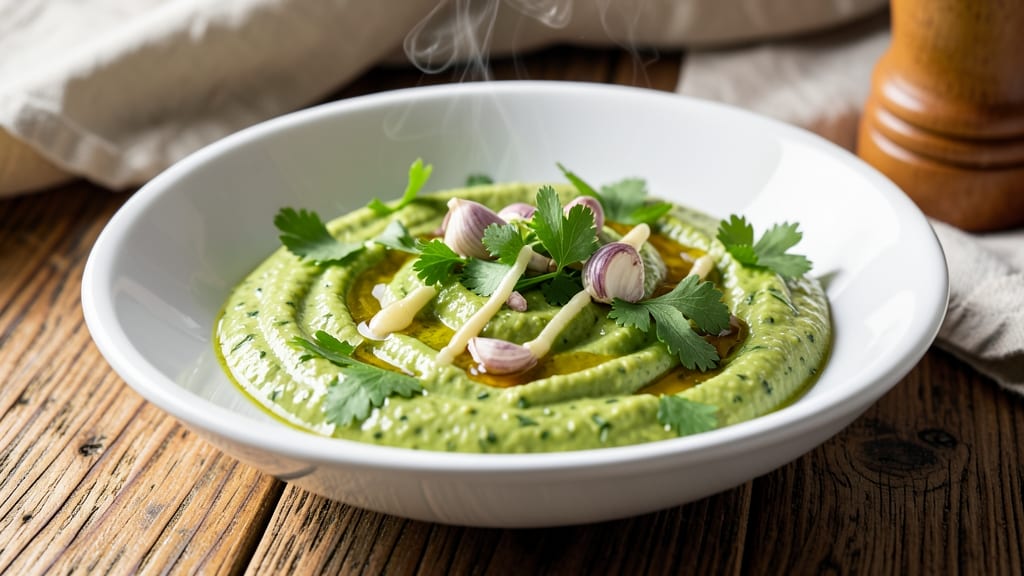
This avocado chimichurri sauce recipe transforms traditional chimichurri into a velvety, creamy dream that adds richness to every bite. The secret lies in blending ripe avocado with fresh herbs, garlic, and lime, creating a sauce that's both vibrant and deeply satisfying.
What sets this apart is the perfect balance of textures—smooth avocado base with bright, herby zing that keeps it fresh and lively.
The beauty of this recipe is its simplicity: just blend avocado, parsley, cilantro, garlic, lime juice, olive oil, and salt until perfectly smooth. No cooking required, making it ideal for last-minute meals or meal prep.
The sauce stays fresh for up to 3 days in the fridge, maintaining its creamy consistency and bold flavors.
What you'll love most is how this sauce elevates everything it touches—grilled meats, tacos, bowls, or even toast. The avocado adds a luxurious creaminess while the herbs and lime keep it bright and tangy. It's vegan-friendly, packed with healthy fats, and ready in just 5 minutes.
Perfect for weeknight dinners or entertaining, this sauce is a game-changer for anyone who loves bold, fresh flavors. Let's get blending!
Ingredients for avocado chimichurri sauce
Eight vibrant ingredients blend into a velvety sauce that transforms traditional chimichurri into a luxurious creamy experience.
| Ingredient | Amount | Notes |
|---|---|---|
| Ripe Avocados 🥑 | 2 whole | Firm but yielding to gentle pressure |
| Fresh Flat-Leaf Parsley 🌿 | ¾ cup | Stems removed, loosely packed |
| Fresh Cilantro 🌿 | ½ cup | Stems removed, loosely packed |
| Garlic Cloves 🧄 | 4 cloves | Peeled, roughly chopped |
| Fresh Lime Juice 🍋 | ½ cup | Strained, no pulp |
| Extra-Virgin Olive Oil 🫒 | ½ cup | High-quality, fruity variety |
| Diamond Crystal Kosher Salt 🧂 | ¾ tsp | Adjust to taste |
| Red Wine Vinegar 🍷 | 1 tbsp | Dry, bold variety |
| Red Chili Flakes 🌶️ | ¼ tsp | Optional, for subtle heat |
The avocados are the foundation—choose ones that yield slightly to gentle pressure for that perfect creamy texture. Trader Joe's and Whole Foods carry excellent Hass avocados year-round, but local farmers markets often have fresher options. Fresh herbs are non-negotiable here; the parsley and cilantro should be vibrant green with no wilting. For the garlic, organic cloves tend to have more flavor, but conventional works fine. The lime juice should be freshly squeezed—bottled juice lacks the bright acidity needed to balance the richness. If you can't find red wine vinegar, apple cider vinegar works in a pinch, though it'll have a slightly different profile.
No fresh parsley? Fresh basil at half the amount gives a similar aromatic punch, though the flavor will differ slightly. Cilantro hater? Swap for flat-leaf parsley only, but reduce to 0.5 cup total. The olive oil quality matters—California extra-virgin with fruity notes elevates the sauce, while cheaper varieties can taste flat. For a smokier version, add 1/4 tsp smoked paprika. The red chili flakes are optional but recommended for that subtle heat that keeps the sauce vibrant. If you're sensitive to spice, omit entirely or use 1/8 tsp cayenne pepper instead.
This sauce thrives on freshness but can be stored properly for 3 days in an airtight container in the fridge. To prevent browning, press plastic wrap directly onto the surface before sealing. For longer storage, portion into ice cube trays, freeze, and transfer to a bag—perfect for single-use portions. The sauce works beautifully as a marinade, dip, or finishing sauce, and its creamy texture makes it ideal for drizzling over grilled vegetables or toasted bread. Always blend just before serving to maintain that perfect velvety consistency.
Why You'll Love This Recipe
- No-Fuss Blender Magic: I swear, this sauce takes three minutes—just toss everything into the blender, hit pulse, and you’ve got silky green perfection. No chopping, no straining, no stress. That’s right, even if your knife skills are stuck in the Stone Age.
- Herb-Packed Punch: The parsley and cilantro team up like old friends, while the garlic and lime cut through the avocado’s creaminess. It’s bright, tangy, and just slightly funky—like a hug from a Latin American grandma who knows her herbs.
- Weeknight Superhero: Slather it on grilled chicken, toss it with rice, or just eat it with chips. It’s my lazy Tuesday secret weapon. Honestly, I’ve used it for everything from tacos to sandwiches, and it never lets me down.
- Leftovers? More Like Future Meals: Make a big batch—it keeps for days in the fridge, and the flavor actually deepens over time. Between us, I’ve turned last night’s dinner into today’s lunch without breaking a sweat. Budget-friendly? Absolutely. Waste-free? Even better.
Step-by-step instructions for avocado chimichurri sauce
Here's how to create a velvety, herb-forward chimichurri with avocado's natural richness.
Halve and Pit the Avocados
Cut each of the 2 whole ripe avocados in half lengthwise and remove the pits using a sturdy spoon. Scoop the flesh directly into a food processor or high-powered blender. The avocados should be firm but yield slightly when pressed—this ensures a creamy texture without being mushy. If your avocados are overly soft, chill them for 10 minutes first to firm up slightly.
Leave the skins on during processing—they'll help create a smoother puree. Give the avocados a quick pulse to break them down into small chunks before adding any other ingredients. This prevents the processor from overheating when you add the oil later. The goal is to create a base that's smooth but still retains some texture, so don't over-process at this stage.
Process the Herb and Aromatic Base
Add the 0.75 cup fresh flat-leaf parsley, 0.5 cup fresh cilantro, 4 cloves peeled garlic, and 0.25 tsp red chili flakes to the food processor. Pulse 4-5 times until the herbs are finely chopped but not yet pureed. You want to preserve some texture in the final sauce—this creates visual interest and prevents it from becoming too heavy. The garlic should be minced but still visible as small flecks throughout.
This is where the sauce's bright, herbal character comes together. I like to add the chili flakes at this stage so they're evenly distributed but still identifiable as heat pockets. If you prefer a milder version, you can reduce this to just 0.125 tsp or omit entirely. The herbs should smell intensely fresh—this is your quality checkpoint before adding liquids.
Blend with Lime and Vinegar
With the processor running, slowly drizzle in the 0.5 cup fresh lime juice and 1 tbsp red wine vinegar through the feed tube. This gradual addition prevents the mixture from splattering and allows the acids to emulsify with the avocado fat. The sauce should begin to take on a vibrant green color and develop a slightly frothy consistency. Stop blending occasionally to scrape down the sides and ensure even incorporation.
The acidity from the lime and vinegar serves two purposes: it brightens the avocado's richness and helps stabilize the emulsion so the sauce doesn't separate. You'll notice the mixture becomes more cohesive as the acids react with the avocado's natural oils. Taste at this point—you should detect a balance of herbal freshness, citrus tang, and subtle heat from the chili.
Incorporate Olive Oil for Creamy Texture
With the processor running on low speed, slowly drizzle in the 0.5 cup extra-virgin olive oil. This is the most critical step for achieving that signature creamy texture. Add the oil in a thin, steady stream—if you pour too quickly, the sauce will seize up and become greasy. The mixture should transform from a thick paste into a smooth, velvety sauce that coats the back of a spoon.
I use a high-quality, fruity olive oil here—the flavor profile will influence the final product significantly. As you add the oil, the sauce will lighten in color slightly and become more fluid. Stop blending once all the oil is incorporated and the sauce is completely smooth. The texture should be thick enough to coat the back of a spoon but still pourable.
Season and Adjust Consistency
Add the 0.75 tsp diamond crystal kosher salt and pulse 2-3 times to distribute evenly. Taste the sauce and adjust the seasoning—you may need a bit more salt to balance the acidity, especially if you're using high-quality salt. The sauce should be vibrant, herby, and slightly tangy with a creamy avocado base that carries all the flavors.
If the sauce is too thick for your liking, add 1-2 tablespoons of water or lime juice at a time until it reaches your desired consistency. For a thicker sauce suitable for drizzling, you can leave it as is. Transfer the chimichurri to a serving bowl and press plastic wrap directly onto the surface to prevent browning. This sauce is best used within 2 hours of preparation, though it will keep in the refrigerator for up to 2 days if properly stored.
Pro Tips For Making Avocado Chimichurri Sauce
- PULSE THE AVOCADO: Avocados bruise fast—cut them just before blending and toss the pit in while pulsing, not blending continuously. I learned this the hard way after watching a perfectly good avocado turn to mush in seconds.
- STACK THE HERBS: Flat-leaf parsley and cilantro wilt faster than you’d think. Bundle their stems together, trim the ends, and submerge the bundle in cold water for 10 minutes before chopping—keeps them crisp and makes mincing easier.
- SALT THE GARLIC: Slice the garlic cloves thinly and toss them in a pinch of salt for 5 minutes before adding to the mix. This softens them without cooking and cuts the sharp bite—trust me, your sauce will thank you.
- ACIDIFY IN STAGES: Add lime juice gradually while tasting. Too much upfront and the avocado turns bitter; too little later and you’re chasing flavor. Start with half, blend, then adjust—this sauce balances better when built, not dumped.
Flavor customization for avocado chimichurri sauce
Herb Swaps
Fresh herbs are the heart of chimichurri, but don't stress if you're missing one. Swap 0.5 cup fresh cilantro for 0.5 cup fresh basil or 0.25 cup fresh dill—both add brightness but with different profiles.
For a Mediterranean twist, use 0.5 cup fresh oregano (it's bold and earthy). If you only have flat-leaf parsley, reduce to 0.5 cup total and add 0.25 cup fresh mint for a refreshing kick. 🌿
Spice Level Control
Adjust heat to your taste! The 0.25 tsp red chili flakes provide subtle warmth, but you can crank it up with 0.5 tsp cayenne pepper for serious heat or dial it back to 0.125 tsp for mildness.
For smoky depth, add 0.25 tsp smoked paprika—it blends beautifully with the avocado's richness. Always taste before serving to avoid overpowering the fresh flavors.
Texture Variations
Want chunkier texture? Pulse the herbs in 6-8 bursts instead of blending smooth. For a silky finish, strain through a fine-mesh sieve after blending. If the sauce separates, whisk in 1 tbsp extra lime juice or 1 tsp cornstarch slurry to stabilize.
The avocado's fat needs acid to emulsify properly—don't skip the lime or vinegar, even if you're adjusting textures. ✨
Flavor Boosters
Brighten the sauce with 1 tsp honey or 1 tsp maple syrup for a touch of sweetness that balances the acidity. For umami depth, add 1 tsp soy sauce or 0.5 tsp fish sauce (if not vegan).
A splash of 1 tsp apple cider vinegar adds complexity, while 1 tsp toasted sesame oil introduces nutty warmth. Always taste as you go—small adjustments make all the difference!
Regional Twists
For a Mexican-inspired version, add 0.5 tsp ground cumin and 0.25 tsp chipotle powder. A Mediterranean take includes 0.25 tsp dried oregano and 1 tsp lemon zest.
For Asian fusion, stir in 1 tsp rice vinegar and 0.5 tsp grated ginger. Each twist keeps the avocado base while letting you explore global flavors. 🌍
Storage Hacks
To prevent browning, press plastic wrap directly onto the sauce's surface before sealing in an airtight container. For longer storage, freeze in ice cube trays—thaw overnight in the fridge. If the sauce thickens after refrigeration, whisk in 1 tsp water or lime juice to restore creaminess.
The avocado's fat oxidizes quickly, so always store with a barrier to preserve freshness. ❄️
Nutrition facts
Frequently asked questions
Can I make this sauce without a food processor?
Yes! Use a mortar and pestle for the herbs and garlic first, then mash the avocado with a fork. Stir in the lime juice, vinegar, and olive oil gradually while mashing. The texture will be slightly chunkier but still delicious. For a smoother result, transfer to a blender or food processor after mashing the avocados.
How do I prevent the avocado from browning?
Press plastic wrap directly onto the sauce's surface before sealing it in an airtight container. This blocks oxygen, which causes browning. For longer storage, freeze in ice cube trays—thaw overnight in the fridge. The avocado's fat oxidizes quickly, so always use a barrier to preserve freshness.
What's the best way to store leftovers?
Store in an airtight container with plastic wrap pressed directly onto the surface. Keep refrigerated for up to 2 days. If it thickens, whisk in 1 tsp lime juice or water to restore creaminess. For longer storage, freeze in 1-tablespoon portions—thaw overnight in the fridge before using.
Can I use this sauce as a marinade?
The creamy avocado base works beautifully as a marinade for 15-30 minutes for delicate proteins like fish or shrimp. For tougher meats, use it as a finishing sauce after cooking. The acidity helps tenderize while the herbs add vibrant flavor. Just don't marinate for too long—the avocado's fat can break down proteins over time.
What's the secret to getting the perfect creamy texture?
The key is adding the olive oil slowly while blending on low speed. This emulsifies the avocado fat properly. For extra silkiness, strain through a fine-mesh sieve after blending. If the sauce separates, whisk in 1 tbsp lime juice or 1 tsp cornstarch slurry to stabilize it.