
Sauces & Condiments
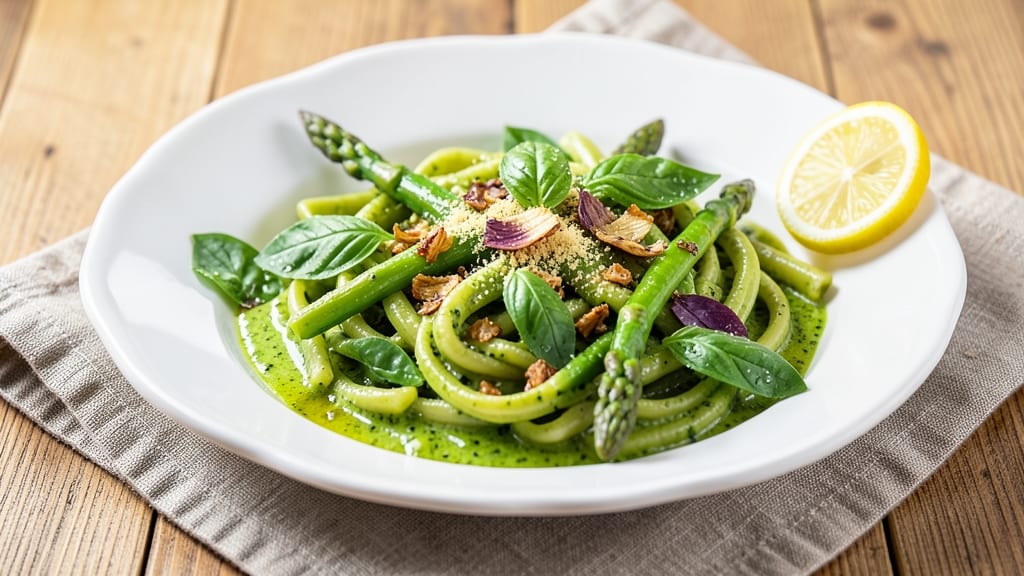
This asparagus pasta sauce recipe transforms spring's most elegant vegetable into a vibrant, earthy sauce that clings perfectly to al dente noodles. The secret lies in blitzing tender asparagus with garlic, lemon, and basil—creating a bright green pesto that's fresher than traditional versions while maintaining that signature crunch.
I developed this after realizing asparagus's natural nuttiness pairs beautifully with pasta's carbs, elevating both into something restaurant-worthy.
The beauty of this sauce is its versatility—it works with any pasta shape and adapts to seasonal variations. You'll start by quickly blanching asparagus to preserve its vibrant color, then blending it with a minimalist ingredient list that includes nutritional yeast for depth and pine nuts for texture.
The sauce comes together in just 10 minutes, making it ideal for weeknight dinners when you crave something special without the effort.
What makes this recipe stand out is the balance of textures: creamy from the asparagus and olive oil, crunchy from the toasted nuts, and tender from the perfectly cooked pasta.
Each bite delivers that fresh-asparagus brightness alongside the comforting familiarity of pasta, creating a dish that feels both sophisticated and approachable. The sauce also keeps beautifully in the refrigerator, so you can make it ahead and transform leftovers into a quick lunch.
Serve this sauce over freshly cooked pasta with a sprinkle of parmesan and freshly cracked black pepper for the perfect spring meal. The asparagus's natural sweetness shines through, while the lemon brightens every forkful—proof that spring vegetables can be the star of the plate without overwhelming the dish.
Let's get cooking!
Ingredients for asparagus pasta sauce
Bright green asparagus meets creamy pasta in this vibrant, restaurant-quality sauce that's ready in 10 minutes.
| Ingredient | Amount | Notes |
|---|---|---|
| Fresh Asparagus 🌱 | 1 lb | Trimmed ends, spears cut into 1-inch pieces |
| Extra-Virgin Olive Oil 🫒 | ½ cup | High-quality, fruity variety preferred |
| Garlic Cloves 🧄 | 4 cloves | Peeled, roughly chopped |
| Fresh Basil Leaves 🌿 | 1 ½ cups | Packed, stems removed |
| Lemon Juice 🍋 | 2 tbsp | Freshly squeezed, seeds removed |
| Nutritional Yeast 🧀 | ¼ cup | For cheesy, umami depth |
| Pine Nuts 🥜 | ½ cup | Toasted lightly for crunch |
| Parmesan Cheese 🧀 | ½ cup | Freshly grated, fine texture |
| Salt 🧂 | ½ tsp | Diamond Crystal kosher salt |
| Black Pepper 🌶️ | ¼ tsp | Freshly cracked |
| Uncooked Pasta 🍝 | 12 oz | Any shape, al dente preferred |
| Water 💧 | 4 cups | For pasta cooking |
| Sea Salt 🧂 | 1 ½ tsp | For pasta water |
The asparagus is the star—look for spears with tightly closed tips and vibrant green color at Whole Foods or your local farmers market. Thicker spears hold up better to blanching, but any size works. Trader Joe's has pre-trimmed asparagus if you're short on time, though I always trim mine myself for that restaurant-quality touch. The nutritional yeast is non-negotiable here; Bragg or Bob's Red Mill are my go-tos for that perfect umami kick without dairy. Fresh basil is worth hunting down—the plastic-wrapped kind at grocery stores often has bruised leaves, so check the stems for freshness.
No pine nuts? Walnuts or cashews toasted work beautifully—just know the texture will be slightly different. Short on basil? Fresh parsley or cilantro at half the amount adds brightness, though the flavor profile shifts. The lemon juice can be swapped for white wine vinegar at half the amount if you're out, but fresh lemon brightens the whole dish. For the pasta, any shape works—linguine, penne, or even farfalle. Just make sure it's al dente; undercooked pasta soaks up the sauce better. The sauce thickens as it cools, so if it feels too loose right after blending, let it sit for 5 minutes before serving.
This sauce keeps beautifully—3-4 days in an airtight container in the fridge, or 3 months frozen. I like to make a double batch and freeze half; it's perfect for quick lunches or last-minute dinners. The pasta sauce reheats well, though I prefer serving it fresh over just-cooked noodles. For extra crunch, toast fresh pine nuts or walnuts and sprinkle on top right before serving. The sauce also works as a sandwich spread or pasta salad dressing—versatility at its finest.
Why You'll Love This Recipe
- I swear by this trick: just snap the asparagus stalks instead of chopping them. The tough ends break cleanly, and the bright green spears cook down to tender perfection—no knife skills required. Between us, I’ve burned more garlic than I’d like to admit, but this sauce forgives mistakes.
- No Chopping Chaos: I swear by this trick: just snap the asparagus stalks instead of chopping them. The tough ends break cleanly, and the bright green spears cook down to tender perfection—no knife skills required. Between us, I’ve burned more garlic than I’d like to admit, but this sauce forgives mistakes.
- Bright & Fresh Bite: That lemon juice isn’t just for flavor—it cuts through the richness of the olive oil and makes the basil pop. Honestly, the first time I tasted it, I thought, “Why haven’t I done this every spring?” The garlic doesn’t overpower; it just lingers in the background like a good friend.
- Weeknight & Potluck Hero: This sauce doubles as a quick weeknight dinner or a showstopper for brunch. Toss it with pasta for a 20-minute meal, or drizzle it over grilled chicken for a crowd. I’ve even served it cold in the summer—yes, really—and no one complained. (My roommate still teases me about the “fancy spring pasta” I made at 6 PM.)
Step-by-step instructions for bright green asparagus pasta sauce
This vibrant pesto comes together faster than you'd think—fresh asparagus and basil transform into a luscious sauce with just a few minutes of work.
Blanch and Toast the Asparagus
Bring a small pot of water to a rolling boil. Add the 1 lb fresh asparagus (prepped into 1-inch pieces) and blanch for 2 minutes until bright green and just tender—it should still have a slight bite. Immediately transfer to an ice bath to stop cooking and preserve that vibrant color.
While the asparagus cools, heat a dry skillet over medium heat and toast the 0.5 cup pine nuts for 3-4 minutes, stirring constantly. They'll release their nutty aroma and turn a lovely golden brown. Remove from heat immediately—they burn faster than you'd expect—and let cool slightly. This toasting enhances their crunch and deepens their flavor.
Pulse the Pesto Base
In a food processor, combine the blanched asparagus (drained well), 1.5 cups fresh basil leaves, 4 cloves garlic cloves, 0.25 cup nutritional yeast, 0.5 cup Parmesan cheese, 0.5 tsp salt, and 0.25 tsp black pepper. Pulse until finely chopped but still slightly textured—you want visible flecks of asparagus and basil for that fresh appeal.
With the processor running, slowly drizzle in the 0.5 cup extra-virgin olive oil until the mixture forms a thick, vibrant green paste. Taste and adjust seasoning—this is your flavor checkpoint. The nutritional yeast adds that cheesy depth without dairy, while the asparagus brings a subtle sweetness that balances the basil's brightness.
Cook the Pasta Al Dente
Bring 4 cups water to a boil in a large pot, then add 1.5 tsp sea salt. Add the 12 oz uncooked pasta and cook according to package instructions until 1 minute before al dente—you'll finish cooking it in the sauce. Reserve 1 cup pasta water before draining.
Here's the thing—don't rinse the pasta. That starchy coating helps the pesto cling beautifully. When the pasta is ready, drain it but save that 1 cup reserved pasta water. It's your secret weapon for adjusting the sauce consistency later if needed.
Combine and Finish the Sauce
Add the drained pasta to the food processor with the pesto base. Pulse just a few times to combine, then transfer everything to a serving bowl. Stir in the toasted pine nuts and 2 tbsp lemon juice, which brightens the whole dish with a zesty kick.
Toss the pasta with the sauce, adding 2-3 tablespoons of reserved pasta water at a time if the sauce seems too thick. You're aiming for that perfect clingy consistency where every strand of pasta is beautifully coated. The sauce should be vibrant green, with visible flecks of asparagus and basil throughout.
Serve Immediately for Maximum Freshness
Divide the pasta among plates and garnish with additional Parmesan cheese and a sprinkle of black pepper. The contrast of warm pasta with the bright green sauce is stunning—serve it right away while the asparagus maintains its vibrant color and the pine nuts are still crisp.
This sauce keeps its best qualities for 1-2 days in the refrigerator, but it's truly at its peak when served fresh. The asparagus's natural sweetness and the basil's freshness make this pesto stand out from traditional versions—it's bright, earthy, and packed with texture from those toasted pine nuts.
Pro Tips For Making Asparagus Pasta Sauce
- CHAR THE ASPARAGUS FIRST: Blanch the asparagus in boiling salted water for exactly 2 minutes before adding it to the sauce—this softens the tough ends while keeping the tips crisp. I used to skip this and ended up with a mushy, sad pile of green sludge.
- USE WHOLE BASIL STEMS: Tear the basil leaves off their stems and toss the stems into the sauce with the garlic—they’ll release more flavor than you’d expect. Sounds weird, but it works: the stems add a subtle earthiness that rounds out the bright lemon notes.
- LOW AND SLOW WITH GARLIC: Cook the minced garlic in olive oil over the lowest heat you can tolerate—any hotter and it burns before the asparagus is ready. I learned this the hard way after tasting bitter, acrid sauce that ruined an otherwise perfect dish.
- SALT THE PASTA WATER LATE: Add the asparagus and lemon juice to the pasta after draining, not before—this keeps the sauce from getting watered down and the asparagus from turning limp. Yes, it’s an extra step, but your sauce will stay vibrant and cohesive.
Wine and beer pairings for this recipe
Crisp White Wine
This vibrant asparagus pesto pairs beautifully with a dry Italian white wine like Vermentino or Pinot Grigio. Their crisp acidity cuts through the sauce's richness while complementing the asparagus's natural sweetness.
I love Sardinian Vermentino—its citrus notes enhance the lemon in the sauce. Serve slightly chilled for the best experience. 🍷
Crisp Lager Pairing
For beer lovers, a crisp Italian lager like Peroni or Birra Moretti works perfectly. The light maltiness balances the sauce's herbal notes without overpowering the asparagus. If you prefer hoppier beers, try a Belgian witbier like Hoegaarden—its coriander and citrus notes mirror the lemon in the sauce. 🍺
Sparkling Wine
A dry Prosecco or Cava adds a festive touch to this spring dish. The bubbles cleanse your palate between bites, making the asparagus's brightness pop even more.
Look for Italian Prosecco DOC—its apple and pear notes harmonize beautifully with the pesto's herbal profile. Serve well-chilled for the best contrast. ✨
Red Wine Option
If you prefer red, a light-bodied Chianti or Pinot Noir works surprisingly well. Their acidity and subtle earthiness complement the asparagus's natural flavors. I recommend a Chianti Classico—its cherry notes add a delightful contrast to the green sauce. Serve at room temperature for the best pairing. 🍷
Nutrition facts
Frequently asked questions
Can I use frozen asparagus in this recipe?
Fresh asparagus gives the best vibrant green color and texture, but you can use frozen in a pinch. Thaw it first, drain well, and pat dry before blending. The texture will be slightly softer, but the flavor remains excellent. Just add 1 extra minute of blanching time to ensure it's fully cooked through.
What if I don't have pine nuts?
No problem! Toasted walnuts or cashews work beautifully for texture. For a seed option, try pumpkin seeds or sunflower seeds—they add a different but still delicious crunch. Just toast them for 2-3 minutes until fragrant and golden.
Why does my sauce turn gray after blending?
Overcooked asparagus causes graying due to oxidation. Always blanch for exactly 2 minutes and immediately transfer to ice water. For extra vibrancy, add 1 tsp lemon juice to the sauce right after blending—it preserves the green color beautifully.
Can I make this sauce ahead of time?
Store the sauce in an airtight container in the fridge for up to 3 days or freeze for 3 months. Reheat gently until warm, then toss with freshly cooked pasta. The flavor actually improves after resting, and the asparagus keeps its color better when stored properly.
What pasta shapes work best with this sauce?
Any shape works, but linguine, fettuccine, or penne are ideal for maximum sauce clinging. For extra fun, try farfalle or gemelli—their unique shapes create beautiful presentation. Just