
Sauces & Condiments
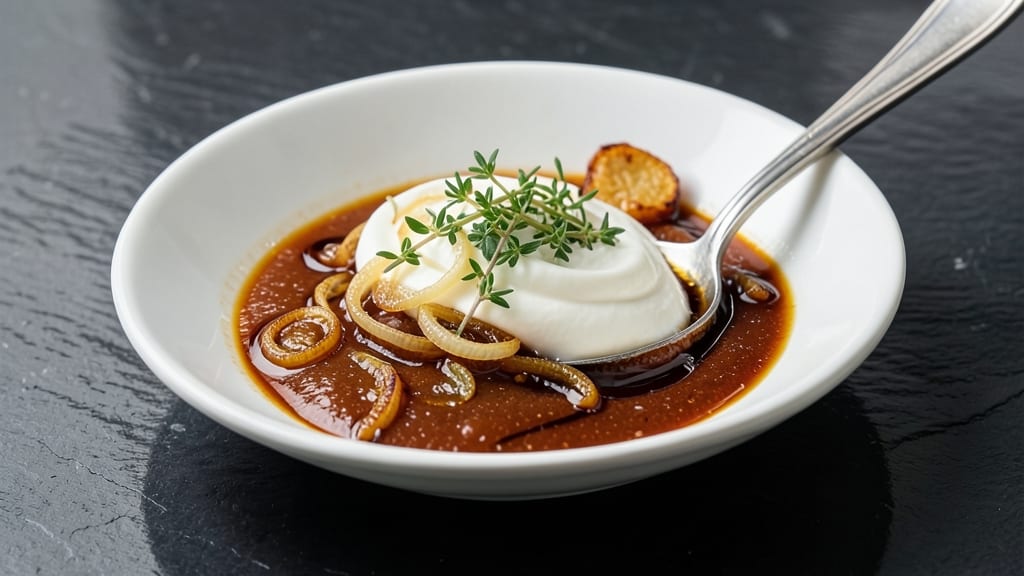
Armagnac sauce transforms ordinary roasted meats into a luxurious dining experience with its deep, brandied richness. This classic French sauce combines butter, shallots, and a touch of cream into a velvety sauce that carries the warm, caramelized notes of Armagnac brandy—perfect for duck, mushrooms, or game birds. The secret lies in slow reduction and proper emulsification, ensuring every spoonful delivers that signature depth.
The sauce begins with shallots caramelized until golden, then deglazed with Armagnac to create a fragrant base. Butter and cream are added gradually to create a silky texture that clings beautifully to roasted meats.
What sets this sauce apart is the balance of acidity and richness, achieved through precise timing and gentle heat.
Once complete, the sauce will have a glossy sheen and a complex flavor profile—sweet from the caramelized shallots, nutty from the Armagnac, and velvety from the butter and cream. It’s the kind of sauce that elevates simple roasted meats into a restaurant-worthy centerpiece, with a finish that lingers.
Store any leftovers in an airtight container in the refrigerator for up to 5 days, or freeze for longer storage. Reheat gently over low heat, stirring occasionally, to maintain its smooth, luxurious consistency. This sauce is worth the effort—every bite will taste like a taste of France.
Ingredients for armagnac sauce
Nine ingredients, French elegance. This sauce delivers restaurant-quality depth with Armagnac's signature richness.
| Ingredient | Amount | Notes |
|---|---|---|
| Unsalted Butter 🧈 | ¾ cup | Cold and cubed for emulsification |
| Shallots 🧅 | 1 lb | Peeled and thinly sliced |
| Armagnac Brandy 🍷 | ½ cup | High-quality, 40% ABV preferred |
| Heavy Cream 🥛 | ½ cup | Full-fat for richness |
| Demi-Glace 🍲 | ½ cup | Store-bought or homemade |
| Fresh Thyme Leaves 🌿 | 1 tbsp | Or 1 tsp dried thyme |
| Fresh Parsley Leaves 🌿 | 2 tbsp | Chopped for garnish |
| Diamond Crystal Kosher Salt 🧂 | ½ tsp | For seasoning |
| Freshly Ground Black Pepper 🌶️ | ¼ tsp | For finishing |
The Armagnac is non-negotiable—look for a high-proof, aged brandy like Château de Lagarde or Janneau for authentic depth. Whole Foods or specialty liquor stores carry premium selections, but even a mid-range brand will work if it's at least 40% ABV. Shallots should be firm and pale purple, not green or sprouting. Costco or Trader Joe's often have pre-peeled shallots in the frozen section, which saves time. For butter, Plugrá or Land O'Lakes unsalted are reliable choices—cold and cubed, they emulsify beautifully into the sauce. The demi-glace can be store-bought (like Maillard or Goya), but homemade is superior if you have the time.
No Armagnac? Cognac or brandy works in a pinch, though the flavor profile shifts slightly. Short on heavy cream? Half-and-half or whole milk will work, but the sauce may separate more easily. Fresh thyme is ideal, but dried thyme at one-third the amount suffices. For the demi-glace, reduced red wine or beef stock can substitute in a bind. The key to success lies in the butter—never melt it completely before adding to the sauce, or it will break. If you lack shallots, substitute finely chopped yellow onion, though the flavor will differ slightly. Always taste as you go; the sauce should balance sweetness from the caramelized shallots with the brandy's nutty bite.
This sauce keeps beautifully—5 days refrigerated in an airtight container, or 3 months frozen. To reheat, warm gently over low heat, whisking constantly to prevent separation. For a silky texture, whisk in a splash of cold cream or a small cube of butter as it reheats. The sauce thickens as it cools, so thin with a bit of warm water if needed. Portion into ramekins before freezing for easy single servings. Label containers clearly—this sauce deserves to be savored slowly.
Why You'll Love This Recipe
- Here’s what sold me: that first sip of Armagnac hitting the pan turns into a sauce so velvety and deep, you’d think you slaved over it. The demi-glace adds this je ne sais quoi—like a secret handshake between the brandy and cream, buttery and slightly smoky without tasting like you burned anything.
- I’ll be real: I always make extra. The sauce thickens beautifully when reheated—just a splash of cream or water—and tastes even better the next day. Honestly, it’s my go-to for meal prep because it’s hard to mess up, and my wallet thanks me for not buying takeout.
Step-by-step instructions for Armagnac sauce
Master this velvety sauce with rich brandied depth that elevates roasted meats to extraordinary heights.
Sweat the Shallots Until Translucent
In a heavy-bottomed saucepan, melt the 0.75 cup unsalted butter over medium-low heat. Add the 1 lb peeled and thinly sliced shallots and cook gently for 15-20 minutes, stirring occasionally. The shallots should soften completely and turn translucent without browning—this foundational step builds the sauce's sweet, mellow base.
I like to stir every 2-3 minutes to prevent sticking. If the shallots start to color, reduce the heat immediately. The butter should foam gently but not brown. This patience ensures a smooth, flavorful foundation without bitterness.
Deglaze with Armagnac and Reduce
Once the shallots are perfectly softened, increase heat to medium-high and carefully pour in the 0.5 cup Armagnac brandy. The alcohol will flame briefly—this is normal and necessary to burn off the raw spirit. Let the flames subside completely before stirring.
Reduce the mixture by half over medium heat, stirring occasionally, until the liquid reduces to about 2 tablespoons. This reduction concentrates the brandy's depth and removes any lingering alcohol sharpness. The sauce should now have a glossy sheen and intense aroma.
Build the Sauce with Cream and Demi-Glace
Lower the heat to medium-low and whisk in the 0.5 cup heavy cream and 0.5 cup demi-glace. Stir constantly for 5-7 minutes until the sauce thickens slightly and coats the back of a spoon. This combination creates a luxurious, velvety texture while balancing the sauce's richness.
If the sauce thickens too quickly, add 1-2 tablespoons water to maintain a smooth consistency. The goal is a sauce that coats the back of a spoon but remains pourable. Taste and adjust seasoning with the 0.5 tsp Diamond Crystal kosher salt and 0.25 tsp freshly ground black pepper—the brandy's natural sweetness should be balanced by subtle saltiness.
Finish with Herbs and Emulsify
Remove the sauce from heat and stir in the 1 tbsp fresh thyme leaves and 2 tbsp chopped fresh parsley leaves. Let the herbs steep for 2 minutes to infuse their aromatic qualities. Strain the sauce through a fine-mesh sieve into a clean saucepan to remove any herb bits, ensuring a silky texture.
Return the sauce to low heat and whisk in the remaining 0.25 cup cold cubed butter, one piece at a time. This cold butter emulsifies the sauce, creating a glossy, velvety finish. The sauce should thicken beautifully and develop a luxurious sheen. Taste once more and adjust seasoning if needed.
Rest and Serve at Peak Temperature
Transfer the sauce to a heatproof bowl and tent loosely with plastic wrap, allowing it to rest for 10-15 minutes at room temperature. This resting period allows flavors to meld and the sauce to reach its ideal consistency—no longer too hot to handle but still warm and fluid.
Serve the sauce immediately over roasted meats, drizzled generously over each portion. The Armagnac sauce should cling beautifully to the meat, enhancing its natural flavors with its rich, brandied depth. For best results, reheat gently over low heat, stirring constantly to maintain its velvety texture.
Pro Tips For Making Armagnac Sauce
- Sweat Shallots Slow: Low heat is your friend here—shallots should melt into golden syrup, not brown into bitter bits. I used to rush this, and the sauce always tasted harsh. Give them 8-10 minutes with a splash of water if they stick, stirring occasionally. Patience pays off.
- Deglaze Hot Pan: The moment you remove the shallots, pour in that Armagnac immediately—the pan’s still screaming hot. Let it bubble furiously for 30 seconds before scraping up those browned bits. Skimp here, and you’re left with a thin, flavorless sauce. (Yes, even if you’re impatient like me.)
- Reduce Cream First: Heavy cream loves to scald. Simmer it alone for 5 minutes before adding demi-glace—it thickens faster and won’t curdle when you combine everything. I learned this the hard way after one very lumpy batch. Trust the process.
- Strain for Smoothness: Unless you’re going for rustic, strain the sauce through a fine-mesh sieve after combining all ingredients. The butter and shallot bits add texture, but they can make the sauce feel heavy. (Your future self will thank you for the clean finish.)
Dietary considerations for this armagnac sauce
Gluten-Free Adaptations
The traditional Armagnac sauce recipe is naturally gluten-free, but always double-check your ingredients. The demi-glace is the only potential concern—opt for a gluten-free demi-glace or make your own from scratch using gluten-free beef stock and red wine.
Brands like Annie's or Kraft offer gluten-free demi-glace options. The shallots, butter, cream, and Armagnac are all inherently gluten-free, so no other substitutions are needed. 🌾
Dairy-Free Options
For a dairy-free version, replace the 0.75 cup unsalted butter with 0.75 cup refined coconut oil or vegetable shortening—both work well for emulsification. Use full-fat coconut cream instead of heavy cream to maintain richness.
The sauce will still develop a velvety texture, though the flavor profile will shift slightly toward coconut. Taste as you go and adjust seasoning to balance the new elements. 🥥
Lower-Calorie Adjustments
To reduce calories while keeping the sauce rich, swap 0.5 cup heavy cream for 0.5 cup light cream or half-and-half. Use low-fat butter (or omit it entirely) and replace with 1 tbsp cornstarch mixed with 2 tbsp cold water to thicken the sauce.
This keeps the brandy's depth but cuts calories by about 30%. The sauce will still coat beautifully, though it may separate slightly—whisk vigorously to re-emulsify. 💡
Alcohol-Free Substitutes
If you want to avoid alcohol entirely, replace the 0.5 cup Armagnac with 0.5 cup apple cider or 0.5 cup white wine vinegar (reduced by half). For a richer flavor, use 0.5 cup reduced apple juice instead.
The sauce will lose some of the brandy's signature depth, but it will still be delicious and safe for all ages. Add a pinch of cinnamon or vanilla extract to mimic Armagnac's caramel notes. 🍎
Vegetarian-Friendly Tweaks
This sauce pairs beautifully with vegetarian dishes like roasted eggplant or portobello mushrooms. Keep the recipe as-is, but ensure your demi-glace is vegetarian (some contain bone marrow). For extra umami, add 1 tbsp soy sauce or 1 tsp mushroom powder when building the sauce.
The brandy's richness will still shine, making it a luxurious vegetarian option. 🌱
Storage for Dietary Needs
Store the sauce in an airtight glass container—glass is safest for gluten-free and dairy-free versions to avoid cross-contamination. Refrigerate for up to 5 days or freeze for 3 months. When reheating, warm over low heat and whisk constantly to prevent separation.
For dairy-free versions, add a splash of coconut cream while reheating to restore silkiness. Always label containers with dietary notes to avoid confusion. ❄️
Nutrition facts
Frequently asked questions
Can I substitute Armagnac with another brandy?
Yes, but expect slight flavor differences. Cognac or French brandy work best as they share similar profiles. Avoid cheaper vodka-based brandies—they lack the caramelized depth that makes Armagnac special. If substituting, use the same amount (0.5 cup) and reduce the sauce longer to compensate for any alcohol sharpness.
Why did my sauce separate?
Sauce separation usually happens from overheating or adding cold ingredients too quickly. Always whisk in cold butter (0.25 cup) one piece at a time over low heat—this emulsifies properly. If it separates, whisk in 1 tsp cold cream and reheat gently while stirring constantly. For future batches, reduce heat to medium-low when adding cream.
What meats pair best with this sauce?
This sauce shines with rich, gamey meats like duck, venison, or roasted chicken thighs. It also elevates mushroom risotto or seared scallops for a vegetarian option. The brandy's depth complements fatty cuts, while the creaminess balances lean proteins. Serve warm over roasted potatoes or crusty bread to soak up every drop.
How do I make this sauce ahead of time?
Prepare the sauce up to 2 days in advance—it tastes even better after flavors meld! Store in an airtight container in the fridge. Reheat gently over low heat, whisking constantly to prevent separation. For longer storage, freeze for up to 3 months. Thaw overnight in the fridge, then reheat slowly. The sauce may thicken slightly when cold—thin with 1 tsp warm water if needed.
Can I use this sauce for pasta?
Toss 1/4 cup sauce per serving with fettuccine or tagliatelle for an elegant dish. Add 1/4 cup cooked wild mushrooms or crispy pancetta to the pasta before mixing. The sauce's richness pairs beautifully with the starch, but use less than you would for meat—pasta absorbs sauce quickly. Garnish with extra parsley for freshness.