
Sauces & Condiments
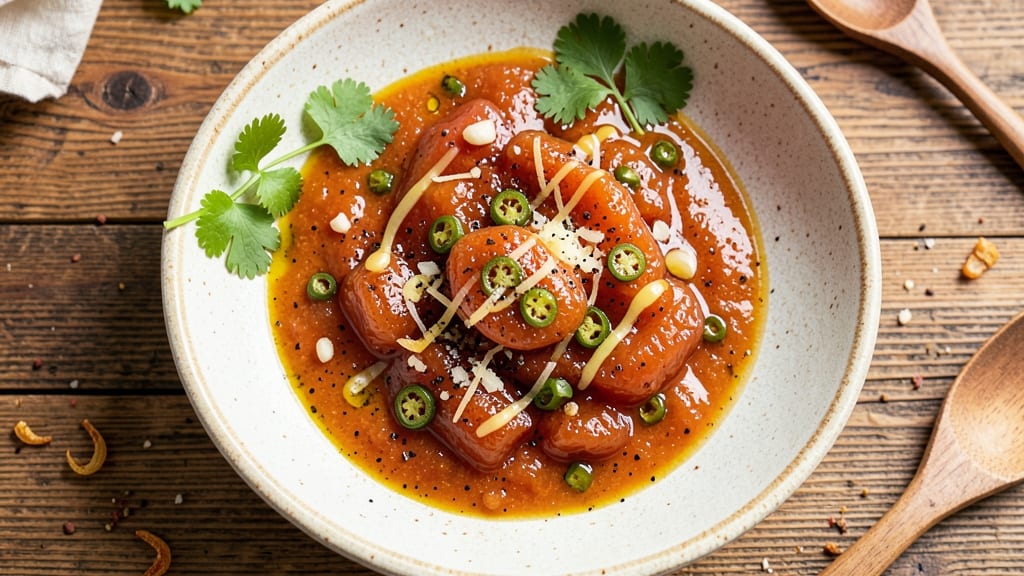
This apricot jalapeño sauce transforms grilling and dipping into an experience—where sweet, tangy apricot meets bold jalapeño heat. The balance is precise: caramelized apricots provide natural sweetness while jalapeños bring controlled spice, creating a versatile sauce that elevates everything from grilled meats to crispy appetizers.
What makes this recipe stand out is its adaptability—adjust the heat to your preference without sacrificing depth of flavor.
The foundation starts with a simple blend of apricot preserves and jalapeño, simmered until smooth and glossy. A touch of apple cider vinegar brightens the sauce, while garlic and ginger add aromatic complexity.
The result is a sauce that’s rich enough for glazing but light enough to drizzle, with a texture that clings perfectly to food. No added sugars or artificial ingredients—just real, balanced flavor.
Perfect for marinating chicken or pork, as a dipping sauce for fries or chips, or as a glaze for grilled vegetables, this sauce delivers restaurant-quality results with minimal effort. The secret lies in the slow reduction, which intensifies the flavors while maintaining that perfect sweet-heat harmony.
Once you taste it, you’ll reach for this sauce again and again—whether you’re cooking for a crowd or treating yourself to a simple weeknight meal.
Customize the heat level by adjusting jalapeño seeds or adding a pinch of smoked paprika for depth. Store in the refrigerator for up to two weeks, or freeze for longer shelf life.
Ready in just 20 minutes, this sauce proves that bold flavors don’t require complicated techniques—just the right balance of ingredients and a little patience.
Ingredients for apricot jalapeno sauce
Sweet apricot meets bold jalapeño—just ten ingredients for a sauce that transforms grilling and dipping.
| Ingredient | Amount | Notes |
|---|---|---|
| Apricot Preserves 🍑 | 1 cup | No-sugar-added preferred |
| Jalapeño Peppers 🌶️ | 4 whole | Seeds removed for mild heat |
| Apple Cider Vinegar 🍏 | 2 tbsp | For bright acidity |
| Garlic Cloves 🧄 | 3 cloves | Minced for aromatic depth |
| Fresh Ginger 🌿 | 1 tbsp | Finely grated, fresh preferred |
| Extra-Virgin Olive Oil 🫒 | ¼ cup | For richness and smoothness |
| Smoked Paprika 🌶️ | 1 tsp | For depth and smokiness |
| Salt 🧂 | ½ tsp | Diamond Crystal preferred |
| Black Pepper 🌶️ | ¼ tsp | Freshly ground for heat |
| Honey 🍯 | 1 tbsp | Optional, for extra sweetness |
The apricot preserves are the heart of this sauce—look for no-sugar-added varieties at stores like Whole Foods or Trader Joe's for the best balance. Jalapeños should be fresh and firm; Mexican jalapeños from the produce section have the perfect heat-to-fruit ratio. If you can't find them, Serrano peppers work in a pinch, but reduce the amount to half. Fresh ginger is ideal, but if you're in a hurry, substitute 1 tsp ground ginger—though it lacks that bright, zesty kick. The olive oil should be extra-virgin, like California or Italian varieties—cheap oils will make the sauce taste flat.
No honey? Maple syrup or agave nectar work just as well for that extra touch of sweetness. Want more depth? Add a pinch of cinnamon or cayenne—cinnamon enhances the apricot's warmth, while cayenne ramps up the heat. The smoked paprika is non-negotiable for that smoky backbone, but if you're out, a dash of liquid smoke in the final simmer does the trick. For the vinegar, apple cider vinegar is best, but white vinegar works if that's all you have—just add a pinch more salt to balance the sharpness. The sauce thickens as it cools, so if it's too thin, simmer uncovered for another 2-3 minutes.
This sauce keeps beautifully—store it in a sealed jar in the fridge for up to 2 weeks, or freeze in ice cube trays for single-serving portions. The flavors actually improve after a day or two as everything melds together. For grilling, let it come to room temperature first—cold sauce can cool down your food too fast. If you make a big batch, divide it into smaller containers so you're not dealing with one giant jar. And trust me, you'll want to make a big batch—this stuff disappears fast.
Why You'll Love This Recipe
- Pantry Magic: I swear by this sauce because it uses stuff I already have—no special shopping required. Open a jar of apricot preserves, grab a jalapeño from the fridge, and you’re halfway there. Honestly, the only prep is mincing garlic and slicing ginger, which takes less time than waiting for takeout.
- Sweet Heat Balance: That first bite? Pure magic. The apricot preserves give it a jammy richness, while the jalapeño and vinegar cut through with tangy fire. Between us, the ginger adds this unexpected depth—like a hug for your taste buds.
- Glazes Everything: Toss it on grilled chicken, drizzle it over roasted veggies, or slather it on sandwiches. I’ve even used it as a marinade for tofu—it’s the kind of sauce that turns simple meals into something special. (Yes, even on a Tuesday night.)
- Make-Ahead Miracle: This stuff keeps for weeks in the fridge, and the flavors only get better as it sits. I double the batch because it disappears fast—whether I’m prepping for game day or just lazy weeknight dinners. Budget-friendly? Absolutely. Stress-free? Even more so.
Step-by-step instructions for apricot jalapeño sauce
Here's how to blend sweet apricot richness with smoky jalapeño heat for a versatile sauce.
Prepare the Jalapeños and Aromatics
Start by cutting the 4 whole jalapeño peppers in half lengthwise and remove all seeds and membranes - this keeps the heat mild while preserving the flavor. Finely chop the jalapeño flesh and set aside. In a small bowl, mince the 3 garlic cloves and grate the 1 tablespoon fresh ginger using a microplane or fine grater. You want the ginger to be as fine as possible for smooth incorporation into the sauce.
The key here is balance - too much jalapeño will overpower the sweetness, while not enough will make the sauce lack depth. I like to keep the jalapeño pieces small so they blend completely into the sauce rather than creating texture. If you prefer more heat, leave some seeds in one or two of the peppers.
Sauté the Jalapeños and Aromatics
Heat the ¼ cup extra-virgin olive oil in a medium saucepan over medium heat until shimmering but not smoking. Add the chopped jalapeños and cook for 3-4 minutes until they begin to soften and release their oils. Add the minced garlic and grated ginger, cooking for another 30-45 seconds until fragrant - you should smell that bright, citrusy jalapeño aroma combined with the warm ginger and garlic.
Don't let the garlic burn - it should be golden around the edges but still maintain its color. If it starts to darken too quickly, reduce the heat slightly. This step builds the flavor foundation that will carry through the entire sauce. I like to taste the jalapeños at this point to judge the heat level before proceeding.
Build the Sauce Base
Add the 1 cup apricot preserves, 2 tablespoons apple cider vinegar, 1 teaspoon smoked paprika, ½ teaspoon salt, and ¼ teaspoon black pepper to the pan. Stir well to combine all ingredients, scraping up any browned bits from the bottom of the pan - these contain concentrated flavor. Bring the mixture to a gentle simmer over medium-low heat, then reduce heat to low and let it cook uncovered for 8-10 minutes.
During this time, the sauce will thicken slightly as the moisture evaporates. Stir occasionally to prevent sticking and to ensure even cooking. You're looking for a smooth, glossy consistency with the flavors melding together. If the sauce becomes too thick before the 10 minutes are up, you can add 1-2 tablespoons of water to loosen it.
Finish and Adjust
After the initial simmering, stir in the 1 tablespoon honey (if using) and taste the sauce. This is where you'll make any final adjustments - add more salt if needed, or a touch more vinegar for brightness. The sauce should have a perfect balance of sweet apricot, smoky jalapeño heat, and tangy vinegar. Let the sauce cool slightly before tasting again, as flavors will mellow as it cools.
For a smoother texture, you can transfer the sauce to a blender or food processor and pulse briefly. This isn't necessary if you prefer some texture from the jalapeños. The sauce should keep in the refrigerator for up to 2 weeks, though it's best used within a few days for maximum freshness.
Pro Tips For Making Apricot Jalapeno Sauce
- COOK JALAPEÑOS LOW AND SLOW: Toss those peppers in a dry skillet over medium-low heat for 8-10 minutes, turning occasionally—this draws out the heat without burning them to ash. I learned this the hard way when my sauce tasted like charred regret instead of smoky depth.
- PEEL GINGER LIKE A PRO: Use the flat side of a chef’s knife to smack the ginger root hard before peeling—it cracks the skin cleanly. Skip the paring knife struggle; this saves time and keeps your fingers from looking like they’ve been in a fight.
- DEGLAZE WITH VINEGAR FIRST: After cooking the aromatics, hit the pan with 1/4 cup apple cider vinegar before adding apricot preserves—it cuts through the sugar and prevents a gloppy, cloying sauce. (Yes, even if you’re impatient like me.)
- STRAIN THE SEEDS OUT: Run the cooked jalapeños through a fine-mesh sieve after simmering to remove seeds and membranes—this keeps the heat consistent and the texture smooth. I skip this step sometimes, and the sauce turns into a spicy, seedy mess. Not worth it.
Essential equipment for this dish
Saucepan Essentials
You’ll need a medium-sized saucepan with a tight-fitting lid—I recommend a 3-quart stainless steel pan like All-Clad for even heat distribution. The lid helps concentrate steam during simmering, which thickens the sauce faster.
Avoid non-stick pans for this recipe, as the high heat can degrade the coating and affect flavor. A heatproof spatula (like OXO Good Grips) is perfect for stirring and scraping up those flavorful browned bits from the bottom. 🔥
Blender or Food Processor
For a silky-smooth sauce, a high-speed blender (such as Vitamix or Ninja) works best. If you prefer some texture, skip blending entirely. A mini food processor (like Cuisinart Smart Multiprocessor) is ideal for small batches.
Never blend hot liquids—always let the sauce cool for 5 minutes first to avoid splattering or damaging your appliance. I’ve learned this the hard way! 💫
Measuring Tools
Precision matters here, especially with the jalapeños and vinegar. Use a sharp chef’s knife (like Wüsthof) to dice the peppers evenly, and a microplane for the ginger to achieve that ultra-fine texture.
A liquid measuring cup ensures accurate vinegar and oil measurements, while a small spoon or scale helps with the smoked paprika and salt. Don’t eyeball these—flavor balance depends on it. ✨
Storage Containers
For leftovers, glass jars with airtight lids (like Ball Mason jars) are best—they preserve freshness for up to 2 weeks in the fridge. If freezing, use freezer-safe silicone molds or ice cube trays for portion control.
Label everything with the date to track freshness. Pro tip: A small squeeze bottle makes drizzling the sauce effortless over grilled meats or fries. 💡
Nutrition facts
Frequently asked questions
Can I use fresh apricots instead of preserves?
Yes, but you'll need to adjust the process. Peel and pit 2 cups fresh apricots, then simmer them with ¼ cup water until soft (10-12 minutes). Blend until smooth, then strain through a fine-mesh sieve to remove skins. Use this purée as a 1:1 substitute for the preserves, but reduce the apple cider vinegar to 1 tablespoon since fresh fruit has more natural acidity.
How do I adjust the heat level?
For milder heat, remove all jalapeño seeds and membranes before chopping. For extra spice, leave seeds in 2-3 peppers and add ¼ teaspoon cayenne pepper at the end. Pro tip: Taste before blending—you can always add more jalapeño, but you can't remove it once blended. For smoky depth without heat, increase smoked paprika to 1½ teaspoons.
What are the best uses for this sauce?
This versatile sauce excels as a grilling glaze for chicken or pork, a dipping sauce for fries or chips, or a marinade for shrimp skewers. It also works as a drizzle for tacos, a condiment for burgers, or a finishing sauce for roasted vegetables. For extra richness, brush it on grilled peaches—the sweetness and heat create a perfect contrast!
Why does my sauce look too thin?
Sauce thickness depends on simmering time and ingredient ratios. If it's too thin, simmer uncovered for 5-10 more minutes to reduce. For immediate thickening, mix 1 teaspoon cornstarch with 1 tablespoon water, stir into the sauce, and cook for 2 minutes. Avoid over-blending—this can make the sauce watery. If using fresh apricot purée, reduce simmering time by 3-4 minutes since it's less concentrated.
Can I make this sauce without a stove?
Use a slow cooker on low for 2-3 hours or a microwave-safe bowl (covered with a damp paper towel) for 8-10 minutes at 50% power, stirring every 2 minutes. For the microwave method, add 1 extra tablespoon vinegar to prevent curdling. The slow cooker version develops deeper flavors but requires more hands-off time.