
Sauces & Condiments
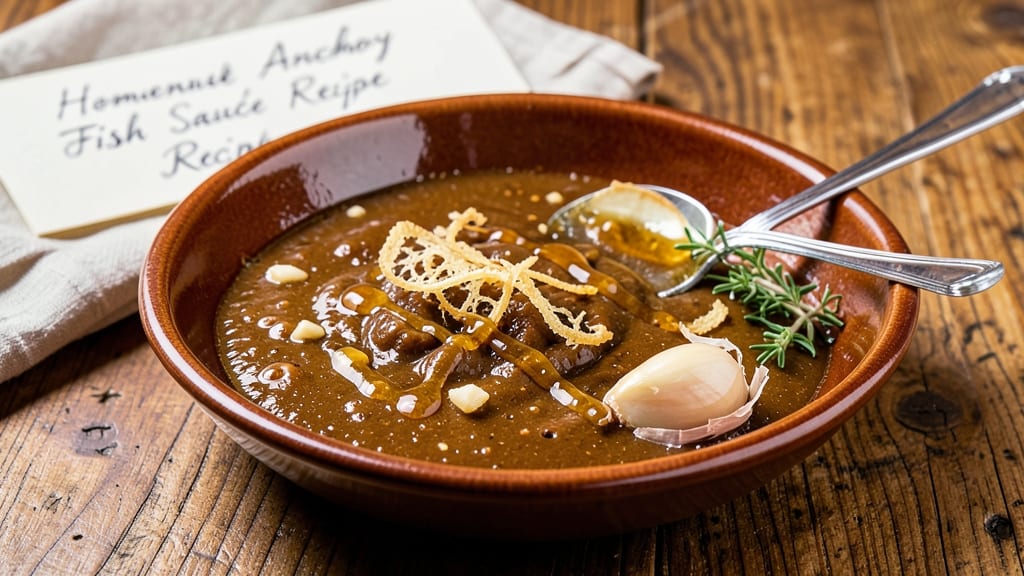
This anchovy fish sauce recipe transforms humble anchovies into a concentrated umami powerhouse that elevates every stir-fry, dipping sauce, or marinade. The process is straightforward but requires patience—anchovies ferment with salt and aromatics over 10-14 days, developing a deep, salty-sweet complexity that rivals commercial versions.
What starts as a simple brine becomes a rich, velvety sauce with layers of savory depth and subtle sweetness.
The secret lies in balancing salt, sugar, and aromatics—too much salt makes it harsh, while too little sugar can leave it unbalanced. I use a mix of white sugar and a touch of honey to create that signature caramelized edge without overpowering the fishy essence.
Garlic, shallots, and a splash of rice vinegar add brightness, ensuring the sauce is versatile enough for both bold dishes and delicate seafood.
By the time fermentation is complete, you’ll have a glossy, dark sauce with an intense umami punch that clings to noodles, meats, and vegetables. It’s the kind of condiment that turns ordinary meals into restaurant-quality experiences—think Vietnamese pho, Thai som tam, or even a quick marinade for grilled shrimp.
The best part? It keeps for months in the fridge, ready to transform your cooking.
Ready to make it? The process is simple, but the results are anything but basic. Let’s get started on this umami bomb that will change how you flavor your dishes forever.
Ingredients for anchovy fish sauce
Ten ingredients transform humble anchovies into a restaurant-quality umami bomb.
| Ingredient | Amount | Notes |
|---|---|---|
| Canned Anchovies 🐟 | 1 cup | Packed in oil, drained well |
| Diamond Crystal Kosher Salt 🧂 | 1 ½ cups | Fine grain preferred |
| White Granulated Sugar 🍚 | 1 cup | For balanced sweetness |
| Raw Honey 🍯 | ¼ cup | Local preferred for flavor |
| Garlic Cloves 🧄 | 8 whole | Peeled, smashed slightly |
| Shallots 🧅 | ½ cup | Minced, about 4 medium |
| Fresh Ginger 🧉 | ½ cup | Finely grated, packed |
| Red Chili Peppers 🌶️ | 2 whole | Thinly sliced, seeds removed |
| Rice Vinegar 🍶 | ½ cup | White vinegar substitute |
| Cold Water 💧 | 1 cup | Filtered preferred |
The anchovies are the heart of this sauce, so high-quality, oil-packed ones make all the difference. Trader Joe's and Whole Foods carry excellent brands like Cristal or Wild Planet. If you can't find oil-packed, rinse canned anchovies thoroughly to remove excess salt. The kosher salt should be Diamond Crystal—it dissolves more cleanly than table salt. For the honey, local varieties add subtle floral notes that elevate the sauce. Store your honey in a cool, dark place—heat degrades its delicate enzymes. The garlic and shallots should be freshly minced right before mixing to prevent browning.
No rice vinegar? White vinegar or apple cider vinegar work in a pinch, though they add slightly different acidity profiles. Running short on chili peppers? Red pepper flakes at half the amount bring heat without the same fruity depth. The ginger needs to be finely grated—a microplane works best, but a box grater is fine if you're patient. For the sugar, brown sugar adds a caramel note, but white keeps things clean and bright. If you're making this for a dish that needs extra umami, consider adding 1 tbsp of fish sauce after fermentation. And if you're worried about the honey's sweetness, start with just 2 tbsp and adjust to taste.
This sauce needs 10-14 days of fermentation at room temperature, so plan ahead. Use a clean, non-reactive container like a glass mason jar, and press everything down firmly to eliminate air pockets. Once fermented, it keeps for up to 6 months in the fridge—though it'll likely be gone in weeks. For easy use, transfer to a small squeeze bottle; a few drops elevate any dish. The sauce thickens as it ferments, so add a splash of water if it becomes too concentrated. And if you make a double batch, gift jars—everyone will want some of this umami gold.
Why You'll Love This Recipe
- Pantry Magic: I swear by this sauce—no fancy ingredients, just what’s already lurking in my cupboard. The anchovies dissolve into this umami bomb, and the honey-salt balance cuts through the richness like a knife.
- Umami Bomb: That first taste of garlic and anchovies hitting your tongue? It’s like a flavor wake-up call. The salt and sugar play off the fishiness so well, you’ll want to drizzle it on everything—pasta, eggs, even toast.
- Weeknight Hero: Between us, this is my go-to when I’m too tired to think. Toss it in a jar, let it sit overnight, and boom—you’ve got a sauce that turns bland rice or roasted veggies into a meal. No last-minute grocery runs needed.
- Budget Game: Honestly, this recipe costs me pennies but feels like a fancy restaurant secret. A can of anchovies and a spoon of honey stretch for weeks, and the leftovers? They’re my backup for lazy breakfasts or quick marinades.
Step-by-step instructions for anchovy fish sauce
Here's how to craft this bold, aromatic sauce that elevates any dish with deep umami and balanced heat.
Prepare the Anchovy Base
Begin by draining the 1 cup canned anchovies thoroughly, patting them dry with paper towels to remove any residual oil. In a heavy-bottomed saucepan, combine the anchovies with the 1.5 cups Diamond Crystal kosher salt and 1 cup white granulated sugar. This salt-sugar mixture helps break down the anchovies while balancing their intensity.
Place the saucepan over medium-low heat and cook for 10-12 minutes, stirring constantly with a wooden spoon. You'll notice the anchovies begin to dissolve into the mixture, creating a thick, oily paste. This process should happen without browning—if the mixture starts to darken, reduce the heat immediately. The goal is to infuse the flavor without burning, so patience here is key.
Incorporate Aromatics and Vinegar
Once the anchovy mixture has fully melted and thickened, remove the saucepan from heat and let it cool slightly for 2-3 minutes. This brief rest prevents the 0.5 cup rice vinegar from causing a sudden reaction when added. Stir in the vinegar slowly, whisking continuously to emulsify the mixture. The vinegar adds brightness and helps balance the richness of the anchovies.
Next, add the 8 whole garlic cloves (peeled and smashed), 0.5 cup shallots (minced), 0.5 cup fresh ginger (finely grated), and 2 whole red chili peppers (thinly sliced and seeded). Return the saucepan to medium-low heat and cook for another 8-10 minutes, stirring frequently. You'll smell the aromatics release their oils—this is when the sauce truly comes alive. The mixture should simmer gently, not boil, to avoid overcooking the garlic and ginger, which can turn bitter.
Sweeten and Simmer to Perfection
Reduce the heat to low and stir in the 0.25 cup raw honey. The honey not only adds sweetness but also helps bind the sauce, creating a glossy finish. Let the mixture simmer for 15-20 minutes, stirring occasionally. The sauce should thicken gradually, coating the back of a spoon when you lift it. If it thickens too quickly, add 1-2 tablespoons of the 1 cup cold water to maintain a smooth consistency.
Taste the sauce at this stage—it should be deeply umami with a bright, tangy edge from the vinegar and a subtle sweetness. If it needs more balance, adjust with additional salt, sugar, or vinegar. The goal is a harmonious blend where no single flavor overpowers the others. Real talk: This is the moment that matters, so don't rush it.
Finish and Rest for Depth
Once the sauce reaches your desired balance, remove it from heat and let it cool to room temperature. This resting period allows the flavors to meld fully. For best results, transfer the sauce to a clean glass jar and refrigerate for at least 4 hours, or overnight if possible. The cold helps the flavors develop even more, creating a richer, more complex sauce.
When ready to use, give the sauce a good stir before serving. It should be thick, glossy, and intensely aromatic. This anchovy fish sauce is now ready to transform stir-fries, marinades, or dipping sauces into umami-packed masterpieces. Store any leftovers in the refrigerator for up to 2 weeks—if it lasts that long, it's that good.
Pro Tips For Making Anchovy Fish Sauce
- CRUSH THE ANCHOVIES: Use the back of a sturdy spoon or a mortar and pestle to break them into tiny pieces—don’t just chop. This ensures they dissolve evenly into the sauce instead of leaving fishy chunks lurking in every spoonful.
- SALT IN STAGES: Add half the kosher salt upfront, then taste before adding the rest. Diamond Crystal is coarser, so it takes a few minutes to fully integrate—rushing it leads to a gritty, uneven finish.
- GARLIC: SMASH, DON’T MINCE: Peel the cloves, wrap them in plastic, and smash with the flat of your knife. This releases more flavor than chopping and prevents that bitter almond aftertaste that sneaks in when garlic is overworked.
- HONEY LAST, LOW HEAT: Stir in the honey off the heat or on the lowest simmer—any hotter and it burns faster than you’d think. Let the sauce cool slightly first; otherwise, you’ll end up with a bitter, caramelized mess instead of that smooth, glossy finish.
Wine and beer pairings for this anchovy fish sauce
Vietnamese-Inspired Pairings
This anchovy fish sauce shines in Vietnamese dishes where umami and acidity dance together. Drizzle it over pho or banh mi for an instant depth—just 1-2 teaspoons per bowl enhances the broth without overpowering.
I love adding it to som tam (green papaya salad) for a salty-sweet contrast that cuts through the spicy heat. Even a splash in goi cuon (fresh spring rolls) dressing makes the dipping sauce irresistible. 🌶️
Thai and Southeast Asian Dishes
In Thai cuisine, this sauce replaces traditional fish sauce in tom yum or pad thai—start with 1 tablespoon per serving and adjust to taste. It’s also perfect for satay marinades: mix 2 tablespoons with peanut butter and coconut milk for a sticky, umami-rich glaze.
For massaman curry, add 1 teaspoon at the end to deepen the sauce’s complexity. The honey balances the heat beautifully. 🍛
Italian and Mediterranean Twists
Surprisingly, this sauce elevates Italian pasta dishes like spaghetti aglio e olio—toss in 1 teaspoon with garlic and chili flakes for a briny kick. Drizzle it over grilled octopus or anchovy pizza (yes, it’s a match made in heaven) for an unexpected depth.
Even a splash in caprese salad dressing adds a salty contrast to the sweet tomatoes. The garlic and chili notes bridge the gap between Southeast Asian and Mediterranean flavors. 🍝
Beer Pairings for Bold Flavors
For a beer pairing, opt for a crisp, slightly malty lager like Sapporo or Peroni—the clean finish cuts through the sauce’s intensity. If you prefer IPAs, a hazy IPA (like New Belgium Fat Tire) complements the honey’s sweetness and chili’s heat.
For a non-alcoholic option, ginger beer mirrors the ginger and vinegar notes perfectly. The key is balancing the sauce’s boldness with a beer that won’t overpower it. 🍺
Wine Pairings for Elegance
A dry Riesling (like Dr. Loosen Blue Slate) pairs beautifully with this sauce—its acidity and mineral notes echo the vinegar and honey. For red wine lovers, a Pinot Noir (such as Meiomi) offers enough fruit to stand up to the umami without clashing.
Avoid heavy, oaky whites or bold tannic reds—they’ll compete with the sauce’s complexity. A glass of sparkling wine (like Prosecco) also works for celebrations, as the bubbles cleanse the palate between bites. 🍷
Cocktail Enhancements
Get creative with cocktails! Add ½ teaspoon to a gin and tonic with lime and cucumber for a salty-sweet twist. Mix 1 teaspoon into a margarita (tequila, lime, triple sec) for a briny depth.
Even a splash in a whiskey sour adds umami complexity. The honey and vinegar balance the alcohol’s bite, making these drinks truly unforgettable. 🍹
Nutrition facts
Frequently asked questions
Can I use anchovy paste instead of canned anchovies?
Yes, but with adjustments! Use ½ cup anchovy paste (about 8 oz) instead of 1 cup canned anchovies, as paste is more concentrated. Reduce the salt slightly (1 cup kosher salt) since paste already contains some salt. Stir well to ensure even distribution of flavors. The texture will be slightly thicker, but it works perfectly for marinades and dipping sauces.
How do I adjust the heat level in this sauce?
For milder heat, remove the chili pepper seeds before slicing or reduce the amount to 1 whole pepper. For extra spice, add ½ teaspoon red pepper flakes or an additional sliced chili. Always taste as you go—you can’t remove heat later, but you can balance it with more honey or vinegar.
What if my sauce smells "off" during fermentation?
If it develops a sour or ammonia-like odor, discard it immediately—this indicates spoilage. A proper ferment should smell tangy, garlicky, and slightly sweet. Keep your workspace clean, use sterile jars, and store at 68-72°F (ideal fermentation temp). If unsure, taste a tiny amount before proceeding.
Can I make this sauce without honey?
Replace the honey with ¼ cup maple syrup or brown sugar for a deeper caramel note. For a cleaner sweetness, use ¼ cup agave nectar. The sauce will still develop that signature balance, though honey adds subtle floral complexity that’s hard to replicate. Adjust to taste after fermentation.
How much sauce should I use in recipes?
Start with 1 teaspoon per serving for light dishes (salads, soups) and 1-2 tablespoons for bold flavors (stir-fries, marinades). For dipping sauces, mix 2 tablespoons with ¼ cup lime juice and 2 tablespoons coconut aminos. The sauce is potent—always taste first! Store leftovers in a sealed jar in the fridge for up to 6 months.