
Sauces & Condiments
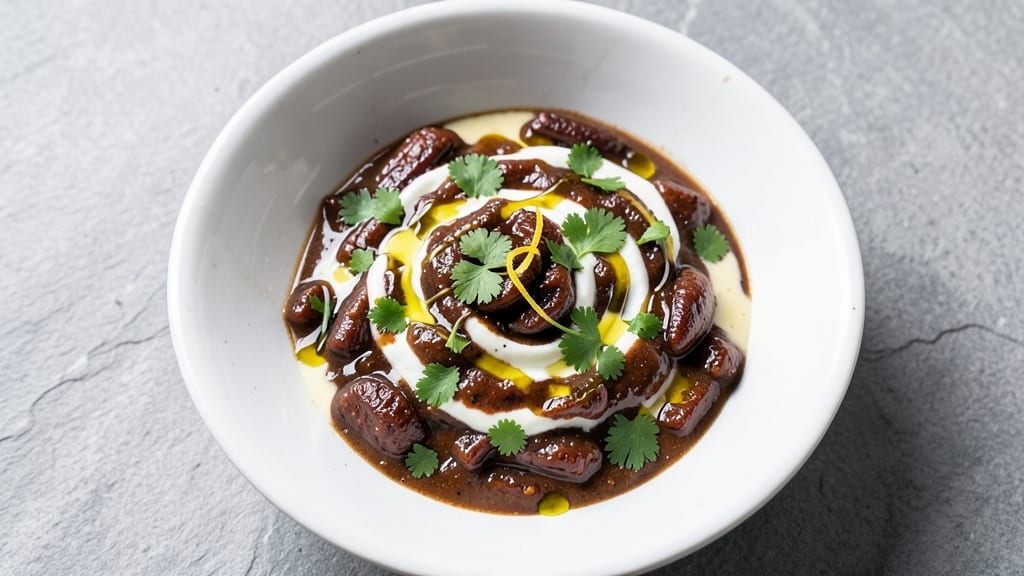
This ancho chile ranch sauce transforms ordinary ranch into a smoky, complex condiment that elevates everything from tacos to roasted vegetables. The secret lies in blending dried ancho chiles with buttermilk and herbs, creating a sauce that's creamy yet tangy with deep, earthy undertones.
I developed this recipe after craving ranch with more depth—something that could stand up to bold flavors without overpowering them.
The sauce begins with rehydrated ancho chiles, which provide natural sweetness and smokiness, balanced by the tang of buttermilk and the richness of sour cream. Garlic, fresh herbs, and a touch of lime brighten the flavors, while cumin and smoked paprika deepen the complexity.
What you'll end up with is a versatile sauce that's perfect for dipping, drizzling, or mixing into marinades.
What sets this sauce apart is its ability to adapt—use full-fat dairy for maximum creaminess or swap in vegan alternatives for a plant-based version. The sauce thickens slightly as it sits, making it ideal for meal prep, and keeps well in the refrigerator for up to a week.
Whether you're serving tacos, grilled meats, or fresh veggies, this sauce adds a sophisticated touch.
Ready in just 15 minutes, this recipe delivers restaurant-quality results with minimal effort. The blend of smoky, tangy, and herby flavors creates a sauce that's impossible to resist. Let's make it—your taste buds will thank you.
Ingredients for ancho chile ranch sauce
Nine simple ingredients blend smoky chiles with creamy tang for a ranch that stands out.
| Ingredient | Amount | Notes |
|---|---|---|
| Dried Ancho Chiles 🌶️ | 2 whole | Stems and seeds removed |
| Buttermilk 🥛 | 1 cup | Full-fat preferred for creaminess |
| Sour Cream 🧀 | ½ cup | Full-fat for best texture |
| Extra-Virgin Olive Oil 🫒 | ¼ cup | For richness and balance |
| Fresh Cilantro Leaves 🌿 | ½ cup | Chopped, stems removed |
| Fresh Parsley Leaves 🌿 | ¼ cup | Chopped, for brightness |
| Garlic Cloves 🧄 | 3 cloves | Peeled and minced fine |
| Lemon Juice 🍋 | 1 tbsp | Freshly squeezed |
| Ground Cumin 🌿 | ½ tsp | Toasted for deeper flavor |
| Smoked Paprika 🌶️ | ½ tsp | For extra smokiness |
| Sea Salt 🧂 | ½ tsp | Adjust to taste |
Ancho chiles are the heart of this sauce—look for dried, deep red pods at Latin markets or the international aisle. Penzeys or Trader Joe's usually carry them, or buy online if needed. The fresher the chiles, the more vibrant the flavor, but they keep well for months in a cool, dark place. Toast them briefly (30 seconds per side) to deepen their smokiness before rehydrating. For extra richness, use full-fat buttermilk and sour cream—they make all the difference in creaminess.
No ancho chiles? Dried guajillo or pasilla peppers work in a pinch, but they're more tart. Fresh herbs missing? Dried cilantro or parsley at one-third the amount keeps the flavor profile close. Want more smokiness? Add a pinch of liquid smoke or swap smoked paprika for regular. The olive oil can be swapped for avocado oil if preferred, and if you're avoiding dairy, unsweetened almond milk yogurt makes a great tangy base. Just remember: the balance of smoky, tangy, and herby is key—don't overpower the buttermilk with too much spice.
This sauce thickens as it sits, so stir in a splash of water or milk if it gets too stiff. Keeps 5-7 days in the fridge, sealed in an airtight container. For longer storage, freeze in ice cube trays—perfect for portion control. The flavors actually improve after a day or two, so make extra if you're planning to use it over several meals. Trust me, you'll want seconds.
Why You'll Love This Recipe
- No-Soaking Needed: I keep a jar of dried ancho chiles in my pantry, and honestly? You don’t even need to soak them first. Just toast them in a dry pan for 30 seconds until fragrant—boom, ready to blend. That smoky depth hits different when you skip the extra step.
- Creamy Heat Magic: The buttermilk and sour cream give it that tangy richness, but the ancho chiles? They bring the slow-burning warmth without overpowering. That crispy edge with the creamy center? Chef’s kiss. Perfect for people who love flavor but hate spicy surprises.
- Game for Any Meal: Slather it on tacos, drizzle it over grilled chicken, or toss it with roasted veggies—this sauce doesn’t judge. Between us, I’ve even used it as a dip for pita chips when I’m lazy. (Yes, even on a Tuesday night.)
- Leftovers That Lie: Make a big batch and store it in the fridge for up to a week. The flavors actually get better as it sits, deepening that smoky, herby goodness. My husband steals the jar before I can finish it—no exaggeration.
Step-by-step instructions for ancho chile ranch sauce
Here's how to blend smoky depth with creamy tang for a ranch sauce that's anything but ordinary.
Rehydrate and Blend the Ancho Chiles
Start by removing stems and seeds from the 2 whole dried ancho chiles. Place them in a small bowl and cover with hot tap water to soften for 10 minutes. You'll know they're ready when they become pliable and slightly translucent—press gently to test.
Drain the chiles and transfer them to a blender along with the 1 cup buttermilk and 0.5 cup sour cream. Blend until completely smooth, scraping down the sides as needed. The sauce should be vibrant red with no visible chile fibers. This step creates the creamy base while infusing that essential smoky depth.
Toast and Incorporate the Spices
In a small dry skillet over medium heat, toast the 0.5 teaspoon ground cumin and 0.5 teaspoon smoked paprika for 30 seconds until fragrant. Watch carefully—they'll darken quickly and release their aromatic oils. Let cool for 1 minute before adding to your blender.
Add the toasted spices to the blender along with the 0.25 cup extra-virgin olive oil, 3 minced garlic cloves, and 1 tablespoon lemon juice. Pulse until fully combined. The lemon juice brightens the sauce while balancing the richness of the dairy and chiles.
Finish with Fresh Herbs and Season
Add the 0.5 cup chopped fresh cilantro leaves and 0.25 cup chopped fresh parsley leaves to the blender. Pulse just until the herbs are finely chopped but not completely pureed—you want visible flecks for texture. Taste and add the 0.5 teaspoon sea salt, adjusting to your preference.
Blend for another 10 seconds to fully incorporate. The sauce should be thick but pourable, with a vibrant red hue from the chiles and a fresh herbal finish. If it's too thick, thin with 1-2 teaspoons water at a time until you reach your desired consistency.
Rest and Adjust for Perfect Texture
Transfer the sauce to a clean jar or container and let it rest at room temperature for 15 minutes. This allows the flavors to meld completely. Give it one final taste and adjust the seasoning if needed—you might want a touch more salt or lemon juice to balance the smokiness.
The sauce will keep in the refrigerator for up to 5 days, making it perfect for meal prep. Use it as a dip, marinade, or topping for tacos, grilled meats, or roasted vegetables. The ancho chiles give it a subtle smokiness that pairs beautifully with the tangy dairy base.
Pro Tips For Making Ancho Chile Ranch Sauce
- SOAK CHILES FIRST: I learned this the hard way—dry-roasting ancho chiles straight from the jar will make you cough and taste like burnt paper. Soak them in warm water for 10-15 minutes first, then drain. This softens them enough to blend smoothly without turning your sauce into chile dust.
- USE FULL-FAT DAIRY: Low-fat buttermilk or sour cream will give you a watery, separated mess. Stick with full-fat versions—they emulsify better and keep the sauce rich. If you’re out of buttermilk, mix 1 cup whole milk with 1 tablespoon vinegar and let it sit for 5 minutes.
- STRAIN THE CHILE INFUSION: After blending the soaked chiles with oil, strain the mixture through a fine-mesh sieve. This removes seeds and tough skins that’ll make your sauce gritty. (Yes, it’s extra work, but your mouth will notice.)
- FINISH WITH COLD DAIRY: Whisk in the buttermilk and sour cream at the very end, right before serving. If you add them too early, the acid will break down the oil and turn your sauce into curdled soup. Cold dairy blends faster and stays stable longer.
Troubleshooting your ancho chile ranch sauce
Sauce Too Thin?
If your sauce ends up too thin after blending, don't panic—simmering is the easiest fix. Transfer the sauce to a small saucepan and heat over medium-low heat for 3-5 minutes, stirring constantly.
The dairy will thicken naturally as moisture evaporates. For immediate results, mix 1 tablespoon cornstarch with 1 tablespoon cold water to form a slurry, then whisk into the sauce while heating. 💫
Sauce Too Thick?
Thick sauce happens when the chiles absorb too much liquid during rehydration. Thin it gradually by adding 1 teaspoon water or buttermilk at a time while blending, tasting between additions. Avoid over-thinning—this sauce should coat the back of a spoon but still be pourable.
For extra creaminess, stir in 1 tablespoon sour cream instead of water. The texture should feel like a luxurious dip, not a gloppy paste.
Chiles Too Strong?
Ancho chiles vary in heat intensity, and some brands pack more punch than others. If your sauce tastes overwhelmingly spicy, balance it with 1 extra tablespoon lemon juice or 1 teaspoon honey to mellow the heat.
For a smoother texture, strain the blended chile mixture through a fine-mesh sieve before adding other ingredients. I've found Trader Joe's ancho chiles to be consistently mild compared to others. 🌶️
Sauce Separating?
Dairy-based sauces sometimes separate if exposed to temperature changes. To fix this, whisk the sauce vigorously or blend it again for 10 seconds to re-emulsify. For prevention, store the sauce in a glass jar (not plastic) and refrigerate immediately after making.
If separation persists, stir in 1 teaspoon Dijon mustard—its acidity helps stabilize the emulsion. The sauce should come back together smoothly with gentle mixing.
Herbs Too Strong?
Fresh herbs can dominate if overused, especially cilantro which has a distinct flavor. If your sauce tastes herb-heavy, balance it by adding ½ teaspoon toasted cumin or ½ teaspoon smoked paprika to round out the flavors.
For a milder profile, reduce the herb amount by ¼ cup in future batches. I like to taste after adding herbs—if I can detect individual leaves, it's time to blend longer or reduce the quantity slightly.
Lacking Smokiness?
If your sauce tastes more like regular ranch than smoky chile ranch, boost the depth with ½ teaspoon liquid smoke or an extra ¼ teaspoon smoked paprika. For a more intense smoky flavor, toast the rehydrated chiles in a dry skillet over low heat for 1 minute before blending.
This caramelizes their natural sugars and intensifies their aroma. The difference is noticeable—trust me, it's worth the extra step. 🔥
Nutrition facts
Frequently asked questions
Can I make this sauce without buttermilk?
For a tangy substitute, mix 1 cup plain yogurt with 1 tablespoon lemon juice or vinegar and let sit for 5 minutes to thicken. Vegan option? Use unsweetened almond milk yogurt or blend 1 cup silken tofu with 1 tablespoon lemon juice for creaminess. The key is maintaining that bright acidity to balance the smoky chiles.
How spicy will this sauce be?
Ancho chiles are naturally mild (1,000-2,000 Scoville units), so this sauce has a gentle warmth rather than heat. For extra depth without spice, toast the chiles longer (1 minute in a dry pan) to enhance their smoky sweetness. If you prefer heat, add ½ teaspoon cayenne or a pinch of chipotle powder—but taste first!
What’s the best way to use leftover sauce?
This versatile sauce elevates everything! Drizzle over tacos, grilled corn, or roasted sweet potatoes. Mix into burgers or meatloaf for moisture, or use as a marinade for chicken or shrimp. For a quick appetizer, serve with crudités (carrot sticks, celery, bell peppers). The smoky flavor pairs especially well with charred or grilled foods.
Can I make this sauce ahead of time?
Yes! The flavors actually improve over time. Make it 1-2 days ahead and store in an airtight container in the fridge. Give it a stir before using—it may thicken slightly. For longer storage, freeze in ice cube trays (thaw in the fridge) or small batches in a freezer-safe jar (up to 3 months).
Why does my sauce look grainy?
Graininess usually means the chiles or herbs weren’t blended long enough. Pulse the mixture again for 30 seconds or strain through a fine-mesh sieve if needed. For smoother results, soak chiles in hot water for 15 minutes (instead of 10) to soften them more. If using dried herbs, reduce the amount by ¼ cup—they can create texture issues.