
Sauces & Condiments
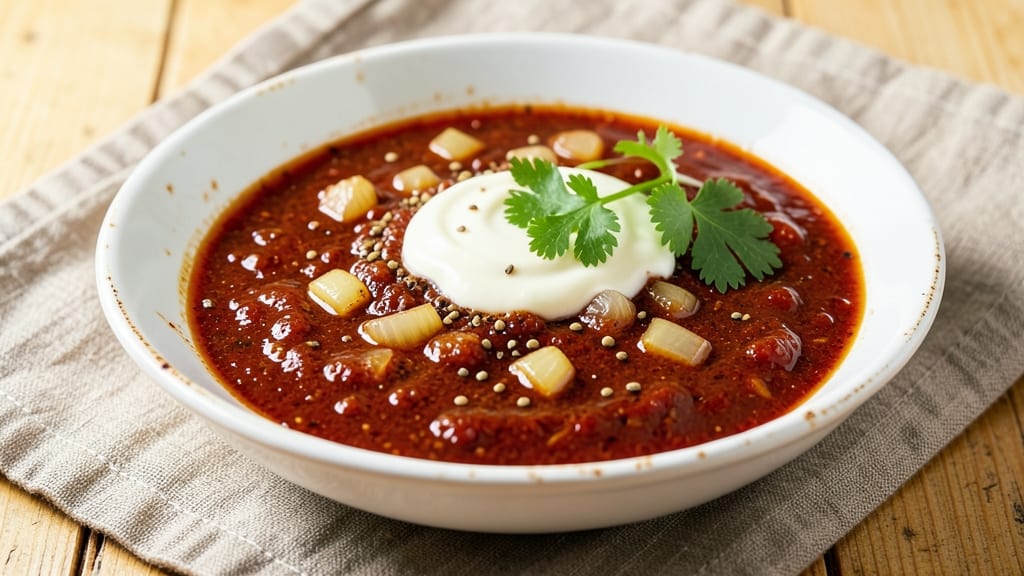
This Algerienne sauce recipe transforms simple ingredients into a bold, aromatic condiment that bridges North African warmth with Mediterranean brightness. The harissa-kissed tomato base builds layers of spicy heat and smoky depth, while fresh herbs and celery add a crisp contrast that elevates everything from grilled lamb to crusty bread.
What makes this sauce special is its perfect balance—rich enough to stand alone, yet bright enough to complement rich dishes without overpowering them.
The foundation begins with slow-cooked tomatoes and onions, their natural sweetness caramelizing into a velvety base. Harissa paste introduces that signature Algerian fire, while cumin and coriander ground the flavors with earthy warmth.
The secret to achieving that signature texture lies in blending just until smooth, then finishing with a touch of cream and fresh herbs—this creates a sauce that's both luxurious and approachable, with a velvety mouthfeel that clings beautifully to proteins or vegetables.
What sets this Algerienne sauce apart is its versatility—it works as a marinade, a dipping sauce, or a finishing touch for couscous dishes. The celery crunch adds a refreshing element that cuts through richness, making it ideal for balancing hearty meats or pairing with fresh salads.
One batch keeps well in the refrigerator for up to a week, allowing you to build flavor over time as the spices deepen.
Ready in under 45 minutes, this sauce requires minimal effort but delivers restaurant-quality results. The key is patience—letting the flavors meld during simmering creates a depth you won't find in store-bought versions.
Whether you're serving it alongside grilled meats or using it as a vibrant dip, this Algerienne sauce will become a staple in your kitchen for its ability to transform ordinary meals into something extraordinary.
Ingredients for algerienne sauce
Harissa, tomatoes, and herbs blend into a velvety sauce with a perfect balance of heat and freshness.
| Ingredient | Amount | Notes |
|---|---|---|
| Canned San Marzano Tomatoes 🍅 | 1 can | Crushed or blended, seeds removed |
| Yellow Onion 🧅 | 1 whole | Medium size, finely diced |
| Harissa Paste 🌶️ | 2 tbsp | High-quality, spicy variety |
| Ground Cumin 🌿 | 1 tsp | Toasted for deeper aroma |
| Ground Coriander 🌿 | 1 tsp | Freshly ground preferred |
| Heavy Cream 🥛 | ¼ cup | Full-fat for richness |
| Fresh Celery 🧅 | ¼ cup | Finely chopped, for crunch |
| Fresh Parsley 🌿 | ¼ cup | Stems removed, chopped |
| Fresh Cilantro 🌿 | ¼ cup | Stems removed, chopped |
| Extra-Virgin Olive Oil 🫒 | ¼ cup | For finishing, fruity variety |
| Garlic Cloves 🧄 | 3 cloves | Peeled, minced finely |
| Salt 🧂 | ½ tsp | Diamond Crystal preferred |
| Black Pepper 🌶️ | ¼ tsp | Freshly ground |
The harissa is non-negotiable here—Penzeys or La Boîte brands deliver the best flavor. Look for vibrant red color and a smooth paste (no chunks). If you're sensitive to heat, reduce the amount to 1 tbsp and add cayenne later. The San Marzano tomatoes are worth hunting down at Whole Foods or specialty stores—their sweetness is unmatched. For the celery, organic bunches from the grocery store's produce section work best, but skip the pre-cut celery sticks—they're often watered down.
No harissa? Mix 1 tbsp smoked paprika with 1/2 tsp cayenne for a close substitute. Fresh herbs wilt fast, so store them in damp paper towels in the fridge. The heavy cream can be swapped for coconut milk for a dairy-free version, though the texture will be slightly lighter. If you're short on time, jarred tomato paste works in a pinch—just add a splash of water to thin it. The garlic can be roasted for a sweeter flavor—wrap the whole cloves in foil, bake at 400°F for 10 minutes, then peel and mince.
This sauce tastes even better the next day as the flavors meld. Store in an airtight container with a thin layer of olive oil on top to preserve freshness for up to 7 days. For longer storage, freeze in ice cube trays—perfect for single-serving portions. The celery crunch disappears when reheated, so add it fresh just before serving. If you make a big batch, portion into small jars—they keep beautifully for 3 months in the freezer.
Why You'll Love This Recipe
- Pantry Magic: I swear by this sauce because it’s the kind of recipe that doesn’t judge you for using canned tomatoes—especially San Marzano, which turns the whole thing silky and rich. Just chop one onion, stir in the harissa, and let the cumin and coriander work their magic while you do something else. No fancy techniques, just pure convenience.
- Heat Meets Warmth: That harissa paste? It’s the star—spicy, smoky, and just a little funky, but the cumin and coriander soften it into something irresistibly balanced. The San Marzano tomatoes add sweetness that cuts through the kick, making every bite feel like a hug for your taste buds. (Yes, even on a Tuesday night.)
- Sauce for Everything: Between us, this sauce is my secret weapon for lazy nights, potlucks, or when I’m feeding a crowd. Drizzle it over grilled chicken, toss it with couscous, or serve it with crusty bread—it’s that adaptable. Honestly, I’ve even used it in omelets, and no one batted an eye.
- Budget-Friendly Leftovers: A single jar of San Marzano tomatoes and a small tube of harissa stretch into meals for days. The spices cost pennies, and the sauce only gets better as it sits—deeper, richer, and still packed with flavor. I make a big batch on Sundays and freeze portions, so I’m never scrambling for dinner ideas.
Step-by-step instructions for Algerienne sauce
This rich, aromatic sauce balances heat, creaminess, and fresh herbs perfectly—let's build it layer by layer.
Sauté the Aromatics Until Transparent
Heat the 0.25 cup extra-virgin olive oil in a medium saucepan over medium heat. Add the finely diced yellow onion and cook for 5-6 minutes until completely transparent and just beginning to soften. The onions should release their sweetness without browning—this is your signal to add the next ingredients.
Here's the thing—if you see the onions darkening too quickly, reduce the heat slightly. You want them to caramelize later, but first we need that aromatic base. The 3 minced garlic cloves go in now, cooking for just 30 seconds until fragrant. Garlic burns fast, so don't walk away during this step. You'll know it's ready when the kitchen smells like fresh garlic, not burnt toast.
Build the Spice Base
Reduce heat to medium-low and stir in the 2 tbsp harissa paste, 1 tsp ground cumin, and 1 tsp ground coriander. Cook for 1-2 minutes until the harissa deepens in color and the spices bloom—you should see tiny bubbles forming and the mixture darkening slightly. This step develops the sauce's signature warmth and depth.
The harissa will have natural oil that helps distribute the spices evenly. If it looks too dry after stirring, add 1 tablespoon water to help it incorporate smoothly. I always taste at this stage to check the heat level—adjust with a pinch more harissa if you want extra kick, or a splash of water if it's too intense for your palate.
Simmer the Tomatoes Until Thickened
Pour in the 1 can crushed San Marzano tomatoes, scraping up any browned bits from the bottom of the pan. Bring to a gentle simmer, then reduce heat to low and cook uncovered for 20-25 minutes, stirring occasionally. You're looking for a sauce that coats the back of a spoon—it should reduce by about one-third, with a velvety texture.
I press a spoon against the sauce every few minutes to check consistency. The sauce should leave a noticeable trail when you lift the spoon—this indicates proper thickening. If it's reducing too quickly, cover partially with a lid to slow evaporation. The tomatoes should break down completely, releasing their natural sweetness and blending with the spices.
Finish with Cream and Fresh Herbs
Remove the pan from heat and stir in the 0.25 cup heavy cream and 0.5 tsp salt. Let it sit off the heat for 2-3 minutes—this prevents curdling while allowing the cream to temper gently. Return to low heat just until warmed through, about 1-2 minutes, then stir in the 0.25 cup chopped celery, 0.25 cup parsley, and 0.25 cup cilantro.
The fresh herbs add brightness that cuts through the richness. I like to pulse the cilantro and parsley quickly in a food processor before adding to maintain their vibrant color. Taste and adjust seasoning with black pepper—this sauce should balance heat, acidity, and creaminess in every bite. The celery adds a subtle crunch that contrasts beautifully with the silky texture.
Rest and Serve
Transfer the sauce to a bowl and let it rest for 10 minutes at room temperature. This allows the flavors to meld completely and the sauce to thicken slightly as it cools. The final texture should be luxurious yet still pourable—thick enough to coat the back of a spoon but light enough to drizzle.
Serve immediately over grilled meats, pasta, or crusty bread. For extra richness, finish with a drizzle of extra-virgin olive oil just before serving. This sauce keeps well in the refrigerator for 5 days, though I find it's best enjoyed fresh when the herbs are at their peak. The heat from the harissa will mellow slightly as it cools, but the depth of flavor only improves with time.
Pro Tips For Making Algerienne Sauce
- Sear the Onion First: Don’t just sweat that onion—get it golden brown in 3-4 minutes with a splash of oil and medium-high heat. I learned this the hard way: skipping this step leaves the sauce tasting flat, like someone forgot to turn on the flavor dial. The caramelized bits are what make this sauce sing.
- Balance the Harissa: Start with half the harissa called for, taste, then add more if needed. Some brands are fiercer than others, and you’ll regret overdoing it—your sauce will taste like a spicy mistake. A pinch of sugar or a splash of tomato paste can mellow it out if you go too far.
- Simmer, Don’t Boil: Once everything’s combined, keep the heat low and let it bubble gently for at least 20 minutes. I used to rush this, and the sauce ended up thin and one-dimensional. Patience here lets the spices meld and the tomatoes break down properly—no shortcuts.
- Toast the Spices: Bloom the cumin and coriander in the oil for 30 seconds before adding the onion. This wakes up their flavors and prevents that dull, chalky taste they can leave behind. Yes, it’s a small step, but it makes a real difference in how vibrant the sauce tastes.
Best sauces and condiments for this recipe
Spicy Tomato Base
This Algerienne sauce starts with a harissa-kissed tomato base that forms the heart of its complex flavor profile. The San Marzano tomatoes provide natural sweetness, while the harissa paste delivers that signature Algerian heat.
I always use Penzeys brand harissa—its smooth texture and balanced spice level make all the difference. The slow simmer reduces the tomatoes by about one-third, concentrating their flavor into a rich, velvety consistency that clings beautifully to proteins. 🌶️
Creamy Texture Secrets
The heavy cream is what transforms this sauce from bold to luxurious. I stir it in off the heat first to prevent curdling, then gently warm it through. For a lighter version, swap the cream for coconut milk—it adds richness without heaviness.
The key is patience: let the cream sit for 2-3 minutes before reheating to temper it properly. This step also balances the harissa's heat with a smooth, cooling finish.
Herb and Crunch Balance
The fresh herbs—parsley, cilantro, and celery—are where this sauce gets its brightness. I pulse the herbs quickly in a food processor before adding to maintain their vibrant color and prevent wilting. The celery adds a subtle crunch that contrasts perfectly with the creamy texture.
For extra freshness, add the herbs just before serving. If you're short on time, dried herbs work in a pinch, but fresh makes all the difference.
Olive Oil Finish
A final drizzle of extra-virgin olive oil elevates this sauce to restaurant-quality. I use a fruity variety like California Early Harvest—its nutty notes complement the harissa and tomatoes beautifully. The oil also helps preserve the sauce in the fridge for up to 5 days.
For a smoky twist, try finishing with 1 tsp smoked paprika instead. This step adds richness without altering the sauce's natural balance.
Heat Adjustments
If the harissa is too intense, balance it with a pinch of sugar or a splash of lemon juice. For extra heat, add ½ tsp cayenne pepper at the end. I always taste as I go—this sauce should dance between spicy, creamy, and fresh in every bite.
The harissa's heat mellows slightly as the sauce cools, so adjust to your preference before serving. 🔥
Versatile Serving Ideas
This sauce works as a dipping sauce for grilled lamb, a marinade for chicken, or a topping for couscous. I love drizzling it over seared scallops or using it as a base for pasta dishes.
For extra depth, simmer it with chickpeas for a hearty stew. The celery crunch disappears when reheated, so always add it fresh before serving. The possibilities are endless! 💫
Nutrition facts
Frequently asked questions
Can I make Algerienne sauce without harissa?
Yes! For a milder version, replace the 2 tbsp harissa with 1 tbsp smoked paprika + ½ tsp cayenne pepper. This mimics the smoky depth while reducing heat. The sauce will still have complexity, just with a different spice profile.
How do I adjust the heat level?
Start by tasting the sauce after adding harissa. For less heat, stir in 1 tsp sugar or 1 tbsp lemon juice to balance it. Want more spice? Add ½ tsp extra cayenne at the end. Remember, harissa heat mellows slightly when cooled—adjust before serving.
Can I make this sauce dairy-free?
Swap the ½ cup heavy cream for ½ cup full-fat coconut milk. The texture will be slightly lighter but still creamy. For extra richness, add 1 tbsp tahini at the end. The sauce will still cling beautifully to proteins.
What's the best way to store leftover sauce?
Transfer to an airtight container and refrigerate for up to 5 days. For longer storage, freeze in ice cube trays—thaw overnight in the fridge. To preserve freshness, always keep a thin layer of olive oil on top. The celery crunch disappears when reheated, so add fresh herbs just before serving.
What are the best proteins to pair with this sauce?
This sauce shines with grilled lamb chops, chicken thighs, or seared scallops. It also works as a marinade for kebabs or a topping for pasta dishes. For vegetarian options, try drizzling it over roasted eggplant or grilled halloumi. The creamy texture balances rich proteins perfectly.