
Sauces & Condiments
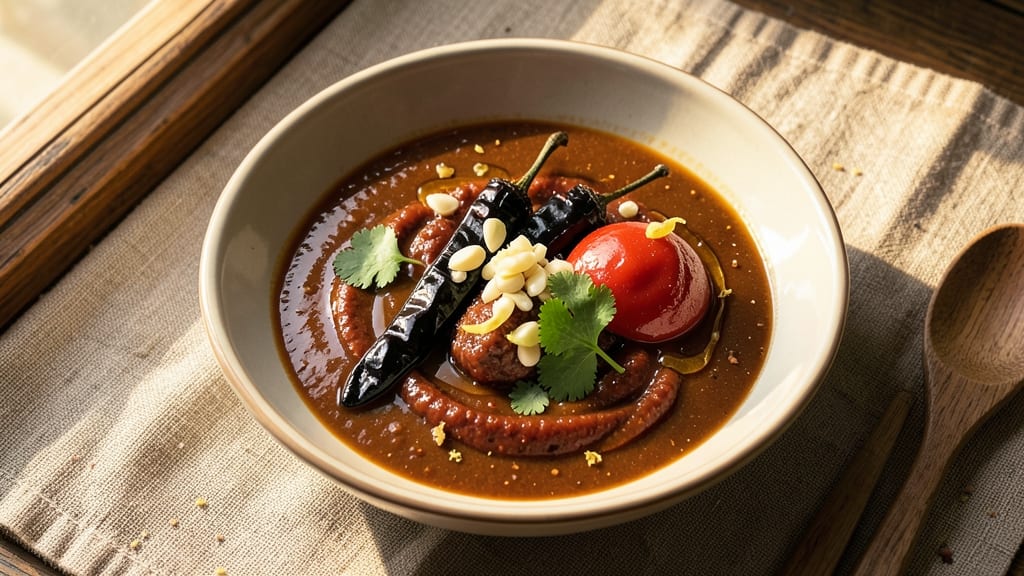
This Bibigo BBQ sauce recipe delivers the perfect balance of smoky, sweet, and tangy flavors that elevate any dish. The combination of gochujang, chipotle peppers, and tomato paste creates a rich base, while vinegar and honey add bright acidity and depth.
I developed this sauce after craving that signature Bibigo tang without the artificial aftertaste—now you can recreate it at home with simple pantry staples.
The secret lies in simmering the sauce just until it thickens, allowing flavors to meld without burning. Celery crowns add a satisfying crunch that contrasts beautifully with the smooth, sticky glaze.
This isn't just another BBQ sauce—it's a versatile condiment that works as a marinade, glaze, or dipping sauce for meats, tofu, or grilled vegetables.
What makes this recipe stand out is its ability to transform ordinary dishes into something extraordinary. The smoky chipotle heat builds gradually, while the sweet-tangy tomato base keeps it balanced. Whether you're slow-cooking ribs or tossing it over grilled corn, this sauce delivers restaurant-quality flavor with minimal effort.
Ready in just 30 minutes, this sauce keeps well in the refrigerator for up to two weeks, making it perfect for meal prep. The celery crowns stay crisp when added fresh, adding texture that cuts through the richness. Let's get cooking!
Ingredients for bibigo bbq sauce
Pantry staples plus a few specialty finds—this sauce nails that Bibigo tang with real depth.
| Ingredient | Amount | Notes |
|---|---|---|
| Gochujang Paste 🌶️ | ½ cup | Korean fermented chili paste |
| Tomato Paste 🍅 | ½ cup | Smooth, not chunky |
| Apple Cider Vinegar 🍎 | ¼ cup | For tangy brightness |
| Honey 🍯 | ¼ cup | Light amber preferred |
| Chipotle Peppers in Adobo 🌶️ | 2 whole | Mild or hot variety |
| Garlic Cloves 🧄 | 4 cloves | Peeled and minced |
| Celery Crowns 🧅 | 1 whole | Fresh, for crunch |
| Extra-Virgin Olive Oil 🫒 | ¼ cup | For richness |
| Soy Sauce 🥢 | 2 tbsp | Light or dark |
| Brown Sugar 🍚 | 2 tbsp | Packed lightly |
| Salt 🧂 | 1 tsp | Kosher or sea salt |
| Black Pepper 🌶️ | ½ tsp | Freshly ground |
Gochujang is the heart of this sauce—look for the fermented kind at Asian markets or the international aisle. H Mart or Trader Joe's usually have good options. If you can't find it, substitute 1 tbsp sriracha plus 1 tbsp tomato paste, but it won't be the same. Chipotle peppers in adobo add smoky heat—mild works better for a balanced sauce. The celery crowns? Grab the freshest bunch you can find—they should snap crisply when broken. For the tomato paste, Rao's or Muir Glen are my go-tos—they're smooth and consistent.
No gochujang? Mix 2 tbsp sriracha with 1 tbsp tomato paste as a pinch-hitter, but expect less complexity. Running low on honey? Maple syrup works 1:1, though it'll be slightly less floral. The vinegar can be swapped for rice vinegar or lemon juice, but apple cider gives that signature tang. For extra smokiness, add 1/2 tsp smoked paprika. The celery crowns? Toss them in just before serving—they wilt fast in the sauce. If you're prepping ahead, slice them fresh when ready to eat.
This sauce keeps for 2 weeks in the fridge—it actually gets better as flavors meld. For longer storage, freeze in ice cube trays and transfer to a bag. Thickens up when chilled, so stir in a splash of water before using if it's too stiff. The celery crowns? Only add them fresh—they lose crunch fast. Double the batch if you're feeding a crowd—this sauce disappears quickly, especially when ribs or wings are involved.
Why You'll Love This Recipe
- Five-Ingredient Magic: I swear, this sauce comes together with just a saucepan and 10 minutes of stirring. No chopping, no measuring cups—just dump, simmer, and taste. That gochujang and chipotle combo does the heavy lifting.
- Sweet-Smoky Kick: The honey and apple cider vinegar balance the heat perfectly—like a hug for your taste buds. One bite and you’ll understand why I keep a jar in the fridge for everything from wings to grilled cheese.
- Weeknight Workhorse: Slap this on burgers, drizzle it over fries, or toss it with tofu for a quick dinner. It’s my go-to when I’m too tired to plan but still want flavor. (Yes, even on a Tuesday night.)
- Budget-Friendly Staple: A single batch stretches across three meals—leftovers taste just as good reheated. Plus, gochujang and tomato paste last forever, so you’re not breaking the bank for bold flavor.
Step-by-step instructions for Bibigo BBQ sauce
Here's how to make this smoky, tangy sauce with layers of flavor and a celery crown crunch.
Char the Chipotle Peppers and Celery Crown
Preheat your oven broiler to high. Place the 2 whole chipotle peppers in adobo sauce on a foil-lined baking sheet. Broil for 3-4 minutes until the skins blacken and blister. Watch closely—they'll burn quickly! Transfer the peppers to a bowl, cover with plastic wrap, and let them steam for 10 minutes. This makes them easier to peel.
While the peppers char, cut the celery crown into ¼-inch thick slices (about 1 cup). Spread them on the same baking sheet and broil for 2-3 minutes until the edges darken slightly. You want them to keep their crunch but develop a smoky flavor. Set aside—we'll add these back later for texture.
Build the Sauce Base with Gochujang and Tomato
In a medium saucepan, combine the 0.5 cup gochujang paste and 0.5 cup tomato paste. Add the 0.25 cup apple cider vinegar and 0.25 cup honey, stirring until smooth. The mixture will be thick and vibrant red—this is your flavor foundation. Place the pan over medium heat and bring to a gentle simmer, stirring constantly for 5 minutes. You're developing the sauce's tangy-sweet balance here.
Peel the charred chipotle peppers (rub off the blackened skin), then finely chop them. Add them to the pan along with the 4 minced garlic cloves. Stir for 2-3 minutes until fragrant—this releases the peppers' smoky depth and garlic's aroma. The sauce should smell complex, like a mix of sweet, spicy, and tangy notes.
Add Richness and Balance the Flavors
Pour in the 0.25 cup extra-virgin olive oil and 2 tbsp soy sauce, stirring to combine. Add the 2 tbsp brown sugar and 1 tsp salt, then reduce heat to low. Let the sauce simmer gently for 10-12 minutes, stirring occasionally. You're looking for it to thicken slightly—it should coat the back of a spoon when you lift it.
Taste and adjust: need more heat? Add a pinch of gochujang paste. Too sweet? Stir in a splash of apple cider vinegar. The sauce should be bold but balanced—smoky from the chipotle, tangy from the vinegar, and sweet from the honey and brown sugar. Here's where it gets fun—taste as you go!
Finish with Crunch and Pepper
Remove the pan from heat and stir in the 0.5 tsp black pepper and the broiled celery crown slices. The celery adds a fresh, crisp contrast to the rich sauce. Let the sauce sit for 5 minutes—this lets all the flavors meld together while keeping the celery crisp. If the sauce thickens too much, whisk in 1-2 tablespoons of water to reach your desired consistency.
For the best results, use the sauce immediately on grilled meats, roasted vegetables, or as a dipping sauce. If storing, transfer to an airtight container and refrigerate for up to 2 weeks. The flavors actually deepen over time, so it's worth making ahead!
Pro Tips For Making Bibigo Bbq Sauce
- Simmer Low and Slow: After burning my first batch by rushing the sauce, I learned to keep the heat at a gentle simmer—not a boil. This lets the gochujang and chipotle flavors meld without turning bitter or separating the tomato paste. (Yes, even if you’re impatient like me.)
- Toast the Gochujang: Warm the gochujang paste in a dry pan for 30 seconds before adding liquids—just until it smells earthy and fragrant. This step deepens its flavor and cuts through the vinegar’s sharpness. (Skip it, and the sauce tastes flat.)
- Strain the Chipotle: Mince the chipotle peppers but strain out the seeds and excess oil from the adobo sauce—unless you want a muddy, overly oily sauce. A fine-mesh sieve does the job cleanly. (I used to skip this and wondered why my sauce tasted uneven.)
- Balance the Vinegar: Add the apple cider vinegar gradually, tasting as you go. Too much upfront makes the sauce taste sour before the sweetness and smokiness can catch up. (I now add half first, then adjust.)
Flavor customization for these flavors
Sweet Heat Balance
Adjust the sweet-to-spicy ratio by tweaking the honey and gochujang amounts. For a milder sauce, reduce gochujang to 0.375 cup and increase honey to 0.375 cup. Need more heat? Add 1 tbsp extra gochujang or 1 tsp cayenne pepper.
I often start with the recipe as written, then adjust based on taste—this sauce is all about finding your perfect balance. 🌶️
Smoky Depth Variations
Boost smokiness by adding 1/2 tsp smoked paprika or 1/2 tsp liquid smoke (like Colman's). For a deeper char flavor, broil the chipotle peppers for an extra 1 minute—just watch them closely to avoid burning.
If you love smoky ribs, try adding 1/2 tsp chipotle powder to the sauce base for extra complexity. 🔥
Tangy Twists
Swap apple cider vinegar for rice vinegar (1:1) for a sharper tang, or add 1 tbsp lemon juice at the end for brightness. For a fruity kick, stir in 1 tbsp orange zest or 1 tbsp pineapple juice while simmering.
The acidity cuts through the richness beautifully—perfect for grilled chicken or tofu. 🍊
Texture Contrasts
Instead of celery crowns, try thinly sliced jicama (for a sweeter crunch) or toasted sesame seeds (for nutty depth). For a creamy texture, stir in 1 tbsp tahini at the end. If you love texture, add 1/4 cup crushed peanuts or 1/4 cup chopped scallions just before serving. 🥜
Dietary Adaptations
For a gluten-free version, use tamari instead of soy sauce and ensure your gochujang is certified gluten-free. To make it sugar-free, reduce brown sugar to 1 tbsp and add 1 tbsp monk fruit sweetener.
For a vegan option, skip honey (use agave instead) and ensure gochujang is vegan-friendly. 🌱
Regional Flavor Mashups
Give it a Carolina twist by adding 1/2 tsp mustard powder and 1/4 cup ketchup to the base. For a Korean-inspired boost, stir in 1 tbsp sesame oil and top with toasted sesame seeds.
A Mexican fusion works well with 1/2 tsp cumin and 1/4 cup lime juice. Each variation keeps the sauce's core flavors while adding exciting new layers. 🌎
Nutrition facts
Frequently asked questions
Can I make this Bibigo-style sauce without gochujang?
You can substitute 2 tbsp sriracha plus 1 tbsp tomato paste for the gochujang, but the flavor won't be identical. For a closer match, try 1 tbsp miso paste plus 1 tbsp chili flakes instead. The sauce will lose some of its fermented depth, but the smoky-sweet balance will still work.
How long does this sauce keep, and can I freeze it?
Store the sauce in an airtight container in the fridge for up to 2 weeks. For longer storage, freeze in ice cube trays (transferring to a bag afterward). Thaw overnight in the fridge—never at room temperature. The celery crowns should be added fresh to maintain crunch.
What's the best way to use this sauce on meats?
For ribs or chicken, brush on during the last 10-15 minutes of cooking to prevent burning. For pulled pork, add 1/2 cup sauce per pound of meat while shredding. For grilled steak, use as a finishing sauce—just 1-2 tablespoons per serving to avoid overwhelming the dish.
Why did my sauce turn out too thick or too thin?
If too thick, whisk in 1-2 tbsp water or apple cider vinegar while warm. For thinning, simmer uncovered for 5 extra minutes to reduce. The celery crowns also affect texture—add them last to preserve their crunch. The ideal consistency should coat the back of a spoon but still drizzle easily.
Can I use this sauce for non-meat dishes?
Toss it with grilled tofu or tempeh, drizzle over roasted vegetables, or use as a dip for spring rolls or fries. The smoky-sweet profile works beautifully with plant-based proteins. For extra richness, stir in 1 tbsp tahini before serving.