
Sauces & Condiments
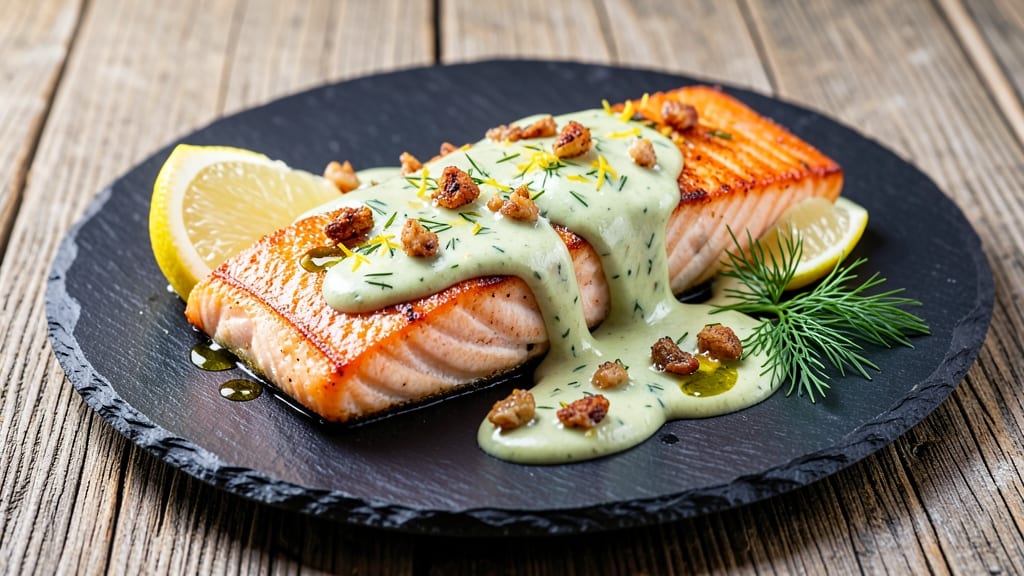
This baked salmon with creamy dill sauce delivers restaurant-quality flavor in just 25 minutes—perfect for weeknight dinners. The secret lies in baking the salmon at 375°F until perfectly tender, then finishing it with a velvety dill sauce that brightens every bite.
I've perfected this one-pan method to minimize cleanup while maximizing flavor, making it ideal for busy evenings. What sets this recipe apart is the sauce, which combines fresh dill, sour cream, and lemon for a tangy, herby richness that pairs beautifully with the salmon's natural oils.
The key is baking the salmon skin-side down first to create crisp edges while keeping the inside moist—no flaking or dryness here. The sauce comes together in minutes while the salmon finishes baking, ensuring everything is ready at the same time.
By the time you plate this dish, you'll have golden, flaky salmon topped with a luscious green sauce that adds freshness and depth.
The combination of tender fish and bright, creamy sauce creates a balance that's both elegant and satisfying—ideal for impressing guests or treating yourself to a special meal without the fuss. Serve with roasted asparagus or a simple side salad to complete the dish.
The creamy dill sauce also works as a dip for crusty bread, so you'll have leftovers that taste just as good the next day.
Ingredients for baked salmon with creamy dill sauce
Fresh salmon, herby dill, and tangy lemon—just 11 ingredients for a restaurant-worthy weeknight dinner.
| Ingredient | Amount | Notes |
|---|---|---|
| Fresh Atlantic Salmon Fillets 🐟 | 1 ½ lb | Skin-on, center-cut preferred |
| Fresh Dill 🌿 | ½ cup | Chopped, stems removed |
| Sour Cream 🧀 | ½ cup | Full-fat for creaminess |
| Lemon Juice 🍋 | 2 tbsp | Freshly squeezed |
| Extra-Virgin Olive Oil 🫒 | 2 tbsp | For baking and sauce |
| Garlic Cloves 🧄 | 2 cloves | Minced for sauce |
| Salt 🧂 | 1 tsp | Diamond Crystal kosher |
| Ground Black Pepper 🌶️ | ½ tsp | Freshly ground |
| Fresh Lemon Zest 🍋 | 1 tsp | For extra brightness |
| Plain Greek Yogurt 🥛 | ¼ cup | For sauce thickness |
| Asparagus Spears 🌱 | 1 lb | Trimmed, for serving |
The salmon is everything here. Wild-caught Atlantic has the best flavor, but any fresh fillet works. Look for bright pink color and firm texture at Whole Foods or your fishmonger—they'll often cut it to size for you. Fresh dill is a must (the dried stuff can't compare), so grab a bunch and use half for the sauce, half for garnish. The sour cream should be full-fat—Trader Joe's or Kroger brands are my go-to. For the lemon, I always buy two and use one for juice, one for zest to keep things fresh.
No fresh dill? Dried works at one-third the amount, but it won't be as vibrant. Out of sour cream? Greek yogurt at half the quantity gives similar thickness. The Greek yogurt in the sauce can be swapped for more sour cream if you prefer. For the asparagus, frozen works in a pinch—just thaw and pat dry before roasting. The garlic can be pre-minced from a jar (no shame), but fresh tastes better. And if you're feeling fancy, add a splash of white wine to the sauce for extra depth.
Salmon keeps best in the coldest part of your fridge, wrapped in parchment paper, for 2 days. The dill stays fresh for 5 days if you wrap the stems in a damp paper towel. The sauce can be made ahead and stored for 3 days—it actually tastes better the next day as flavors meld. For leftovers, reheat gently in the microwave with a splash of water to keep it creamy. This dish reheats beautifully, so it's perfect for meal prep—just save the asparagus for fresh sides.
Why You'll Love This Recipe
- No-Fuss Prep: I swear by this—just season the salmon with salt, pepper, and a drizzle of olive oil, then let the oven do the work. The dill sauce comes together in three minutes with a whisk, sour cream, and fresh herbs. Honestly, between us, it’s the kind of recipe that makes me feel like a home cook, not a short-order chef.
- Tangy Creamy Magic: That bright lemon juice cutting through the rich sour cream? It’s the secret weapon here. The salmon stays juicy, the sauce is velvety but not heavy, and the dill—fresh, not dried—adds that herbal punch that makes every bite feel like a little vacation. (Yes, even on a Tuesday night.)
- Weeknight to Dinner Party: This is my go-to when I’m feeding the family or when I’m trying to impress someone special. The same simple prep works whether I’m plating it for two or doubling it for a crowd. Between us, the leftovers reheat beautifully—just a quick microwave zap—and taste just as good the next day.
- Budget-Friendly Luxury: Salmon might sound fancy, but this recipe stretches it like a pro. A single fillet serves two, and the sauce costs pennies to make. I’ll be real: I’ve bought the cheaper cuts, and as long as you don’t overcook it, no one can tell the difference. Plus, the dill and lemon make it feel like a splurge without the price tag.
Step-by-step instructions for baked salmon with creamy dill sauce
Here's how to create a restaurant-worthy salmon dinner with a velvety dill sauce that ties everything together.
Prep the Salmon and Preheat the Oven
Pat the 1.5 lb fresh Atlantic salmon fillets dry with paper towels, removing any moisture from the surface. This step is crucial—wet skin prevents crispy edges and proper browning. Place the fillets skin-side down on a parchment-lined baking sheet.
Preheat your oven to 400°F. While it heats, arrange the 1 lb asparagus spears alongside the salmon on the baking sheet. Drizzle everything with 1 tablespoon of the extra-virgin olive oil, making sure to coat the salmon evenly. Sprinkle with ½ teaspoon of the salt and ¼ teaspoon of the ground black pepper.
Bake the Salmon Until Flaky
Slide the baking sheet into the preheated oven and bake for 12-15 minutes, depending on thickness. You'll know it's done when the salmon flakes easily with a fork and reaches an internal temperature of 145°F. The edges should be lightly golden, but don't overcook—salmon continues cooking slightly after removal.
Remove the salmon from the oven and transfer it to a serving platter. Tent loosely with foil to keep warm while you prepare the sauce. The asparagus should be tender-crisp at this point—if not, return it to the oven for another 1-2 minutes.
Make the Creamy Dill Sauce
In a small bowl, whisk together the ½ cup sour cream, ¼ cup plain Greek yogurt, 2 tablespoons lemon juice, 1 tablespoon extra-virgin olive oil, 1 teaspoon fresh lemon zest, 1 teaspoon salt, and ½ teaspoon ground black pepper. The mixture should be smooth but still slightly thick.
Add the ½ cup chopped fresh dill and 2 minced garlic cloves, stirring gently to combine. Taste and adjust seasoning—you might need a little more lemon juice or salt to balance the flavors. This sauce needs to be creamy but not runny, so if it's too thick, add a splash of warm water.
Serve with Sauce and Asparagus
Drizzle the creamy dill sauce generously over the baked salmon. Use a spoon to spread it evenly, allowing some of the sauce to pool around the edges for dipping. The sauce should coat the salmon completely, creating a glossy, herby finish.
Arrange the asparagus spears alongside the salmon on the serving platter. The bright green asparagus provides a perfect contrast to the golden salmon and creamy sauce. Serve immediately while the salmon is still warm and the sauce is at its peak creaminess.
Pro Tips For Making Baked Salmon With Creamy Dill Sauce
- Pat the Salmon Dry: This isn’t just about aesthetics—wet skin won’t crisp. Use paper towels to blot the fillets thoroughly before seasoning, and resist the urge to skip it even if the fish looks fresh. I learned this the hard way when my salmon turned out soggy instead of golden.
- Use Room-Temp Sour Cream: Cold sour cream will curdle when mixed with lemon juice and dill, making your sauce grainy. Let it sit out for 10-15 minutes before combining—just enough to soften it slightly. Trust me, your sauce will thank you.
- Check Internal Temp at 125°F: Salmon’s done when it hits 125°F internally, not when it looks "cooked" to you. Overbaking dries it out fast, especially with the high heat of baking. A meat thermometer is worth it here—no guessing.
- Infuse Dill with Lemon Zest: Instead of just chopping fresh dill, mix in a teaspoon of lemon zest with the leaves before folding into the sauce. It brightens the flavor and cuts through the richness of the sour cream—my grandmother swore by this, and she was right.
Pro cooking tips for perfect results
Skin-On Perfection
Baking salmon skin-side down is non-negotiable for crispy edges and tender flesh. Pat the skin completely dry with paper towels before seasoning—any moisture will prevent browning. I like to use a microfiber cloth for the final wipe, as it removes more moisture than paper towels.
The key is 400°F for the first 10 minutes, then reducing to 375°F for the remaining 5-7 minutes to ensure even cooking without overbrowning. 🌟
Sauce Consistency Secrets
The sauce should be thick but pourable, like a perfect custard. For extra creaminess, I sometimes replace 2 tablespoons of sour cream with 1 tablespoon of crème fraîche—it adds a subtle tang.
If your sauce is too thick, whisk in 1 teaspoon of warm water at a time until it reaches the right consistency. The sauce should cling to the salmon without sliding off, creating that restaurant-quality finish.
Temperature Control
Use an instant-read thermometer to check the salmon's internal temperature—145°F at the thickest part is perfect. If your oven runs hot, start checking at 12 minutes to avoid overcooking.
I've found that Wild Alaskan salmon cooks slightly faster than Atlantic due to its leaner fat content, so adjust your timing accordingly. The sauce can be made 1 hour ahead and stored in the fridge, but bring it to room temperature before serving for the best texture.
Lemon Brightness Boost
Fresh lemon zest adds a bright, aromatic punch that elevates the dish. For maximum flavor, zest 1 lemon (about 1 teaspoon) and reserve the juice for the sauce. If you're short on time, bottled lemon juice works, but fresh is always better.
I also like to add a pinch of sugar (about ¼ teaspoon) to the sauce to balance the acidity—it rounds out the flavors beautifully. 🍋
One-Pan Efficiency
Roasting the asparagus alongside the salmon saves time and cleanup. Toss the asparagus with 1 teaspoon of olive oil and ¼ teaspoon of salt before baking. For extra flavor, add ½ teaspoon of garlic powder or a sprinkle of smoked paprika.
The asparagus should be tender-crisp when done—4-5 minutes in the oven alongside the salmon works perfectly. This method ensures everything finishes at the same time with minimal effort.
Sauce Garnish Tips
Finish the sauce with a fresh dill garnish for a pop of color and extra herbaceousness. I like to use a microplane to zest 1 small dill stem (about ¼ teaspoon) directly into the sauce for a subtle but noticeable flavor boost.
For a visual wow factor, arrange the dill leaves in a herb crown on top of the salmon before serving. A final drizzle of high-quality olive oil adds shine and depth to the presentation. 💫
Nutrition facts
Frequently asked questions
Can I use frozen salmon instead of fresh?
Yes, but thaw it properly first! Place the frozen salmon in the refrigerator for 24 hours or use the cold water method (sealed in a leak-proof bag for 30-60 minutes). Pat it completely dry before baking to ensure crispy skin. Frozen salmon works just as well but needs extra time to reach room temperature before cooking.
What if my salmon smells fishy?
Fresh salmon should have a mild, ocean-like aroma—not strong or ammonia-like. If it smells overly fishy, it's past its prime. For best results, use wild-caught salmon from a trusted fishmonger or grocery store seafood counter. If you're unsure, check the "sell-by" date and look for bright pink flesh and firm texture.
How can I make this dish dairy-free?
Swap the sour cream and Greek yogurt for ½ cup coconut yogurt or ¼ cup unsweetened almond yogurt, plus 1 tablespoon melted coconut oil for creaminess. Add 1 teaspoon cornstarch to thicken if needed. The sauce will still be tangy and herby, just without dairy.
Can I bake the salmon without skin?
Skinless salmon will cook slightly faster (8-10 minutes at 400°F). Just place it directly on the baking sheet (no need for skin-side down) and brush with a little olive oil. The sauce will still cling beautifully, though you'll miss the crispy edges. For extra flavor, add a sprinkle of lemon pepper before baking.
What's the best way to reheat leftovers?
Gently reheat in a skillet over low heat for 2-3 minutes with a splash of water or broth to maintain moisture. Never microwave—it makes the salmon rubbery. For the sauce, warm it in the microwave for 20-30 seconds, then stir until smooth. Leftovers keep well for 2 days in the fridge, or freeze for up to 1 month.