
Sauces & Condiments
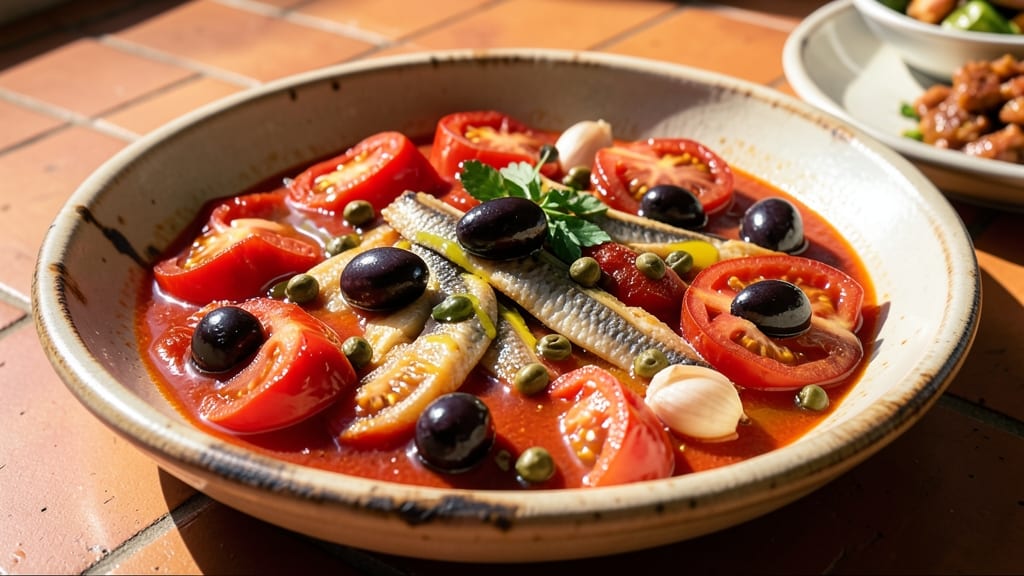
This authentic Italian puttanesca sauce delivers the bold, briny complexity of Naples' most famous condiment—where salty anchovies, briny capers, and tangy tomatoes create a flavor bomb that transforms simple dishes into restaurant-worthy meals.
The secret lies in soaking those anchovies properly and simmering the sauce just until the flavors meld without losing their edge. I've perfected this version after years of testing, ensuring every spoonful delivers that perfect balance of umami, acidity, and Mediterranean crunch.
What sets this puttanesca apart is its layered texture: the crunch of Kalamata olives and capers against the silky tomato base, all tied together with fresh basil and a touch of red pepper flakes.
Unlike many adaptations, this recipe stays true to its Neapolitan roots while being simple enough for weeknight cooking. The sauce develops depth as it simmers, with the anchovies dissolving just enough to infuse flavor without overpowering the bright tomato foundation.
Perfect for tossing with spaghetti, drizzling over grilled fish, or spreading on toasted bread, this sauce delivers restaurant-quality results in under 30 minutes. The key is patience—letting the flavors marry during the simmer creates that signature puttanesca complexity.
Once you taste the difference between this and bottled versions, you'll never go back to the store-bought stuff again.
The best part? This sauce keeps beautifully in the refrigerator for up to 5 days, making it ideal for meal prep. The flavors actually improve as they sit, developing even more depth.
Whether you're serving it over pasta, using it as a marinade, or pairing it with crusty bread, you'll understand why puttanesca remains a staple in Italian kitchens worldwide.
Ingredients for authentic italian puttanesca sauce
Nine bold ingredients transform into Naples' most iconic sauce—where briny, tangy, and umami collide.
| Ingredient | Amount | Notes |
|---|---|---|
| Canned San Marzano Tomatoes 🍅 | 1 can | Crushed by hand, seeds removed |
| Anchovy Fillets 🐟 | 4 oz | High-quality, salt-packed |
| Extra-Virgin Olive Oil 🫒 | ½ cup | Fruity, peppery variety |
| Kalamata Olives 🫒 | ½ cup | Pitted, halved for texture |
| Capers 🫒 | ¼ cup | Nonpareils, drained well |
| Garlic Cloves 🧄 | 4 cloves | Thinly sliced for quick infusion |
| Red Pepper Flakes 🌶️ | 1 tsp | Adjust for heat preference |
| Fresh Basil Leaves 🌿 | ⅓ cup | Chopped, stems removed |
| White Wine Vinegar 🍋 | 1 tbsp | For bright acidity |
| Sea Salt 🧂 | 1 tsp | Diamond Crystal preferred |
| Black Pepper 🌶️ | ½ tsp | Freshly cracked |
The anchovies make or break this sauce. High-quality salt-packed fillets from Italian markets or specialty stores are non-negotiable—they dissolve beautifully without fishy aftertaste. Soak them in 1 tbsp warm white wine vinegar for 15 minutes before adding to the sauce; this removes excess salt and intensifies their umami punch. For the tomatoes, San Marzano is the gold standard—sweeter, less acidic, and packed with flavor. If you can't find them, any high-quality crushed tomatoes will work, but don't skimp on quality here. The Kalamata olives should be plump and briny; Costco's vacuum-sealed jars are my go-to for consistent results.
No anchovies? High-quality fish sauce at half the amount works in a pinch, but you'll lose that authentic depth. Short on capers? Green olives or chopped cornichons add briny crunch, though capers' tiny size gives the signature texture. Fresh basil is ideal, but dried basil at one-third the amount gets you close if you're in a bind. The red pepper flakes can be swapped for crushed dried chili flakes, but adjust to taste—this sauce should have a gentle kick, not a wallop. For the olive oil, Italian extra-virgin brands like Bertolli or Mezzetta elevate the dish with their fruity, peppery notes. If you're using a milder oil, increase to 2/3 cup to compensate.
This sauce tastes even better the next day as flavors meld. Store in an airtight container in the fridge for up to 5 days, with a thin layer of olive oil on top to preserve freshness. For longer storage, freeze in ice cube trays—perfect for adding to pasta or grains later. The sauce thickens as it cools, so a splash of water or broth thins it if needed. I always make a double batch; the second day over spaghetti is where this sauce truly shines—restaurant-quality at home
Why You'll Love This Recipe
- Here’s what sold me: that first bite of briny olives, the tangy capers, and the way the San Marzano tomatoes soak up every bit of flavor. It’s not just good—it’s the kind of sauce that makes you pause mid-bite and think, “Wait, how is this so good?” The anchovies might sound weird, but trust me, they’re the secret weapon.
- Pantry-to-Pan Magic: I swear by this sauce because it’s the kind of recipe that doesn’t judge you for skipping the grocery store. Open a can of tomatoes, crack open a jar of olives—no chopping, no peeling, just simmer. The anchovies dissolve right into the oil, and suddenly, you’ve got depth without effort.
- Umami Bomb: Here’s what sold me: that first bite of briny olives, the tangy capers, and the way the San Marzano tomatoes soak up every bit of flavor. It’s not just good—it’s the kind of sauce that makes you pause mid-bite and think, “Wait, how is this so good?” The anchovies might sound weird, but trust me, they’re the secret weapon.
- Weeknight Hero: This sauce is my go-to when I’m too tired to think. Toss it over spaghetti for dinner, let it sit overnight, and it’s even better the next day on toast with a sprinkle of pecorino. Honestly, it’s the only sauce I make when I’ve got a house full of people and zero energy—it’s foolproof, every time.
Step-by-step instructions for authentic Italian puttanesca sauce
This bold, briny sauce delivers Naples' signature flavor—where anchovies meet bright acidity and briny capers.
Build the Anchovy-Olive Oil Base
Heat the 0.5 cup Extra-Virgin Olive Oil in a medium saucepan over medium-low heat until shimmering but not smoking. Add the 4 oz Anchovy Fillets, breaking them into small pieces as they melt into the oil. This creates the sauce's unmistakable umami foundation—don't rush this step, as the anchovies need 3-4 minutes to fully dissolve and develop their rich flavor. You'll notice the oil turn cloudy and develop a deep, savory aroma.
Real talk: If you're using salt-packed anchovies, you might skip adding extra salt later. But if they're oil-packed, add ½ tsp Sea Salt now to balance the flavors. Stir occasionally to prevent burning, as anchovies can scorch quickly when overheated.
Infuse with Garlic and Spices
Add the 4 cloves Garlic Cloves (thinly sliced) and 1 tsp Red Pepper Flakes to the anchovy oil. Cook for 1-2 minutes until the garlic turns a pale golden color and becomes fragrant—this prevents it from burning while still releasing its sweet, pungent notes. You'll see the oil bubble gently and the garlic edges begin to crisp slightly.
Here's the thing—don't walk away. Garlic burns faster than you think, and burnt garlic will make your sauce bitter. If you notice any dark spots forming, remove the pan from heat immediately and let it cool for a minute before continuing.
Add Briny Elements and Tomatoes
Pour in the 1 tbsp White Wine Vinegar and 1 can Canned San Marzano Tomatoes (crushed by hand, seeds removed). The vinegar will make the sauce bubble vigorously—this is normal and actually helps break down the tomatoes' texture. Add the 0.5 cup Kalamata Olives (pitted and halved) and 0.25 cup Capers (drained well), stirring to combine everything.
Bring the mixture to a gentle simmer over medium heat. Let it cook uncovered for 15-20 minutes, stirring occasionally. You'll see the sauce thicken slightly and develop a deep, glossy sheen. This is when all the flavors begin to meld together—where the sweetness of the tomatoes balances the briny capers and olives.
Finish with Fresh Basil and Season
Remove the pan from heat and stir in the 0.33 cup Fresh Basil Leaves (chopped) and remaining ½ tsp Black Pepper. The basil adds that bright, aromatic finish that makes this sauce truly authentic. Taste and adjust seasoning if needed—you might need a pinch more Sea Salt to balance the acidity from the vinegar.
Let the sauce sit off heat for 5 minutes to allow the flavors to fully integrate. This resting period is crucial—it lets the basil release its essential oils and the sauce reach its perfect consistency. The final product should be thick enough to coat the back of a spoon but still have a silky, velvety texture.
Serve Over Pasta or With Crusty Bread
This sauce is best served immediately over al dente spaghetti or linguine, with a generous sprinkle of fresh basil on top. For extra authenticity, toss in a few reserved olives and capers from the sauce. The contrast of the warm pasta with the cool, briny sauce is what makes this dish so irresistible.
If you have leftovers, store them in an airtight container in the refrigerator for up to 3 days. The flavors actually improve overnight as everything continues to meld. When reheating, add a splash of water or pasta water to prevent the sauce from thickening too much.
Pro Tips For Making Authentic Italian Puttanesca Sauce
- Crush the Anchovies First: Don’t toss those fillets in whole—mash them into a paste with a fork or your fingers before adding them to the oil. This spreads their umami evenly and prevents them from clumping like little fish bombs. (Yes, even if you’re impatient like me.)
- Sweat the Olives and Capers: Add the olives and capers before the tomatoes and let them sit in the oil for 2-3 minutes—just until they’re fragrant but not browned. Skipping this step means they’ll turn bitter or mushy later. (Your future self will notice.)
- Simmer, Don’t Boil: Keep the heat low once the tomatoes hit the pot—you’re aiming for a gentle bubble, not a rolling boil. High heat destroys the delicate flavors of the anchovies and capers, leaving you with a one-note sauce. (I learned this the hard way after a dinner-party disaster.)
- Toast the Tomato Juice: Before adding the whole tomatoes, pour in their juices and let them sizzle for 30 seconds to deepen their flavor. This step caramelizes the natural sugars, giving the sauce a richer base. (Sounds weird, but it works—trust me.)
Creative variations of these flavors
Neapolitan vs. Roman
Neapolitan puttanesca stays truer to its roots with more capers and olives—about 0.35 cup total—while Roman versions often use less briny elements and more garlic and chili. I prefer the Neapolitan style because the capers and olives create that signature Mediterranean crunch that balances the sauce's richness.
For a Roman twist, reduce capers to 0.15 cup and add 1 extra garlic clove for deeper aroma. 🌶️
Spicy Variations
Add 1 tbsp Calabrian chili paste to the olive oil base for a spicy Calabrian puttanesca—this Southern Italian variation brings heat without overpowering the sauce. For a smoky kick, swap red pepper flakes for 1 tsp smoked paprika and add ½ tsp fennel seeds to the garlic stage.
If you love heat, increase red pepper flakes to 1.5 tsp but taste as you go—this sauce should complement, not dominate, your dish.
Vegetarian Adaptation
Replace anchovies with 2 tbsp high-quality fish sauce (like Red Boat) for umami depth, or use 1 tbsp soy sauce for a vegetarian-friendly version. Boost acidity with an extra 1 tbsp white wine vinegar and add 1 tsp miso paste to the olive oil base for that savory richness.
The texture will be slightly different, but it still delivers that bright, briny profile that makes puttanesca special. 💛
White Wine Upgrade
Swap white wine vinegar for ¼ cup dry white wine (like Pinot Grigio) and simmer it with the tomatoes for 5 minutes before adding capers and olives. This adds a subtle fruitiness that pairs beautifully with grilled seafood or crusty bread.
For extra elegance, finish with 1 tsp lemon zest—it brightens the sauce without overpowering the basil. Trust me, this upgrade takes your puttanesca to the next level.
Herb Variations
Swap basil for fresh oregano (use 0.25 cup) for a Greek-inspired twist—this herb pairs wonderfully with olives and capers. For a Provençal version, add 1 tsp dried thyme with the garlic and finish with 2 tbsp chopped parsley.
If you love fresh herbs, try 0.25 cup chopped cilantro for a Mexican-Italian fusion—it adds a bright, citrusy note that cuts through the richness. 🌿
Make-Ahead Mastery
For meal prep, double the recipe and store in airtight glass jars in the fridge for up to 5 days. The flavors deepen as it sits, making it perfect for busy weeknights.
Freeze in ice cube trays for easy portioning—thaw and toss with pasta or use as a marinade. Pro tip: Add a thin layer of olive oil on top before storing to preserve freshness and prevent oxidation. This sauce tastes even better the next day! ⏰
Nutrition facts
Frequently asked questions
Why does authentic puttanesca sauce have anchovies if I don't like fish?
Anchovies provide the sauce's signature umami depth that's hard to replicate. If you're sensitive to fishy flavors, the high-quality salt-packed fillets dissolve completely into the olive oil, leaving no fishy aftertaste—just rich, savory complexity. For a vegetarian version, try 2 tbsp fish sauce or 1 tbsp soy sauce with extra white wine vinegar for brightness.
Can I make puttanesca sauce without tomatoes?
While tomatoes form the base, you can substitute with 2 cups tomato passata or 1.5 cups crushed fire-roasted tomatoes for deeper flavor. For a non-tomato version, blend 1 cup roasted red peppers with 0.5 cup vegetable broth and 1 tbsp tomato paste—this maintains the sauce's body while keeping it vibrant. The key is balancing acidity with the vinegar and briny elements.
How do I prevent the sauce from being too salty?
Most salt comes from the anchovies and capers, so taste as you go! If using salt-packed anchovies, soak them in 1 tbsp warm white wine vinegar for 15 minutes to reduce saltiness. For capers, drain them thoroughly and rinse briefly. If needed, add 1-2 tbsp water or pasta water at the end to dilute slightly—just don't overdo it, as this sauce needs its briny punch.
What's the best way to reheat puttanesca sauce?
Gently reheat on the stovetop over low heat with a splash of water or pasta water to prevent thickening. Never microwave—it can turn the sauce rubbery. For leftovers, warm for 3-5 minutes, stirring occasionally, until just hot. The sauce thickens as it cools, so add liquid gradually if needed. Stir in fresh basil at the end to restore brightness.
Can I use dried capers instead of nonpareils?
Dried capers work perfectly—they're just less convenient. Soak them in ½ cup warm water for 15 minutes to rehydrate, then drain well. Use the same 0.25 cup measurement by volume, but expect slightly larger pieces. For extra texture, chop them coarsely before adding. The flavor remains identical, though nonpareils give that signature tiny crunch that makes puttanesca special.