
Sauces & Condiments
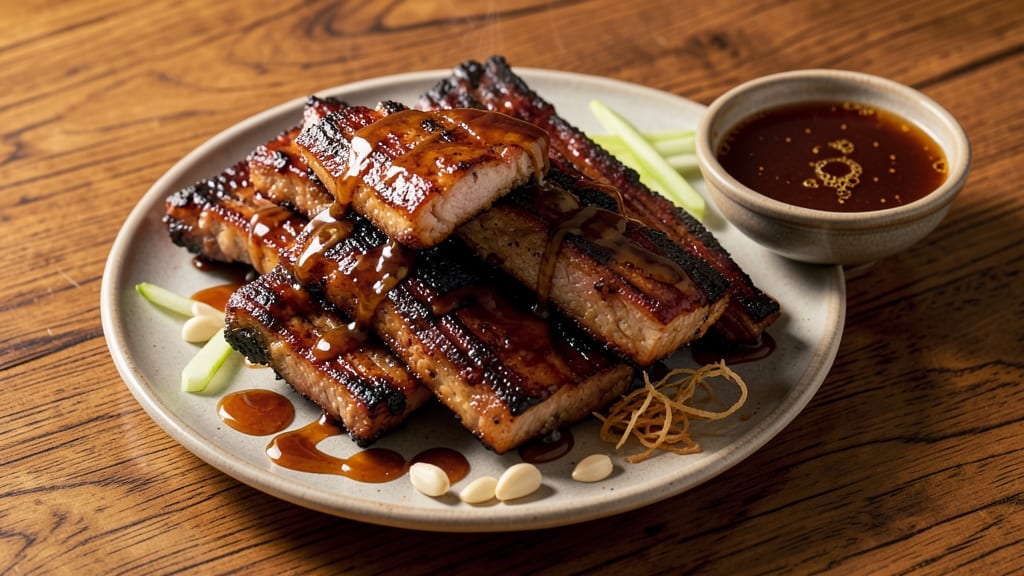
This Asian BBQ sauce recipe for ribs transforms your smoker into a fusion powerhouse—where smoky-sweet glaze meets the bold depth of vinegar and umami. 🔥 I developed it after years of perfecting rib rubs, craving that perfect balance of caramelized sweetness and tangy bite that clings to meat like a second skin.
The secret lies in simmering soy, hoisin, and honey with fresh ginger and garlic until it thickens into a glossy, sticky perfection. What sets this sauce apart is its hidden vinegar depth—just enough rice vinegar to cut through the sweetness without overpowering the ribs' natural richness.
The sauce works as a marinade (tenderizing the meat), a glaze (creating that coveted bark), or a finishing sauce (adding shine and flavor in the last minutes). It's the kind of recipe that turns good ribs into unforgettable ones.
The process is straightforward but requires patience: simmering until the flavors meld into a cohesive, aromatic liquid. You'll end up with a sauce that's sticky, smoky, and packed with layers—each bite delivering a perfect harmony of sweet, savory, and tangy.
It's the kind of glaze that makes your ribs the star of any cookout. Perfect for competition-style ribs or casual backyard cooking, this sauce elevates every bite. Let's get started!
Ingredients for asian bbq sauce recipe for ribs
Ten ingredients, endless flavor—this sauce turns ribs into showstoppers every time.
| Ingredient | Amount | Notes |
|---|---|---|
| Soy Sauce 🍶 | ½ cup | Use light or dark for balance |
| Hoisin Sauce 🍶 | ½ cup | Thick, sweet-savory Chinese sauce |
| Honey 🍯 | ½ cup | Wildflower for floral depth |
| Rice Vinegar 🍶 | ¼ cup | White or seasoned variety |
| Fresh Ginger 🌿 | 2 tbsp | Grated, aromatic punch |
| Garlic Cloves 🧄 | 4 cloves | Minced, fresh is best |
| Sesame Oil 🫒 | 1 tbsp | Toasted for nutty aroma |
| Brown Sugar 🍯 | ¼ cup | Packed, for caramelization |
| Smoked Paprika 🌶️ | 1 tbsp | For that smoky depth |
| Red Pepper Flakes 🌶️ | ½ tsp | Adjust for heat preference |
The soy sauce and hoisin are the flavor anchors here—Kikkoman soy and Lee Kum Kee hoisin are my go-tos, but any quality brands work. If you can't find hoisin, substitute an extra 2 tbsp soy sauce plus 1 tbsp molasses for a close approximation. The honey should be wildflower if you're feeling fancy, but clover works too. Rice vinegar is non-negotiable for that bright tang—apple cider vinegar won't cut it here. Fresh ginger and garlic? Don't skip the zest—it adds a whole new dimension of flavor. I always grab ginger from the Asian market if I'm making a big batch, but the grocery store stuff is fine for small batches.
No sesame oil? A pinch of toasted sesame seeds adds the same nutty aroma without the overpowering flavor. Running low on smoked paprika? A dash of liquid smoke (just ¼ tsp) will give you that smoky backbone, but it's not quite the same. The red pepper flakes can be swapped for ½ tsp cayenne if you want more heat, but trust me—they're worth having on hand for this sauce. If you're making this for a crowd, double the batch—it freezes beautifully. And if you're worried about the sauce being too sweet, add an extra splash of vinegar at the end to balance it out.
This sauce keeps for up to 2 weeks in the fridge, but it actually tastes better after a day or two as the flavors meld. Freeze in ice cube trays for single-use portions—perfect for last-minute glaze touches. If you make a big batch, divide it into small jars so you can grab just what you need without thawing the whole thing. And here's a pro tip: brush it on ribs in the last 30 minutes of cooking for that perfect caramelized bark. Leftovers? Toss them in a stir-fry or drizzle over noodles—it's that versatile.
Why You'll Love This Recipe
- Pantry Magic: I’ll never buy store-bought again—just five ingredients, a quick simmer, and boom, you’ve got sauce richer than takeout. The hoisin and soy sauce team up like old friends, while the ginger adds that zesty kick without extra work.
- Sweet-Savory Balance: That honey glaze caramelizes into sticky perfection, cutting through the smoky ribs with every bite. Honestly, the first time I tasted it, I grabbed a second slice before the plate even hit the table.
- Weeknight Wonder: Slather it on ribs for dinner, drizzle it over noodles for lunch, or toss it with stir-fry veggies—this sauce doesn’t quit. Between us, it’s my go-to when I’m too tired to plan but still want flavor that pops.
- Budget Stretch: A single batch costs pennies but feels like a splurge—no fancy ingredients, just smart combos. I’ve made it stretch over three meals without breaking the bank, and the leftovers? Even better the second day.
Step-by-step instructions for smoky-sweet Asian BBQ sauce
This sauce delivers perfect balance—sweet, smoky, and tangy—with just 10 minutes of hands-on work.
🍳 Step 1: Bloom the Aromatics in Toasted Sesame Oil
Heat a small saucepan over medium-low heat and add the 1 tablespoon sesame oil. Once it shimmers (about 30 seconds), add the 4 minced garlic cloves and 2 tablespoons grated fresh ginger. Sauté for 1-2 minutes until fragrant—you should smell that nutty, zesty aroma. This step builds the sauce's aromatic foundation.
Watch the heat carefully—ginger burns faster than garlic. If it starts to darken, reduce to lowest heat and stir constantly. The goal is to wake up these flavors without burning them. Remove from heat immediately after they smell amazing.
🥘 Step 2: Combine Wet Ingredients for Perfect Balance
In a medium saucepan, combine the 0.5 cup soy sauce, 0.5 cup hoisin sauce, 0.5 cup honey, 0.25 cup rice vinegar, and 0.25 cup packed brown sugar. Stir over medium heat until the sugar dissolves completely (about 2-3 minutes). The mixture will bubble gently—this is normal.
Here's where the magic happens: the vinegar cuts through the sweetness while the sugar caramelizes slightly. You'll see the sauce thicken as it heats. If it gets too sticky, add 1 tablespoon water to loosen it slightly. This ensures smooth application on ribs later.
🔥 Step 3: Build Depth with Smoky and Spicy Notes
Reduce heat to low and stir in the 1 tablespoon smoked paprika and 0.5 teaspoon red pepper flakes. Let the sauce simmer for 3-4 minutes until it thickens slightly and coats the back of a spoon. The paprika will deepen the smoky flavor while the pepper flakes add subtle heat.
This is your quality checkpoint: the sauce should be glossy with a thick, syrupy consistency—not watery, but not so thick it can't be brushed. If it's too thick, add 1 teaspoon water at a time until it reaches your desired texture. The sauce should cling beautifully to ribs without dripping off.
⏰ Step 4: Rest and Adjust for Maximum Flavor
Remove from heat and let the sauce cool for 10 minutes—this resting period allows all the flavors to meld together. Taste and adjust seasoning: need more tang? Add ½ teaspoon rice vinegar. Want more sweetness? Stir in 1 teaspoon honey. The sauce should balance all five flavors—sweet, salty, tangy, smoky, and spicy.
For best results, make the sauce at least 1 hour before using it. This gives the flavors even more time to develop. Store leftovers in an airtight container in the refrigerator for up to 2 weeks—the flavors actually improve with time.
Pro Tips For Making Asian Bbq Sauce Recipe For Ribs
- Simmer Low and Slow: I used to blast this sauce on high heat, thinking it’d thicken faster—wrong. Keep it at a gentle simmer (small bubbles, occasional swirls) for 15-20 minutes. Rushing it burns the honey and turns the ginger bitter. Let the flavors meld like a lazy Sunday brunch.
- Grate, Don’t Mince Ginger: Fresh ginger loses its punch when minced fine—it oxidizes and turns soapy. Use a box grater for coarse shreds (about 1 teaspoon). They’ll infuse the sauce without overpowering it, and you won’t waste half the root peeling and chopping.
- Balance Vinegar Gradually: Dump the rice vinegar in all at once and the sauce will taste sharp and unfinished. Start with half, taste, then add the rest. The acidity cuts through the sweetness, but too much too soon makes the hoisin sauce fight back.
- Thicken with Cornstarch Slurry: If your sauce is too thin after simmering, mix 1 teaspoon cornstarch with 2 tablespoons cold water and whisk it in at the end. Stir for 2 minutes—it’ll coat the ribs better than reducing longer, and you won’t end up with a sticky mess on your hands.
Perfect pairings for asian bbq sauce recipe for ribs
Rib Pairing Essentials
This sauce transforms ribs into a fusion masterpiece—pair it with applewood-smoked baby back ribs for a sweet-spicy contrast.
I love using St. Louis-style ribs when I'm feeling adventurous, as their thick fat cap creates perfect pockets for the sauce to cling. 🔥 For a budget-friendly option, pork shoulder ribs work just as well when cooked low and slow.
When serving, add a side of pickled daikon and carrot slaw—the acidity cuts through the sauce's richness beautifully. I make mine with 1 cup rice vinegar, ½ cup sugar, and 1 tbsp salt, letting it sit for at least 4 hours before serving.
The crunch of quick-pickled cucumbers also adds a refreshing contrast.
Sauce as Marinade
Use this sauce as a pre-cook marinade for ribs—brush it on 2-3 hours before smoking to tenderize and infuse flavor. I recommend using ½ cup of the sauce for a whole rack of ribs, letting it absorb into the meat while you prep your smoker.
This method creates juicier ribs with deeper flavor penetration.
For extra tenderness, I sometimes poke holes in the ribs with a meat fork and inject 1 tbsp of the sauce into each hole before wrapping them in butcher paper for the final cook. This technique ensures the sauce gets deep into the meat, not just on the surface.
Glaze Application
Apply the sauce as a final glaze during the last 30-45 minutes of cooking for that perfect caramelized bark. I use a pastry brush to apply 2-3 thin coats, letting each layer dry slightly before adding the next. This creates a glossy, sticky crust that's irresistible.
For competition-style ribs, I double the sauce batch and use it both as a marinade and a glaze. The first application happens 2 hours before cooking, and the second 30 minutes before the ribs are done. This two-step process guarantees maximum flavor impact on every bite.
Drink Pairings
A crisp Japanese lager like Sapporo or Asahi complements the sauce's balance of sweet and tangy flavors. The light, clean taste of these beers cleanses your palate between bites. For a non-alcoholic option, try sparkling yuzu soda—the citrus notes enhance the sauce's complexity.
If you prefer wine, a dry Riesling with its bright acidity stands up to the sauce's richness. I also love pairing this with green tea (hot or iced) for a refreshing contrast. The tannins in the tea balance the sauce's sweetness beautifully.
Nutrition facts
Frequently asked questions
Can I substitute hoisin sauce in this recipe?
Yes! If you can't find hoisin, mix 2 extra tablespoons soy sauce with 1 tablespoon molasses for a similar sweet-savory depth. For a more authentic Asian flavor, try 1 tablespoon plum sauce instead—it adds fruity complexity that works beautifully with ribs.
How do I adjust the heat level for sensitive eaters?
Simply reduce or omit the red pepper flakes entirely. For mild heat, add just ¼ teaspoon instead of ½ teaspoon. If you want warmth without spice, swap the pepper flakes for ½ teaspoon ground white pepper—it adds depth without heat.
Can I make this sauce without sesame oil?
Skip the sesame oil and add ½ teaspoon toasted sesame seeds at the end for aroma. For a different flavor profile, use 1 teaspoon neutral oil (like vegetable or avocado) to bloom the garlic and ginger. The sauce will still be delicious—just slightly less nutty.
How long can I store this sauce?
The sauce keeps for 2 weeks in the fridge and freezes beautifully for up to 3 months. For freezing, portion into ice cube trays—perfect for single-use glaze applications. Thaw overnight in the fridge before using to preserve texture.
What's the best way to apply this sauce to ribs?
For maximum flavor impact, use it twice: first as a 2-3 hour marinade before cooking, then as a 30-minute glaze at the end. Brush on thin layers, letting each coat dry slightly before adding more to create that perfect caramelized bark.