
Sauces & Condiments
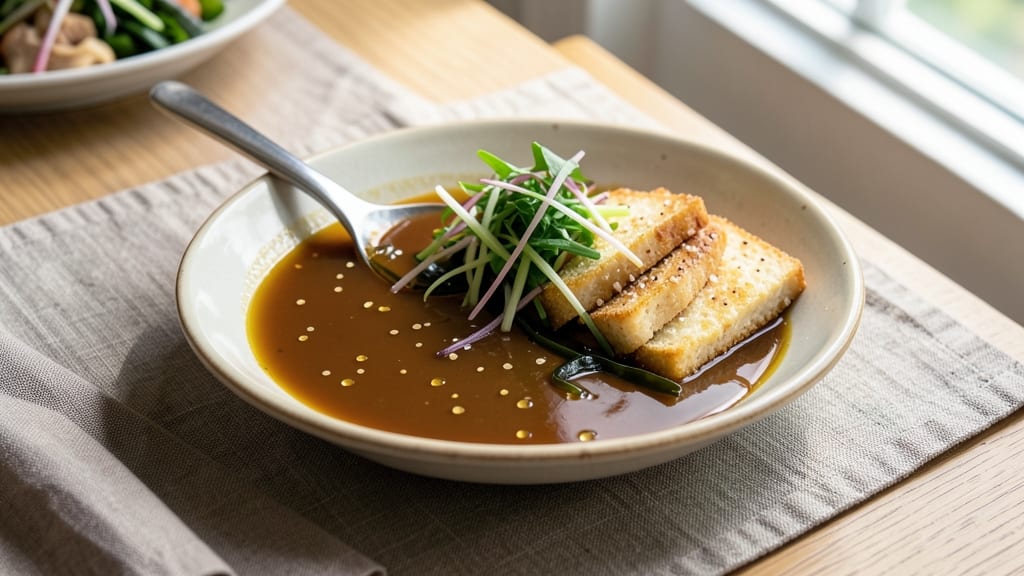
This amakuchi sauce recipe transforms simple pantry staples into a velvety, umami-rich sauce that elevates everything from grilled fish to steamed rice. 💫 The secret lies in balancing soy sauce, mirin, and sugar while simmering until it reaches that signature glossy consistency—just like the sauce served with celery crowns in Japan.
What makes this recipe special is its versatility: it works as a marinade, dipping sauce, or finishing drizzle, yet requires only five core ingredients and 15 minutes of active time.
The foundation of great amakuchi sauce starts with a proper reduction—simmering until the liquid thickens just enough to coat the back of a spoon without being syrupy.
I've found that adding a pinch of kombu or bonito flakes during cooking deepens the umami profile, though they're optional for those who prefer a cleaner flavor. The sauce should finish with a glossy sheen and a balance of sweet, salty, and slightly tangy notes that make every bite sing.
What you'll end up with is a sauce that's equally at home drizzled over sashimi, spooned onto steamed vegetables, or used as a marinade for grilled meats. Its creamy texture and rich flavor transform simple dishes into restaurant-quality meals.
The best part? It keeps beautifully in the refrigerator for up to two weeks, making it perfect for meal prep or gifting to fellow food enthusiasts.
For those looking to experiment, try adding a splash of yuzu juice for brightness or a dash of sesame oil for nuttiness. The possibilities are endless, but the core technique remains the same: simmer, reduce, and balance. Let's create this sauce that brings a taste of Japan to your kitchen.
Ingredients for amakuchi sauce
Five core ingredients create this velvety Japanese sauce with restaurant-quality depth.
| Ingredient | Amount | Notes |
|---|---|---|
| Soy Sauce 🍶 | ½ cup | High-quality Japanese preferred |
| Mirin 🍶 | ¼ cup | Sweet cooking wine, not dry |
| Granulated Sugar 🍚 | ¼ cup | White or brown preferred |
| Kombu 🍃 | 1 piece | Dried seaweed, optional for umami |
| Dashi Stock 🍲 | ½ cup | Instant or homemade preferred |
| Sesame Oil 🫒 | 1 tbsp | Toasted for nuttiness |
| Bonito Flakes 🐟 | 1 tbsp | Optional for deeper flavor |
| Kosher Salt 🧂 | ½ tsp | Adjust to taste |
The soy sauce and mirin form the base—Japanese brands like Kikkoman and Hakkaisan elevate this sauce. Mirin should be sweet and slightly syrupy, not dry. Trader Joe's carries a solid version if you can't find specialty stores. Kombu adds umami depth without overpowering, while bonito flakes deepen the savory notes. For dashi, instant granules work in a pinch, but homemade (from kombu and bonito) delivers richer flavor. Store-bought dashi is fine if labeled 'high-quality'—avoid the ultra-cheap versions.
No mirin? Substitute 1 tbsp sugar plus 1 tbsp water—it won’t be identical, but close. Short on kombu? A dash of msg powder amplifies umami, though it’s a last resort. The sugar can be swapped for maple syrup or agave, though white sugar achieves the cleanest balance. Sesame oil is optional but adds that signature nuttiness—toasted sesame oil tastes best. If you skip it, a pinch of ground sesame seeds at the end works too. For a vegetarian version, omit bonito flakes and use vegetable dashi instead.
This sauce thickens as it cools, so don’t over-reduce. Store in an airtight jar in the fridge for up to 2 weeks—it actually improves with time. For longer storage, freeze in ice cube trays and transfer to a bag. The glossy sheen comes from simmering until it coats a spoon—patience is key. Leftovers reheat beautifully; just warm gently on the stove or microwave until steaming. A drizzle over grilled fish or steamed rice makes every bite sing.
Why You'll Love This Recipe
- Pantry Stash Magic: I swear by this sauce because it’s made with things I already have—soy, mirin, sugar, and kombu. No special shopping trips, no forgotten spices gathering dust. Just open, measure, simmer.
- Umami Bomb: That kombu and dashi combo? It’s like a flavor explosion in your mouth—deep, savory, and just sweet enough. The mirin brightens it up so it’s never one-note, even when I rush.
- Leftovers = Free Lunch: This sauce actually improves the next day. I make a big batch for grilled fish, then use the leftovers to glaze tofu or drizzle over rice bowls. Less waste, more meals.
- Weeknight Workhorse: Ten minutes on the stove, zero fuss. Whether it’s weeknight dinners or a last-minute appetizer, this sauce handles it all. My lazy Sundays just got a whole lot tastier.
Step-by-step instructions for Japanese-style celery crown sauce
Master this umami-rich sauce that transforms ordinary dishes into restaurant-quality meals.
🍳 Step 1: Prepare the Kombu and Dashi Foundation
Place the 1 piece kombu in a small saucepan and cover it with 1 cup cold water. Bring to a gentle simmer over medium-low heat—you'll see small bubbles forming around the kombu. Simmer for exactly 5 minutes to extract its deep oceanic flavor, then remove from heat and let steep for 10 minutes covered.
Strain the kombu broth through a fine-mesh sieve into a clean bowl, pressing gently on the kombu to extract all the liquid. Discard the kombu. This broth forms the aromatic base of your amakuchi sauce, providing that signature Japanese umami depth without overpowering other flavors.
🍳 Step 2: Build the Sweet-Savory Base
In a separate saucepan, combine the strained kombu broth with the 0.5 cup dashi stock and 0.25 cup mirin. Bring to a gentle simmer over medium heat until small bubbles form around the edges. Add the 0.25 cup granulated sugar and stir until completely dissolved—this should take about 2-3 minutes.
Here's where the magic happens: the sugar and mirin create a delicate balance of sweetness that cuts through the saltiness of the soy sauce later. Taste the mixture now—it should be pleasantly sweet with a clean, bright acidity from the mirin. If you're using 1 tbsp bonito flakes, sprinkle them over the simmering liquid and let them infuse for 1 minute before removing from heat.
🍳 Step 3: Incorporate Soy and Salt for Depth
Return the pan to low heat and gradually whisk in the 0.5 cup soy sauce and 0.5 tsp kosher salt. The sauce will darken slightly as the soy sauce integrates—this is normal and indicates proper flavor development. Simmer gently for 5-7 minutes, stirring occasionally, until the mixture reduces by about 25% and thickens slightly.
You're aiming for a consistency that coats the back of a spoon but isn't syrupy. If it reduces too quickly, reduce the heat slightly. The sauce should smell complex—sweet, salty, with hints of seaweed and umami. This is your flavor checkpoint: if it tastes too sweet, add a touch more soy sauce; if too salty, a splash of water and more sugar.
🥘 Step 4: Finish with Sesame Oil for Nuttiness
Remove the sauce from heat completely and let it cool for 2 minutes. Then stir in the 1 tbsp sesame oil using a small whisk or fork. The oil will create beautiful marbling throughout the sauce, adding a subtle nutty aroma and rich mouthfeel. Taste again and adjust seasoning—most Japanese sauces benefit from a final balance check.
For optimal results, use the sauce immediately over hot dishes like ramen, udon, or grilled meats. The heat will activate its full complexity. If storing, transfer to an airtight container and refrigerate for up to 5 days, though the flavor deepens when reheated gently before use. This sauce transforms simple ingredients into something truly special—worth every minute of attention.
Pro Tips For Making Amakuchi Sauce
- Simmer Kombu Low: Toss that kombu in at the very end—just 2-3 minutes before turning off the heat. I learned this the hard way after overcooking it once and ending up with bitter, mushy seaweed instead of that delicate umami punch. Low heat is your friend here; it’s not a race.
- Balance Sugar First: Taste your sugar-to-mirin mix before adding soy sauce. The sugar should dissolve completely, and the liquid should coat your spoon lightly—like syrup, not water. If it’s grainy, you’re either under-sugaring or not heating enough. Trust me, your sauce will thank you later.
- Skip the Boil: Amakuchi sauce isn’t about rolling bubbles—it’s about gentle warmth. A slow simmer (just small ripples) keeps the mirin from evaporating too fast and the dashi from turning flat. I used to crank the heat, and the sauce lost its brightness. Now I keep it at a whisper.
- Strain the Dashi: Unless you’re going for a rustic texture, strain your dashi stock through a fine-mesh sieve or cheesecloth. Kombu bits or leftover bonito flakes turn your smooth sauce into a textural surprise. It’s an extra 30 seconds that makes a real difference.
Health benefits of this amakuchi sauce
Umami Powerhouse
Amakuchi sauce delivers a concentrated dose of umami—that satisfying, savory depth that makes every bite memorable. The kombu and bonito flakes (when used) provide natural glutamates, while the soy sauce contributes inosinate, creating a flavor bomb that enhances any dish.
This sauce contains no artificial additives, just pure, functional umami from whole-food ingredients. 💪
Gluten-Friendly Option
While traditional amakuchi sauce contains soy sauce (which has gluten), you can easily adapt this recipe for gluten-free diets. Simply substitute the soy sauce with tamari (a gluten-free soy sauce alternative) or coconut aminos.
The flavor profile remains rich and balanced, though the color will be slightly lighter. For extra umami without gluten, add 1 tsp mushroom powder to the simmering mixture.
Blood Sugar Balance
The sugar in amakuchi sauce is carefully balanced by the acidity of mirin and the saltiness of soy, creating a low-glycemic impact when used in moderation.
The sauce's natural sweetness comes from granulated sugar, but you can reduce it by 10% if watching sugar intake—just be prepared for slightly less glossy texture. Pairing this sauce with protein-rich foods (like grilled fish or tofu) further stabilizes blood sugar levels.
Rich in Antioxidants
Both kombu and bonito flakes contribute antioxidant properties that combat oxidative stress in the body. Kombu is particularly high in polysaccharides that support gut health, while bonito flakes provide bioactive peptides linked to reduced inflammation.
The sesame oil adds vitamin E, an antioxidant that protects cell membranes. Together, these ingredients create a sauce that's not just delicious but also nourishing. ✨
Digestive Benefits
The fermentation process inherent in mirin and dashi stock makes this sauce easier to digest than many store-bought condiments. The kombu's natural enzymes aid digestion, while the balanced acidity helps stimulate stomach acid production.
For those with sensitive stomachs, I recommend using low-sodium soy sauce and reducing the salt to ¼ tsp—the umami will still shine through.
Versatile Nutrition
This sauce adds flavor without empty calories, making it perfect for low-calorie diets when used sparingly. A 1-tablespoon serving contains about 15 calories, 0.5g fat, and 1g protein, while providing trace minerals like iron from kombu and calcium from dashi.
The sauce's creamy texture makes it satisfying while keeping nutritional impact minimal—ideal for drizzling over vegetables or lean proteins.
Nutrition facts
Frequently asked questions
What's the best way to store leftover amakuchi sauce?
Transfer the sauce to an airtight container and refrigerate for up to 5 days. The flavor actually improves as it sits! For longer storage, freeze in ice cube trays, then transfer to a freezer bag—thaw overnight in the fridge before using. Always reheat gently on low heat or microwave until steaming to preserve that glossy texture.
Can I make this sauce without kombu or bonito?
Skip the kombu and use 1 tsp mushroom powder or ½ tsp msg for umami depth. For bonito flakes, simply omit them—the sauce will still be delicious, just slightly less complex. The core sweet-savory balance from mirin, soy, and sugar will remain intact.
How can I use amakuchi sauce beyond dipping?
This versatile sauce works as a marinade for grilled meats or tofu, a finishing drizzle over hot ramen, or even a glaze for roasted vegetables. For extra richness, simmer it with 1 tbsp butter at the end. Try it on steamed rice like Japanese-style okonomiyaki batter for a flavor upgrade!
Why did my sauce turn too thick?
Over-reducing happens when heat is too high—keep it at a gentle simmer (tiny bubbles at edges). If it thickens too much, whisk in 1-2 tsp warm water to adjust. The ideal consistency coats the back of a spoon but remains pourable. For next time, reduce heat to low during the final 5 minutes of simmering.
What's the difference between amakuchi and tonkatsu sauce?
Amakuchi is a Japanese-style umami sauce with a glossy, balanced sweet-savory profile, while tonkatsu sauce is thicker, sweeter, and often contains wheat flour for a breading-like texture. Amakuchi works with delicate dishes like sashimi, whereas tonkatsu is designed for fried cutlets. Both use soy sauce, but amakuchi relies on mirin and kombu** for depth.